
- 268shark species profiles
- 100country guides
- 7,157recorded shark incidents
- 27US state guides
Sharks are the most misrepresented animals in the sea. Most people meet them through film and headlines rather than on a reef, and the gap between the two is enormous. SharkSider exists to close it: what each species actually is, where it actually lives, and what the incident record actually says.
Everything here is built on three sets of pages. The species profiles give measured sizes rather than fishermen's estimates, the current Red List status, how the animal breeds and an honest risk rating. The country and US state guides answer the question people really have before a holiday — what is in this water, and does it matter. And the attack records publish every entry in our database rather than a headline number, so you can see what an incident usually is: one pass, in murky water, at dawn or dusk, on a limb, survived.
Sharks by country
All countries →The guides readers open most. Each one lists the species with a genuine local record, with pictures, adult size and a plain risk rating.
 Cyprusspecies list & safety
 the Philippinesspecies list & safety
 Greecespecies list & safety
 Turkeyspecies list & safety
 Moroccospecies list & safety
 Malaysiaspecies list & safety
 Finlandspecies list & safety
 Sri Lankaspecies list & safety
 New Zealandspecies list & safety
 Indonesiaspecies list & safety
 Albaniaspecies list & safety
 Tunisiaspecies list & safety
Sharks in the United States
All states →Sharks live off every coastal state: blacktips and bull sharks in the Atlantic and Gulf, great whites and sevengills on the Pacific coast, salmon sharks in Alaska and tiger sharks around Hawaii.
 South Carolinastate guide
 Alaskastate guide
 Floridastate guide
 Pennsylvaniastate guide
 New Jerseystate guide
 Massachusettsstate guide
 North Carolinastate guide
 Texasstate guide
Shark attacks
Every country record →7,157 recorded incidents from 1500 to 2026, 1428 of them fatal, updated weekly. The United States alone accounts for 2597 of them, 199 fatal, most of those minor bites in Florida surf.
 Egypt54 recorded · 14 fatal
 Italy73 recorded · 14 fatal
 Spain47 recorded · 8 fatal
 Portugal4 recorded · 2 fatal
 Japan36 recorded · 14 fatal
 Cyprus1 recorded · 1 fatal
 Dominican Republic7 recorded · 2 fatal
 South Africa599 recorded · 114 fatal
Read the numbers next to each other and the pattern is hard to miss: bites are rare, concentrated in a few coastlines, and almost always investigative rather than predatory. How to survive a shark attack covers what to do in the water; fourteen things more likely to kill you covers the perspective.
Popular shark species
All species →From the great white to the cookiecutter — the profiles people look up first, each with pictures, a size comparison against a diver and the species' own incident record.
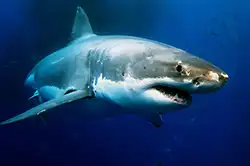
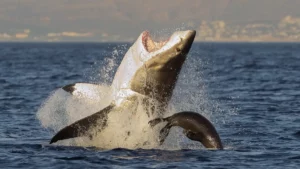 Great White Sharkspecies profile
 Cookiecutter Sharkspecies profile
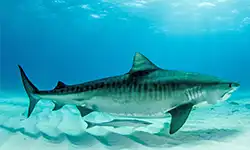
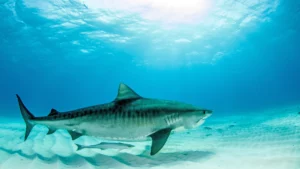 Tiger Sharkspecies profile
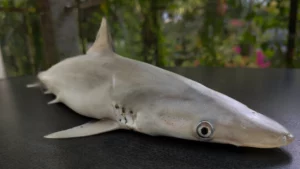 Milk Sharkspecies profile
 Dwarf Lanternsharkspecies profile
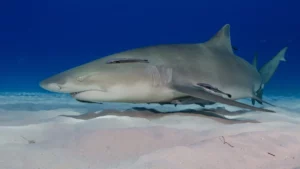 Lemon Sharkspecies profile
 Caribbean Reef Sharkspecies profile
 Goblin Sharkspecies profile
 Thresher Sharkspecies profile
 Whitefin Topesharkspecies profile
 Chain Catsharkspecies profile
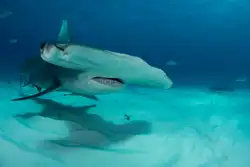
 Hammerhead Sharkspecies profile
Latest from the blog
All articles →Longer pieces on how sharks work, what is happening to them, and the people who worked it out.
 Why Are Sharks Endangered?shark blog
 Can Sharks Smell Period Blood?shark blog
 How Much Does A Shark Weigh?shark blog
 Are Sharks Older Than Trees?shark blog
 How To Survive A Shark Attack?shark blog
 How Many Sharks Are In The World?shark blog
New here? Start with these
If you know nothing about sharks, three pages give you the whole frame in about ten minutes: what a shark actually is, how one is built and where they came from — a lineage older than trees. After that, the eight orders of sharks turns 500 species into eight groups you can actually hold in your head.
If you are here for one answer instead, shark facts and FAQ is the index: how many teeth a shark has, how long they live, whether they have bones, what eats them, and whether any of the things you have heard about blood in the water are true. And if you came because sharks are in trouble rather than because they are frightening, start at why sharks are endangered — roughly a hundred million are killed every year, and that is the number that should worry people.
Common questions about sharks
What does SharkSider cover?
Three things: a profile for every shark species we can document, a guide to which sharks live off each country and US state, and the full record of shark attacks by country from our own database. Around 268 species pages, 100 country guides and 80 national attack records, all kept current.
How many shark species are there?
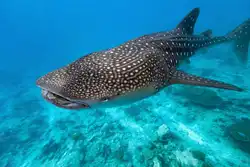
More than 500 have been described, in eight orders, and new ones are still named from deep water most years. They range from 20 cm lanternsharks to the 12 m whale shark. Only a handful of species have any meaningful record of injuring people.
How dangerous are sharks, really?
Far less dangerous than their reputation. Our database holds 7,157 recorded incidents worldwide across more than a century, 1428 of them fatal. A typical modern year produces around sixty unprovoked bites and fewer than ten deaths, against billions of hours of human swimming.
Where does the shark attack data come from?
It merges International Shark Attack File and Global Shark Attack File records with local reporting that our team verifies, and it is updated weekly. Every country page lists the individual entries — date, place, activity, injury, shark and outcome — rather than only a total.
Which sharks live where I am swimming?
Pick your country from the sharks around the world guides, or your state from sharks in the US. Each guide lists the species with a real local record, how big they get, where and when you are likely to see them, and how much care the water actually needs.
Who writes SharkSider?
A small team of divers, surfers and fishermen who spend a lot of time in the water with sharks. Every page is drafted by one member and reviewed by another against published species assessments, fisheries and museum databases and our own incident records.