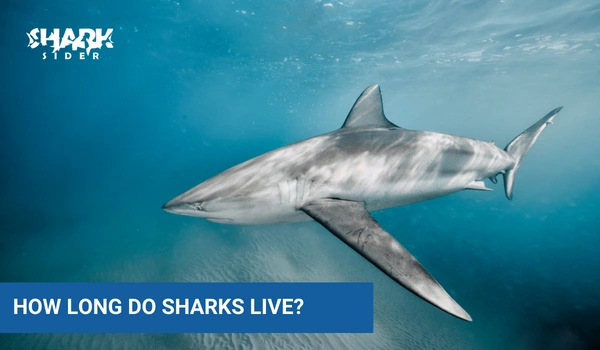
Most sharks live between 20 and 40 years, small coastal species rarely pass 15, and the Greenland shark reaches an age no other vertebrate approaches — radiocarbon dating of eye lens tissue put its oldest measured individual at roughly 390 years.
The figures that have been checked against a physical date marker are far fewer than the figures in circulation. A great white was aged at 73 in 2014, which more than doubled the previous textbook number. Whale shark ages have been validated only to about 50 years, despite the 100-plus estimates repeated everywhere. Where the tissue has not been dated, the honest answer is that nobody knows.
- Oldest measured sharkAbout 390 years (Greenland shark)
- Oldest validated great white73 years
- Typical small coastal shark10 to 15 years
On this page
The range, from a decade to four centuries
There is no single lifespan for sharks, and the gap between the ends of the scale is enormous. A small coastal species such as the Atlantic sharpnose or the bonnethead is old at 12. A tiger shark or a shortfin mako can pass 30. The Greenland shark lives for centuries. The last entry on that list outlives the first by a factor of more than thirty.
Three variables account for most of the spread. Size comes first: big sharks grow slowly, mature late and last longer, and the relationship holds well enough across the group to be useful as a first guess. Temperature comes second, and it works in the opposite direction to intuition — cold water slows everything, including ageing, so the polar and deep-water species outlive their tropical relatives of the same size. Depth comes third, mostly because it is a proxy for cold and for scarce food.
That last point is worth correcting, because the old version of this page had it backwards. Deep water does not hold more food. It holds much less, and a shark living on an unreliable supply grows slowly, reproduces rarely and stretches its life out over a long time. Slowness is not a symptom of longevity in sharks; it is the mechanism.
How anybody puts a number on a shark's age
The standard method is to cut a vertebra in half and count the paired light and dark bands laid down in the calcified centrum, in the same way a forester counts rings in a trunk. It is cheap, it works on dead animals from fisheries landings, and it produced almost every shark age figure printed before about 2010.
It also has a flaw that took decades to expose: the assumption that one band pair equals one year is not true for every species, and where it fails it fails in the direction of making sharks look younger than they are. The check came from an accident of history. Atmospheric nuclear weapons testing in the 1950s and early 1960s roughly doubled the amount of radiocarbon in the ocean's surface water, and that spike is locked into any tissue laid down while it was happening. Find the spike in a vertebra, and you have a dated line to count from.
Applied to white sharks in 2014, the technique turned a species everybody aged at around 30 into one whose oldest sampled male was 73. Applied to whale sharks in 2020, it confirmed individuals of 50 and 35 years. The Greenland shark needed a different approach entirely, because its vertebrae are too poorly calcified to band at all; researchers instead dated the proteins in the nucleus of the eye lens, which are laid down before birth and never replaced.
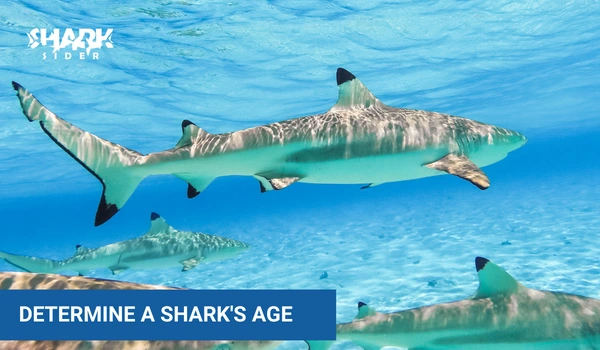
The sharks that live longest
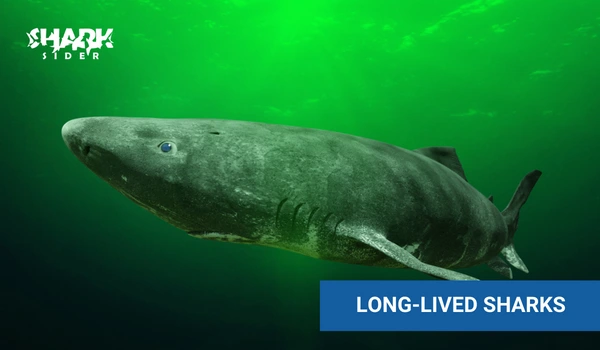
The Greenland shark is not merely the oldest shark; it is the oldest vertebrate anyone has measured. The 2016 study that established this sampled 28 females caught as bycatch and dated their eye lens nuclei, returning a central estimate near 390 years for the largest animal, with an uncertainty range wide enough to place it anywhere from roughly 270 to over 500. Even the bottom of that range beats every other backboned animal on record. The same work implied the species does not reach sexual maturity until around 150 years old.
Behind it sit the spiny dogfishes, which are small — an adult Pacific spiny dogfish is a metre or so — and break the size rule completely by living past 80 years in cold northern water. Their gestation runs close to two years, the longest reliably documented in any shark.
The great white now sits in the 70-year bracket. The basking shark is generally put at about 50, and the whale shark at somewhere between 50 and 100 depending on how much modelling you accept beyond the validated figures. That last uncertainty matters: the round numbers quoted for whale sharks come from growth curves extrapolated past the oldest animal actually measured, not from a dated tissue sample.
The short-lived end of the scale
Most of the more than 500 described shark species are small, and small sharks die young. The sharpnose sharks, the smoothhounds, the smaller catsharks and the bonnetheads generally run 10 to 15 years, mature in two or three, and produce litters every year rather than every second or third year. They are the sharks that behave most like ordinary fish, and they are the only ones that recover quickly from heavy fishing.
The reproductive machinery behind those numbers also needs correcting, because the older version of this article described mother sharks protecting their young and teaching them to hunt. No shark does either. Pups are on their own from the moment they are born or hatch; what looks like care is nursery habitat, shallow water that adults avoid and juveniles use as shelter. Gestation is likewise not two years as a rule — most species carry young for 9 to 12 months, and the near-two-year pregnancies belong to a handful of cold-water sharks. The range of strategies is set out in how sharks reproduce.
Why a long life makes a shark easy to lose
Lifespan is not a piece of trivia in fisheries management; it is the number that decides whether a population can be fished at all. An animal that matures at 150 years and gives birth to a handful of pups cannot replace adults removed faster than about one generation per century. That is the entire argument behind the protection of the Greenland shark, and a version of it applies to sand tigers, basking sharks and the large requiem species.
It also explains why shark populations crash quickly and rebuild slowly, a pattern covered in why sharks are endangered. The biology that lets a shark live for decades — slow growth, late maturity, small broods — is exactly the biology that makes it vulnerable, and the species with the most impressive ages are almost always the ones in the worst trouble. For the physical side of that slow build, see shark anatomy, how much a shark weighs, and the full list in the shark species guide.
Frequently asked questions
What is the longest living shark?
The Greenland shark, by a margin no other species comes close to. Radiocarbon dating of eye lens tissue from 28 females returned a central estimate of about 390 years for the largest animal in the sample, with the uncertainty spanning roughly 270 to over 500 years. It is the longest-lived vertebrate known to science.
How long do great white sharks live?
Around 70 years for the oldest individuals measured. A 2014 study used the radiocarbon signature from 1950s and 1960s nuclear testing to check the growth bands in white shark vertebrae and aged one male at 73. Before that work the species was widely listed at roughly 30 years, which turned out to be a serious underestimate.
How do scientists work out how old a shark is?
They cut a vertebra and count the paired growth bands in the calcified core, then check that count against a known date marker. The usual marker is the radiocarbon spike left in ocean water by atmospheric bomb tests. Greenland sharks have vertebrae too soft to band, so their ages come from proteins in the eye lens instead.
Do whale sharks really live for 100 years?
Possibly, but it has not been shown. Bomb radiocarbon work published in 2020 validated whale shark ages of 50 and 35 years, and the higher figures come from extending growth curves past the oldest animal anyone has measured. Treat 100-plus as a modelled projection rather than a recorded lifespan.
Which sharks have the shortest lives?
The small coastal species. Sharpnose sharks, bonnetheads, smoothhounds and most catsharks live around 10 to 15 years, mature within two or three, and breed annually. Their short lives are the reason these populations rebound from fishing pressure far faster than the large, slow-growing sharks do.
Why do deep-water sharks live longer?
Because the deep sea is cold and poor in food. Low temperature slows metabolism, growth and the accumulation of cellular damage, while a thin food supply means an animal cannot grow fast even if it wanted to. The result is a shark that matures late, reproduces rarely and stretches its life over decades or centuries.
Do mother sharks look after their pups?
No. Sharks provide no parental care at all after the pups are born or the eggs hatch, and adults of some species will eat juveniles of their own kind. What is sometimes mistaken for care is nursery habitat: shallow bays and mangrove edges where the young are relatively safe because large adults do not go there.
Does a shark's size predict how long it lives?
Usually, but not reliably. Across the group, larger sharks grow more slowly, mature later and live longer, so size is a decent first guess. The spiny dogfishes break the pattern completely, reaching only about a metre while living past 80 years, because cold water matters at least as much as body size.
References

A small team focused on researching sharks and making marine biology easy to understand. Every page is reviewed against current species records and the SharkSider attack database, and updated when new incidents or research appear.
Published March 7, 2023 · Last updated September 23, 2026 · Filed under FAQ.