
Yes, there are sharks in Alaska, and three of them are common: the salmon shark, the Pacific sleeper shark and the Pacific spiny dogfish. Six more have confirmed but occasional records in the Gulf of Alaska and the Inside Passage, among them the bluntnose sixgill, the blue shark and, very rarely, the white shark and basking shark.
Nobody has ever been killed by a shark in Alaska, and almost nobody has been hurt. The SharkSider database holds a single record for the state, from Prince William Sound in August 2000: a researcher bitten on the leg by a salmon shark that had been caught in a net, a provoked incident that the shark cannot be blamed for. In water that seldom rises above 12 °C, the animals and the people simply do not meet.
- Shark species in this guide9 confirmed (3 common)
- Commercial shark fishingNo directed fishery (bycatch only)
- Most seen from a boatSalmon shark, Prince William Sound
- Signature encounterSalmon sharks at Port Gravina, Jul–Aug
- Incidents in the database1 (2000), 0 fatal
- Water temperature1–14 °C (34–57 °F)

On this page
- Where Alaska's sharks live and how they survive the cold
- List of the different types of sharks in Alaska
- Where to see sharks in Alaska
- Best time of year to see sharks in Alaska
- Shark attacks in Alaska: what the record actually shows
- Is it safe to be in the water in Alaska?
- Shark conservation in Alaska
- Sharks in nearby states and waters
- Frequently asked questions
- References
Where Alaska's sharks live and how they survive the cold
Alaska has more coastline than every other state combined, roughly 6,600 miles of it before you count the islands, and it faces three different seas. The Gulf of Alaska, from the Inside Passage round to the Aleutians, is where nearly all of the state's sharks live. The Alaska Coastal Current sweeps fresh, nutrient-laden water anticlockwise around the gulf, the summer sun drives one of the most intense plankton blooms on the planet, and the result is the salmon, herring, pollock and squid that support the sharks along with the whales, sea lions and seabirds. The Bering Sea to the north is colder and shallower, and its sharks are almost entirely sleeper sharks and dogfish on the outer shelf. The Chukchi and Beaufort seas of the Arctic coast are too cold for anything but the occasional sleeper shark under the ice edge.
Surviving here takes one of two strategies. The salmon shark uses heat: a network of blood vessels in its swimming muscles and gut traps the warmth it generates, and researchers in Prince William Sound have measured core temperatures above 25 °C in a shark swimming through 6 °C water. That lets it chase salmon at speed in water that would leave a blue shark torpid, and it is why salmon sharks are the only large predatory sharks that thrive this far north. The Pacific sleeper shark does the opposite: it stays cold, moves slowly, and lives on whatever it can scavenge or ambush in the dark below 300 metres, from halibut and octopus to the remains of seals and even whales. Tagging in Prince William Sound has shown sleepers rising towards the surface at night and dropping to the seabed by day. Below both, the spiny dogfish packs every bay from Ketchikan to Kodiak in schools of hundreds, living slowly, maturing at more than 30 years old and reaching an age of 80 or more.
List of the different types of sharks in Alaska
The table separates the three sharks that any Alaskan angler or deckhand will meet from the six that have confirmed but occasional records, and ends with one species that is asked about constantly and has never been confirmed. Sizes are realistic adult lengths. The risk column is about people in the water, which in Alaska mostly means kayakers, divers and crew; none of these species has ever seriously injured anyone in the state.
| Species | Adult size | Risk to swimmers | Where in Alaska & notes |
|---|---|---|---|
Salmon SharkLamna ditropis | 2–3 m (6.5–10 ft), up to 220 kg | Low | Prince William Sound, Sitka Sound, Kodiak and the whole Gulf, Jun–SepAlaska's flagship shark: warm-blooded, fast, and the target of a summer sport fishery. The only Alaskan shark in the incident record, and that was a netted animal biting a researcher. |
Pacific Sleeper SharkSomniosus pacificus | 3–4.4 m (10–14 ft), larger unconfirmed | Low | Deep water of the Gulf of Alaska, Bering Sea and Prince William SoundSlow, cold-bodied scavenger and ambush hunter; common longline bycatch, not the rarity the old page described. Never known to harm a person in the water. |
Pacific Spiny DogfishSqualus suckleyi | 0.9–1.3 m (3–4 ft) | Low | Every bay and inlet from Ketchikan to Kodiak; Yakutat and Kachemak Bay in huge numbersThe state's most numerous shark and its longest-lived, reaching 80 years or more. Mildly venomous dorsal spines are the only hazard. |
Bluntnose Sixgill SharkHexanchus griseus | 3–4.8 m (10–16 ft) | Low | Deep channels of Southeast Alaska and the Inside PassageOccasionally hooked by halibut anglers near Juneau and Sitka. The earlier rating of moderately aggressive had no Alaskan basis. |
Blue SharkPrionace glauca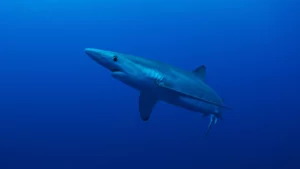 | 2–3 m (7–10 ft) | Low | Offshore Gulf of Alaska on the warmest water of late summerA warm-season visitor at the northern edge of its range, seen by the salmon trollers and longliners far from shore. |
Great White SharkCarcharodon carcharias | 4–5.5 m (13–18 ft) | Low | A handful of confirmed records from the Gulf of Alaska and KodiakRare enough that each record is a scientific note. No Alaskan incident of any kind; the water is at the very limit of what the species tolerates. |
Basking SharkCetorhinus maximus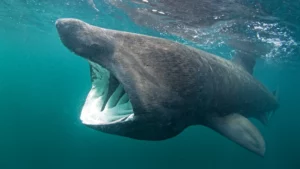 | 6–8 m (20–26 ft) | Low | Rare summer visitor to Southeast Alaska and the northern GulfA plankton feeder, recorded a few times in the last century and now almost never seen. |
Common Thresher SharkAlopias vulpinus | 3–5 m (10–16 ft) including the tail | Low | Rare stray into the Gulf of Alaska in warm yearsA whip-tailed hunter of small fish, far north of its usual range whenever it is seen here. |
Brown CatsharkApristurus brunneus | 0.5–0.7 m (1.5–2.3 ft) | Low | Deep mud slopes of the Gulf of Alaska and SoutheastA small egg-laying deep-water shark known only from trawl surveys. Harmless. |
Greenland SharkSomniosus microcephalus | 3–5 m (10–16 ft) | n/a | Not confirmed in AlaskaAssumed by many to live off Alaska's Arctic coast; every sleeper shark identified from the Beaufort and Chukchi seas so far has been the Pacific species. |
The earlier version of this page rated the bluntnose sixgill as moderately aggressive on the strength of a single provoked bite somewhere in the world; it is a slow, deep-water animal that has never harmed anyone in Alaska. It also described the sleeper shark as rarely seen because it is hard to catch, which has it backwards: Pacific sleeper sharks are among the most common large bycatch on halibut and sablefish longlines in the Gulf of Alaska and the Bering Sea, with thousands hooked and released every year. The animals people ask about most, bull sharks, tiger sharks, hammerheads and makos, have no Alaskan record; the water is 10 to 20 degrees too cold for any of them. The Greenland shark of the Arctic Atlantic is often assumed to reach Alaska's Arctic coast, but every sleeper shark identified from the Beaufort and Chukchi seas so far has been the Pacific species.
Where to see sharks in Alaska
There is no shark diving in Alaska and no aquarium with a big shark tank, so seeing one means a boat. The good news is that the boats that find them are the same charters and wildlife cruises that most visitors take anyway.
- Port Gravina and Port Fidalgo, Prince William SoundThe salmon shark capital of the world. From late June to early September, and peaking in late July and August, adult salmon sharks gather in these two fjords on the eastern side of the Sound to feed on returning pink and chum salmon. Charters out of Valdez and Cordova troll or drift herring for them; on calm mornings you can watch dorsal fins cutting through the salmon schools from the deck.
- Resurrection Bay and SewardThe gateway to Kenai Fjords, where wildlife cruises and halibut boats see salmon sharks in July and August and occasionally bring up a sleeper shark from the deep water off Cape Resurrection. The Alaska SeaLife Center in town has no shark tank but is the best place in the state to understand the food web the sharks sit on top of.
- Kachemak Bay and HomerHome port of the state's shark research programme and a bay full of spiny dogfish, which anglers on the Homer Spit catch by the dozen. Salmon sharks pass the bay mouth in summer, and sleeper sharks are hooked by halibut charters working the deep water of lower Cook Inlet.
- Kodiak IslandThe halibut fleet out of Kodiak hooks more sleeper sharks than any other charter port, most of them released at the side of the boat after a slow, heavy fight. Salmon sharks feed on the island's huge salmon runs, and Kodiak's Steller sea lion haul-outs are where Alaska's few white shark sightings have come from.
- Sitka SoundSoutheast Alaska's best salmon shark water. In July the sharks follow the salmon into the Sound and charters see them breaching beside the boat. The deep channels of the Inside Passage nearby produce bluntnose sixgills for anglers fishing the bottom.
- Yakutat BayA quiet bay on the northern Gulf coast where spiny dogfish are so abundant that they are a nuisance to salmon anglers, and where salmon sharks work the mouth of the Situk River during the runs.
- Juneau, Lynn Canal and the Inside PassageDeep, sheltered water where halibut anglers regularly hook sixgills and sleeper sharks, and dogfish are everywhere. The ferry and cruise-ship route through the Inside Passage is the easiest way to be on the water above them, though sightings from deck are rare.
- Dutch Harbor and the Bering SeaNot a tourist stop, but the fishing capital of the state and the place where the longline and trawl fleets meet Pacific sleeper sharks by the thousand each year. Crew photographs from the Bering Sea are where most of the world's images of large sleeper sharks come from.
If you want one shark encounter in Alaska, book a salmon shark charter from Valdez in the last two weeks of July. The fish are big, fast and close to the surface, the scenery is absurd, and a released shark swimming away beside the boat is the best view of a lamnid shark you can get without a cage anywhere.
Best time of year to see sharks in Alaska
Alaska's shark season is short and it is decided by the salmon.
- Late June to early September: the only time most visitors will see a shark. Salmon sharks converge on Prince William Sound, Sitka Sound and the Kodiak runs as the pinks and chums come home, with the peak in late July and August. Blue sharks reach the northern Gulf on the warmest water of the year in August. Dogfish crowd the bays and river mouths.
- May and June: the sharks are arriving. Salmon sharks tagged by state biologists spend the winter as far south as Baja California and Hawaii and swim back north as the water warms, appearing off Southeast Alaska first.
- October to April: the salmon sharks have gone south, the Gulf is a storm sea and only the residents remain: sleeper sharks in the deep, dogfish in the sheltered inlets and the occasional sixgill in the Inside Passage. The halibut fleet still hooks sleepers all winter.
Sea temperature runs from around 1 °C (34 °F) in the Bering Sea in March to 12–14 °C (54–57 °F) at the surface of Prince William Sound in a warm August. Nobody swims in it for pleasure, and the wetsuit-and-drysuit divers who do go in stay close to shore, which is the simplest reason Alaska's incident list is one entry long.
Shark attacks in Alaska: what the record actually shows
Alaska has never had a fatal shark attack and has never had an unprovoked one. The SharkSider database holds one record for the state, and the full list, updated weekly, is on our shark attacks in Alaska page. The only recorded incident is shown here:
- 2000 · Prince William SoundConducting research — Leg bitten by netted shark provoked incidentSalmon shark
The one entry is instructive precisely because it is so unlike a beach attack. On 27 August 2000 a researcher working in Prince William Sound was bitten on the leg by a salmon shark that had been caught in a net for study. The animal was restrained, stressed and within reach of a human leg, and it did what any three-metre predator does in that situation. That is a provoked incident, the kind that fills the fishing-boat pages of every state's record, and it is the only time an Alaskan shark has put a mark on a person in the database.
The reasons are obvious once you look at the water. Alaska's only large predatory shark, the salmon shark, is built to eat 60-centimetre fish at speed and has no history of attacking people anywhere in its range, which stretches from Japan to California. White sharks, which cause almost every serious bite on the rest of the West Coast, reach Alaska so rarely that the handful of records are scientific curiosities. And the human side of the equation barely exists: the state's swimmers are counted in dozens, its surfers in hundreds at Yakutat and Sitka, and all of them wear thick neoprene in water that would incapacitate an unprotected person in minutes. The people who actually handle Alaskan sharks are deckhands and biologists, and the advice that matters here is theirs: never put a limb near the head of a hooked or netted shark, cut the leader rather than reaching for the hook, and remember that a sleeper shark lying still on deck is not dead.
Is it safe to be in the water in Alaska?
Sharks are the last thing to worry about. Alaska's sea is cold enough that hypothermia, not wildlife, is the hazard for anyone who falls in, and the animals that do occasionally threaten people, Steller sea lions around fish-cleaning stations and the odd curious orca, are mammals. There is no record of a shark approaching a swimmer, kayaker or paddleboarder in the state. Divers who work the kelp and walls of Southeast Alaska and Prince William Sound see dogfish constantly and, very occasionally, a sixgill or a sleeper shark at the edge of the torchlight; both are slow, incurious animals that will drift away if left alone.
The people who need to think about Alaskan sharks are the ones with a rod in their hands. A salmon shark on a line is a fast, heavy, warm-bodied fish with a mouth full of narrow, hooked teeth designed to hold slippery salmon, and it will thrash on deck long after it seems beaten. Charter crews use a tail rope and a long-handled dehooker and keep everyone else behind the wheelhouse, and the released fish swim off strongly. Sleeper sharks look inert but can clamp down on a boot or a gaff hand with a bite made for crushing octopus and halibut; leave them in the water and cut the gangion. Dogfish are the everyday nuisance: their two dorsal spines carry a mild venom and go through a glove, and a bucketful of them on a salmon trip is the usual reason for a bandaged finger in an Alaskan harbour.
Shark conservation in Alaska
Alaska's sharks are managed as bycatch rather than as a fishery, and that has been their protection. There is no directed commercial shark fishery in federal waters off the state; the salmon shark, sleeper shark and dogfish are managed as part of the groundfish plans, with the amount that may be kept alongside a target catch capped and most of it discarded. The state allows a sport fishery for salmon sharks, mostly the summer charters out of Valdez, Whittier and Seward, under a strict bag limit of one shark a day and a small annual limit, and it monitors the catch. Shark finning has been illegal on every US vessel since 2000, and the federal ban on the sale of fins that took effect in 2023 closed the last legal market for any Alaskan shark's fins.
The concerns are about information rather than overfishing. Sleeper sharks are caught by the thousand on longlines and nobody knows how many there are, how old they get or how fast they breed; a close relative, the Greenland shark, has been aged at several centuries, and if sleepers are similar then even a modest bycatch could matter. Salmon sharks are counted only where they aggregate, and the state's biologists in Homer have spent two decades tagging them to learn where the Prince William Sound fish spend the winter. Dogfish, which mature at 35 and carry their pups for two years, were fished commercially for liver oil in Southeast Alaska in the 1940s and have never been assessed since. Warming water in the Gulf of Alaska, most dramatically during the 2014–2016 marine heatwave, shifted salmon runs and with them the sharks, and it is the pressure most likely to change this page in the next decade. Our guide to why sharks are endangered explains why slow-growing, late-maturing species like these are the first to suffer when things change.
Sharks in nearby states and waters
Alaska's sharks are the northern end of a fauna that runs down the whole Pacific coast. Canada's British Columbia shares the sixgills, sleepers and salmon sharks of the Inside Passage. Washington is where sixgills come shallow enough for divers to see them, and Oregon and California are where the white shark takes over as the species people worry about. The salmon sharks that leave Prince William Sound in autumn winter as far south as Baja California in Mexico and even the waters around Hawaii, whose tropical shark fauna could not be more different. Across the Bering Strait, Russia's Kamchatka coast holds the same salmon sharks feeding on the same Pacific salmon. Every state we cover is on Sharks in the US, and sharks around the world lists every country.
Frequently asked questions
Are there sharks in Alaska?
Yes. Three species are common: the salmon shark, which gathers in Prince William Sound and Sitka Sound each summer, the Pacific sleeper shark of the deep Gulf of Alaska and Bering Sea, and the spiny dogfish that fills every bay. Six more, including the bluntnose sixgill, blue shark and white shark, have occasional confirmed records.
Has there ever been a shark attack in Alaska?
Only one, and it was provoked. In August 2000 a researcher in Prince William Sound was bitten on the leg by a salmon shark that had been caught in a net for study. There has never been an unprovoked shark attack in Alaska and nobody has been killed by a shark in the state.
Are there great white sharks in Alaska?
Barely. A few confirmed white shark records exist from the Gulf of Alaska and around Kodiak, where Steller sea lion colonies could support one, but there is no population and no incident of any kind. Alaska's water is at the cold limit of what the species can tolerate, and the salmon shark fills its role here.
What is a salmon shark and is it dangerous?
The salmon shark is a warm-blooded relative of the great white that grows to about three metres and keeps its body up to 20 degrees warmer than the sea, which lets it hunt salmon at speed in Alaskan water. It has no history of attacking people anywhere; the only Alaskan bite on record was a netted shark defending itself.
Where can you see salmon sharks in Alaska?
Prince William Sound is the best place in the world. From late June to early September, and especially in late July and August, adult salmon sharks feed on returning salmon in Port Gravina and Port Fidalgo, reached by charter from Valdez or Cordova. Sitka Sound, Resurrection Bay and the runs around Kodiak also produce sightings.
How big do Pacific sleeper sharks get in Alaska?
Confirmed animals reach about 4.4 metres and several hundred kilograms, and crews on Bering Sea longliners regularly report sharks longer than that. They live in deep, cold water across the Gulf of Alaska and Bering Sea, come up as bycatch by the thousand every year, and are slow, sluggish scavengers that have never harmed a person in the water.
Are there sharks in the Arctic Ocean off Alaska?
A few. Pacific sleeper sharks have been recorded in the Chukchi and Beaufort seas, usually under or near the ice edge, and they are the only sharks confirmed there. The Greenland shark of the Arctic Atlantic is often assumed to reach Alaska, but no specimen from the state's Arctic coast has been identified as one.
Is it safe to swim or kayak in Alaska because of sharks?
Sharks are not a factor. No swimmer, diver, kayaker or paddleboarder has ever been approached by a shark in Alaska, and the state's sharks either avoid people or live far too deep to meet them. Cold water is the real danger; immersion in 5 to 10 degree sea disables an unprotected person within minutes.
When is the best time to see sharks in Alaska?
Late July and August, when salmon sharks are packed into Prince William Sound and Sitka Sound behind the pink and chum salmon runs and blue sharks reach the northern Gulf on the year's warmest water. The salmon sharks migrate south in autumn, leaving only sleeper sharks, sixgills and dogfish through the winter.
Can you fish for sharks in Alaska?
Yes, within limits. Salmon sharks are a legal sport fish with a bag limit of one a day and a small annual limit, and summer charters from Valdez, Whittier and Seward target them. There is no directed commercial shark fishery in federal waters off Alaska; sleeper sharks and dogfish are taken only as bycatch, and the sale of shark fins is banned nationwide.
References

A small team focused on researching sharks and making marine biology easy to understand. Every page is reviewed against current species records and the SharkSider attack database, and updated when new incidents or research appear.
Published November 30, 2022 · Last updated September 22, 2026 · Incident data from the SharkSider attack database (1 records for Alaska, 0 fatal).


