
Yes, there are sharks in Turkey, 31 species, but almost none of them near a resort beach. The ones fishermen and divers meet most are the small-spotted catshark, the common smooth-hound (camgöz), the spiny dogfish of the Black Sea, the sandbar shark of Gökova Bay and, offshore, the blue shark and the shortfin mako. The great white is a rare but genuine visitor to the Aegean and the Sea of Marmara.
The SharkSider database holds 11 dated records for Turkey between 1929 and 1967, two of them fatal: a fisherman at San Stefano near Istanbul in 1929 and a spearfisher off Küçükada in Muğla in 1967. Most of the rest are fishing boats bumped or damaged by large sharks in the Sea of Marmara in the 1930s. Nothing has been recorded in the more than fifty years since, through the whole era of mass tourism at Antalya, Bodrum, Marmaris and Fethiye.
- Shark species recorded31 with solid records
- ProtectionWhite, basking, angel, sand tiger and hammerhead sharks banned from catch; Boncuk Cove closed since 2010
- Most seen from the beachSmall-spotted catshark; sandbar sharks in Boncuk Cove
- Signature encounterSandbar sharks at Boncuk Cove, Gökova Bay, in summer
- Incidents in the database11 (1929–1967), 2 fatal; none since 1967
- Water temperatureMediterranean 16–30 °C; Black Sea 7–25 °C

On this page
- Where sharks live around Turkey
- List of the different types of sharks in Turkey
- Where to see sharks in Turkey
- Best time of year to see sharks in Turkey
- Shark attacks in Turkey: what the record actually shows
- Is it safe to swim and snorkel in Turkey?
- Shark conservation in Turkey
- Sharks in neighbouring waters
- Frequently asked questions
- References
Where sharks live around Turkey
Turkey's 8,300 km of coast runs through four seas that could hardly be more different, and the shark list changes completely from one to the next. The Black Sea is half as salty as the Mediterranean and lifeless below about 150 m, where the water turns to hydrogen sulphide. Only a few hardy sharks tolerate it: the spiny dogfish, known everywhere on the coast as köpek balığı, the small-spotted catshark and, rarely, a smooth-hound or a thresher that has wandered in through the Bosphorus. Turkish and Soviet trawlers built an entire fishery on Black Sea dogfish through the twentieth century, and the species has never recovered.
The Sea of Marmara is the mixing bowl between the Black Sea and the Aegean, with a lens of fresh water on top and salty Mediterranean water beneath. Until the 1960s it held large sharks in surprising numbers: great whites were caught by Istanbul fishermen off Yeşilköy, Ahırkapı and the Princes' Islands, sandbar sharks were common, and angelsharks lay in the sand of the Gulf of İzmit. Pollution and overfishing have hollowed it out, and the mucilage outbreak of 2021 showed how sick it has become, but sandbar sharks and dogfish are still caught, and a white shark still turns up in a Marmara net every decade or so.
The Aegean is where most of Turkey's shark science happens. The bays between Çanakkale and Marmaris, especially Edremit, İzmir, Güllük and Gökova, are shallow, productive and full of the sand and seagrass that coastal sharks use as nurseries. Boncuk Cove in Gökova Bay is the best-known sandbar shark nursery in the Mediterranean. The Mediterranean coast, from Fethiye to the Syrian border, is warmer and poorer but has the deep water of the Antalya Basin close inshore and, at its eastern end, İskenderun Bay, where the Red Sea migrants arriving through the Suez Canal, milk sharks among them, meet the native smooth hammerheads and spinner sharks.
List of the different types of sharks in Turkey
The table lists every shark with a solid record in Turkish waters, drawn from fisheries landings, research surveys, the Boncuk monitoring programme and verified sightings. Sizes are realistic adult lengths rather than the largest fish ever caught. The risk column is about a swimmer or snorkeller at a Turkish beach; for most of these species that is a theoretical question, because they live below 100 m or well offshore. Turkish fishermen call all sharks köpek balığı (“dog fish”), the smooth-hounds and tope camgöz (“glass-eye”), and the sandbar shark kum köpek balığı.
| Species | Adult size | Risk to swimmers | Where in Turkey & notes |
|---|---|---|---|
Sandbar SharkCarcharhinus plumbeus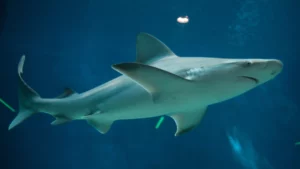 | 1.8–2.4 m (6–8 ft) | Low | Boncuk Cove in Gökova Bay in summer; Marmara, İskenderun BayTurkey's signature shark. Pregnant females and juveniles gather in the protected cove; small mouth, no unprovoked bites recorded in the Mediterranean. |
Blue SharkPrionace glauca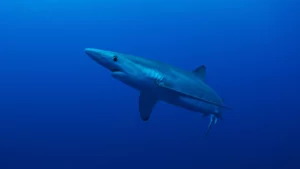 | 2–3 m (7–10 ft) | Low | Open Aegean and Mediterranean beyond the shelf; swordfish longline bycatchThe commonest large shark in Turkish waters. Rarely within sight of a beach. |
Shortfin Mako SharkIsurus oxyrinchus | 2–3 m (7–10 ft) | Moderate | Offshore with tuna and swordfish, summerFast and reactive around hooked or speared fish. Endangered in the Mediterranean; CITES-listed. |
Great White SharkCarcharodon carcharias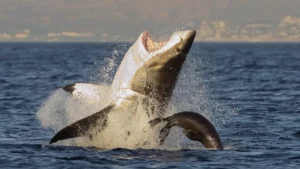 | 4–6 m (13–20 ft) | High | Rare; Sea of Marmara historically, Edremit Bay and the northern Aegean todayWell-documented Turkish records but now perhaps one every few years. Fully protected; no swimmer injury in Turkey has ever been attributed to one. |
Porbeagle SharkLamna nasus | 1.5–2.5 m (5–8 ft) | Low | Cool water of the northern Aegean and Marmara in winter; rareStocky cold-water relative of the white shark. Critically endangered in the Mediterranean. |
Basking SharkCetorhinus maximus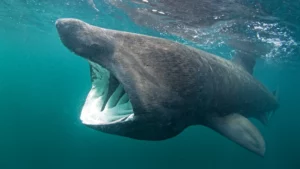 | 6–9 m (20–30 ft) | Low | Surface waters of Saros Bay and the northern Aegean in springPlankton feeder, harmless, protected. Sightings and occasional net entanglements most springs. |
Common Thresher SharkAlopias vulpinus | 3–5 m (10–16 ft) incl. tail | Low | Offshore in all three southern seas; occasional in the MarmaraHalf tail, used to stun schooling fish. Timid with people. |
Bigeye Thresher SharkAlopias superciliosus | 3–4 m (10–13 ft) incl. tail | Low | Deep water of the Antalya Basin; longline bycatchHuge upward-facing eyes for the dark. Never seen by swimmers. |
Spinner SharkCarcharhinus brevipinna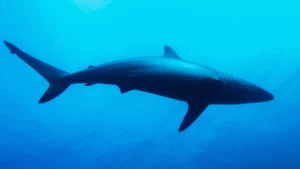 | 2–2.5 m (7–8 ft) | Moderate | İskenderun Bay and the warm Mediterranean coast in summerLeaps and spins after sardines. Has never bitten anyone in Turkey; the handful of cases worldwide involve fishermen and nets. |
Blacktip SharkCarcharhinus limbatus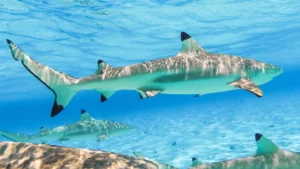 | 1.5–2.5 m (5–8 ft) | Moderate | İskenderun Bay; scattered Aegean recordsThe eastern Mediterranean is its Turkish stronghold. Easily confused with the spinner shark. |
Copper SharkCarcharhinus brachyurus | 2.5–3.3 m (8–11 ft) | Moderate | Rare; a few Aegean and Mediterranean recordsThe bronze whaler of Australian beaches. Present in the Mediterranean but scarce in Turkey. |
Smooth Hammerhead SharkSphyrna zygaena | 2.5–3.5 m (8–12 ft) | Low | İskenderun Bay and offshore Mediterranean; once common, now rareThe only hammerhead with regular eastern Mediterranean records. Catch prohibited in Turkey. |
Milk SharkRhizoprionodon acutus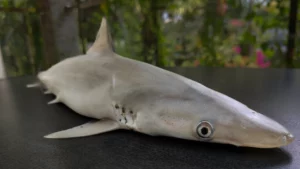 | 0.8–1 m (2.5–3.5 ft) | Low | Shallow sandy coasts of İskenderun and Mersin bays; a Red Sea arrivalSmall, fast, harmless. Turkish landings of this species have grown as the eastern Mediterranean has warmed. |
Small-spotted CatsharkScyliorhinus canicula | 0.6–0.8 m (2–2.5 ft) | Low | All four seas, including the Black Sea; rocky and sandy bottoms from 10 m downThe shark a Turkish snorkeller or diver is most likely to meet. Lays the egg cases found on beaches. |
| NursehoundScyliorhinus stellaris | 1–1.5 m (3–5 ft) | Low | Rocky reefs and caves of the Aegean and Mediterranean; Kaş, SarosLarger and boldly blotched. Divers at Kaş find it asleep in the same caves they explore, and it takes no notice of them. |
Blackmouth CatsharkGaleus melastomus | 0.5–0.7 m (1.5–2.5 ft) | Low | Muddy slopes 200–800 m in the Aegean and Mediterranean; trawl bycatchA small deep-slope catshark with saddle markings and a jet-black mouth lining. |
Common Smooth-houndMustelus mustelus | 1–1.5 m (3–5 ft) | Low | Sandy shelves of the Aegean, Mediterranean and Marmara; the <em>camgöz</em> of the marketFlat crushing teeth for crabs. Timid; a mainstay of Turkish shark landings. |
| Blackspotted Smooth-houndMustelus punctulatus | 0.8–1.2 m (2.5–4 ft) | Low | Same shelves as the common smooth-hound; told apart by black-tipped scalesRestricted to the Mediterranean and nearby Atlantic; fishermen rarely separate it from its relatives. |
Tope SharkGaleorhinus galeus | 1.2–1.8 m (4–6 ft) | Low | Mid-water over the shelf edge, Aegean and MarmaraAlso sold as camgöz. Critically endangered around the world; Mediterranean boats must release it. |
| Spiny DogfishSqualus acanthias | 0.8–1.2 m (2.5–4 ft) | Low | The Black Sea's shark; also Marmara and the northern AegeanKöpek balığı. A spine before each dorsal fin. Fished industrially for decades; endangered in the region. |
| Longnose SpurdogSqualus blainville | 0.7–0.9 m (2.5–3 ft) | Low | Shelf and upper slope, 100–400 m, Aegean and MediterraneanThe warmer-water dogfish; landed with the smooth-hounds. |
Bluntnose Sixgill SharkHexanchus griseus | 3–4.5 m (10–15 ft) | Low | Deep slopes of the Antalya Basin and the Aegean, usually below 300 mThe largest shark regularly caught in Turkey. Six gill slits, a slow deep-water lifestyle and a night-time climb toward the surface; bathers never encounter it. |
Sharpnose Sevengill SharkHeptranchias perlo | 0.8–1.2 m (2.5–4 ft) | Low | Deep water 300–700 m; bottom longlinesSmall and big-eyed with seven gill slits. Its reputation for aggression rests entirely on how it thrashes when hauled onto a deck. |
| AngelsharkSquatina squatina | 1.2–1.8 m (4–6 ft) | Low | Sandy bottoms of the Aegean bays and the Marmara; now very rareFlat ambush hunter, once common in the Gulf of İzmit. Critically endangered; catch prohibited, along with the smoothback angelshark (Squatina oculata). |
Sawback AngelsharkSquatina aculeata | 1.2–1.5 m (4–5 ft) | Low | Deeper muddy bottoms 30–500 m; İskenderun Bay recordsThe deepest-living of the three Mediterranean angelsharks. Its only defence is a snap at whatever steps on it or lifts it. |
Gulper SharkCentrophorus granulosus | 0.8–1.2 m (2.5–4 ft) | Low | Slopes below 300 m; deep longlines off AntalyaHuge green eyes and a reproductive rate so low that a fished population takes decades to rebuild. |
Kitefin SharkDalatias licha | 1–1.5 m (3–5 ft) | Low | Deep water 200–1,000 m, Aegean and MediterraneanChocolate-brown with thick lips and a soft blue glow; no larger light-producing vertebrate is known. |
Velvet Belly LanternsharkEtmopterus spinax | 0.3–0.45 m (1–1.5 ft) | Low | Slopes below 200 m; the most abundant shark in deep trawl surveysBlue-green light organs line its underside. Trawlers discard it in vast numbers. |
Angular RoughsharkOxynotus centrina | 0.6–1 m (2–3 ft) | Low | Muddy bottoms 60–600 m, Aegean and MediterraneanTriangular body, sail-like fins. Critically endangered in the Mediterranean, where keeping one is prohibited. |
Smalltooth Sand Tiger SharkOdontaspis ferox | 2.5–3.5 m (8–12 ft) | Low | Deep rocky slopes; scattered Aegean and Mediterranean recordsBulky and ragged-toothed but placid. Catch prohibited in Turkey. |
Sand Tiger SharkCarcharias taurus | 2.2–3 m (7–10 ft) | Low | Very rare; historical Aegean and Levantine recordsAlmost gone from the Mediterranean. Docile despite the teeth; catch prohibited. |
What is not here matters as much. The bull shark and the tiger shark do not occur in the Mediterranean; any “tiger shark” reported off Antalya is a sandbar or dusky shark. Reef sharks, oceanic whitetips and whale sharks belong to the Red Sea, a thousand kilometres of canal and sea away. The great white shark, by contrast, is real: Turkey has some of the best-documented Mediterranean records outside Italy and Tunisia, from the Marmara catches of the 1930s to 1950s to individuals netted in Edremit Bay and the northern Aegean in recent decades. It is rare, it is protected, and it has never been linked to a swimmer's injury in Turkey.
Where to see sharks in Turkey
Turkey has one site where sharks are close to guaranteed in season, a handful of dive areas where the small species are easy to find, and a few places whose shark history is worth knowing even if the animals are gone. These are the sites where sharks are recorded most consistently.
- Boncuk Cove, Gökova Bay (near Marmaris)A small, shallow cove on the southern shore of Gökova Bay where pregnant female sandbar sharks gather from late spring to early autumn and juveniles spend their first years. Fishing has been banned here since 2010 and boats are kept out; sharks are watched from the shore and monitored by researchers, not dived with.
- Kaş and Kekova, AntalyaTurkey's diving capital, with walls and canyons dropping past 40 m and the clearest water on the coast. Nursehounds and catsharks under ledges, occasional smooth-hounds over sand, and the deep water offshore where blue sharks follow the tuna.
- Saros Bay, ÇanakkaleA deep, cold, clean gulf on the European side of the Dardanelles, protected as a special environmental area. The clearest diving in the northern Aegean, with catsharks, angelshark records and, in spring, basking shark sightings from fishing boats.
- Ayvalık and Edremit Bay, northern AegeanProductive bays where the country's most recent great white records come from, usually a large female tangled in a set net. Divers around the Ayvalık islands see catsharks and smooth-hounds; the big fish are for the fishermen.
- İskenderun Bay, eastern MediterraneanThe warm, shallow bay at the far eastern end of the coast is the richest carcharhinid ground in Turkey: smooth hammerheads, spinner, blacktip and sandbar sharks, and milk sharks that arrived from the Red Sea. Seen mostly in trawl and gillnet landings at İskenderun and Karataş.
- Sea of Marmara and the Princes' Islands, IstanbulThe historic ground. White sharks were landed at Yeşilköy and Ahırkapı in the 1930s and 1950s, and most of Turkey's incident record comes from fishing boats here. Today sandbar sharks and dogfish remain; ferry passengers occasionally see a fin in summer.
- Black Sea coast: Şile, Sinop and TrabzonThe spiny dogfish stronghold. Small boats still land köpek balığı and catsharks for the local markets, and the species is the only shark most Black Sea Turks have ever seen.
- Antalya AquariumOne of the world's longest tunnel aquariums, on the Konyaaltı side of the city, with several shark species on display. The one place in Turkey where a shark sighting is guaranteed any day of the year.
If you want to see a wild shark, plan around Boncuk Cove in June to September, and go with the local guides rather than trying to swim in: the cove is a nursery, access is controlled, and the sharks are watched from the shore and from a viewing platform. For divers, Kaş and Saros are the places where catsharks and nursehounds are a routine sight, and a bluewater fishing charter out of Bodrum or Kaş is the only practical way to meet a blue shark or a mako.
Best time of year to see sharks in Turkey
Turkish waters swing widely with the seasons, and each sea has its own calendar.
- May to September, Aegean and Mediterranean: surface water rises from 20 °C to 28–30 °C on the Antalya coast. This is the sandbar shark season at Boncuk Cove, with the females arriving in late spring and the peak in July and August; it is also when blue sharks and makos are on the swordfish grounds and spinner and blacktip sharks move into İskenderun Bay. The historical white shark records cluster in summer too.
- October to December: still warm on the south coast, the wind drops and diving at Kaş and Saros is at its best. Catsharks and nursehounds are active on the walls, and smooth-hounds are landed in numbers as they move offshore.
- January to March: the Mediterranean cools to 16–17 °C, the Marmara to 8–9 °C and the Black Sea to 7 °C. Spiny dogfish are at their most abundant in Black Sea and Marmara landings, and porbeagles occasionally appear in the northern Aegean.
- April and May: the spring bloom fills the northern Aegean with plankton. Basking shark sightings from Saros Bay and the northern Aegean, and the season when white sharks have most often been caught in Edremit Bay.
The Black Sea's low salinity and cold winters keep almost every Mediterranean shark out for good; the Suez Canal, at the other end of the country, is letting Red Sea species in. Turkey's shark list is being rewritten at both ends.
Shark attacks in Turkey: what the record actually shows
Turkey's incident list is short, old and concentrated in one place. SharkSider tracks every case on the shark attacks in Turkey page. The database holds 11 dated records between 1929 and 1967, two of them fatal, plus one older entry: a swimmer killed at Yumurtalık near Adana in 1848. These are the six most recent (the full list, updated weekly, is on the attacks page):
- 1967 · Kucukada Island, Mugla ProvinceSpearfishing — FatalSpecies not identified · fatal
- 1962 · Ucagiz, Antalya Province — No injury Species not identified · not fatal
- 1961 · ?nciralti Beach, ?zmir, AnatoliaSwimming — Left leg injuredSpecies not identified · not fatal
- 1959 · Off Mezitli, Mersin Province — Leg injuredSpecies not identified · not fatal
- 1958 · Constantinople, Ahirkapi coastFishing — Boat damagedSpecies: White shark · not fatal
- 1938Fishing — Injured by harpooned shark provoked incidentSpecies not identified · not fatal
Read together, the records tell a clear story. Six of the eleven involve fishing boats, most of them in the Sea of Marmara off Istanbul, between 1929 and 1958: a boat rammed at Yeşilköy in 1930, an encounter at the Haydarpaşa jetty in 1934, a harpooned fish that injured its captor in 1938, a white shark that damaged a boat off Ahırkapı in 1958, and the only Marmara death, a fisherman lost when his boat was attacked off San Stefano in January 1929. This was the last era in which large sharks, white sharks among them, were common enough around Istanbul for fishermen to meet them regularly; several were landed and photographed on the quays. The 1937 Istanbul swimming entry is marked invalid in the database, meaning no shark was involved.
Swimmers appear twice, both non-fatal: a leg injury off Mezitli near Mersin in 1959 and another at İnciraltı beach in İzmir in 1961. Neither species was identified, and a 1962 entry from Üçağız near Kaş records no injury at all. The final entry, and the second fatality, is a spearfisher killed off Küçükada in Muğla in July 1967, the classic combination of a diver with speared fish in deep Aegean water. Since then the record is empty: fifty-plus years, tens of millions of tourists at Antalya, Alanya, Bodrum, Marmaris and Fethiye, and not a single confirmed shark injury. The usual precautions apply as they do anywhere, and in Turkey the only one that has ever mattered is the spearfisher's rule: do not carry bleeding fish on your body in open water.
Is it safe to swim and snorkel in Turkey?
Yes. Sharks have not injured anyone in Turkish waters since 1967, and the hazards that actually send tourists to hospital are the sun, rip currents on the Black Sea beaches, jet-ski and boat traffic in crowded bays, sea urchins on rocky entries and, in the last decade, the venomous lionfish and the toxic silver-cheeked toadfish spreading up the Mediterranean coast from the Suez Canal. Lifeguards on the resort beaches flag currents; none has ever needed a shark flag.
The sharks a snorkeller could actually meet are the small-spotted catshark and the nursehound, both of which lie on the bottom by day and swim off when approached, and, in Boncuk Cove, the sandbar shark, which is watched from the shore rather than swum with. Sandbar sharks are heavy-bodied but small-mouthed and have no record of unprovoked bites in the Mediterranean; the females in the cove are there to give birth and ignore people entirely. Divers at Kaş or Saros who meet a passing smooth-hound will see a shape disappear.
The great white deserves respect but not planning: it is too rare in modern Turkish waters to change where you swim. If you spearfish, the two situations that have produced injuries around the Mediterranean are a bleeding catch on a stringer and a long surface swim at dusk; the 1967 Muğla case fits the first exactly. If you sail, swim near the boat in daylight and keep clear of anywhere fishermen are cleaning their catch.
Shark conservation in Turkey
Turkey is not in the EU, so its shark rules are its own, set through the Ministry of Agriculture and Forestry's commercial fishing notifications and its commitments under the Barcelona Convention and the GFCM, the Mediterranean fisheries body. Catching, landing or selling the great white, the basking shark, the three Mediterranean angelsharks, the sand tiger, the smalltooth sand tiger and the hammerheads is prohibited, and fishermen who net one are required to release it. Boncuk Cove has been closed to all fishing since 2010 as part of the no-fishing zones of the Gökova Bay Special Environmental Protection Area, the first Mediterranean nursery protected specifically for a shark, and its sandbar sharks are counted every summer by researchers and volunteers.
The pressures are the same as everywhere in the region and, in the Black Sea and Marmara, worse. Spiny dogfish were fished industrially for decades and are now endangered; the Marmara has lost most of its large sharks to pollution, trawling and the collapse of its food web; and smooth-hounds, catsharks and dogfish are still landed and sold legally across all four seas, often mislabelled. Bottom trawling remains legal in much of the Aegean and Mediterranean, and blue sharks are taken by the hundred on swordfish longlines. The IUCN's Mediterranean assessment lists more than half of the basin's sharks and rays as threatened, and the species that were common in Turkish waters a century ago, the angelsharks and the smooth hammerhead, are now critically endangered.
The Boncuk project shows what focused protection can do, and the Turkish Marine Research Foundation and university teams in İzmir, Istanbul and Antalya now run sighting networks that anyone can report to. If you visit, choose fishing charters that release sharks, never buy köpek balığı or camgöz from a market, and report any angelshark, basking shark or white shark you see or photograph. To understand why the Mediterranean has lost so many of its sharks, see our page on why sharks are endangered.
Sharks in neighbouring waters
Turkey's neighbours share its seas and its sharks. Greece, across the Aegean, has the same coastal species and the longest historical incident list in the eastern Mediterranean, most of it from the 1940s to 1960s. Cyprus, 70 km off the south coast, has a shorter list and a single record from 1901. Israel and Egypt lie at the far end of the Levantine coast, where dusky and sandbar sharks gather in winter and the Red Sea begins. On the Black Sea, Bulgaria and Russia share Turkey's spiny dogfish and catsharks, and very little else. The rest of the Mediterranean and beyond is covered in our sharks around the world index.
Frequently asked questions
Are there sharks in Turkey?
Yes. Thirty-one species have solid records across Turkey's four seas, but most are small bottom sharks such as catsharks, smooth-hounds and spiny dogfish, or deep-water species. Sandbar sharks gather in Boncuk Cove near Marmaris each summer, blue sharks and makos live offshore, and the great white is a rare visitor to the Aegean and Marmara.
Have there been shark attacks in Turkey?
Very few. The SharkSider database lists 11 dated records between 1929 and 1967, two fatal: a fisherman near Istanbul in 1929 and a spearfisher off Muğla in 1967. Most of the rest are fishing boats damaged by large sharks in the Sea of Marmara in the 1930s. No incident of any kind has been recorded since 1967.
Are there great white sharks in Turkey?
Yes, rarely. Turkey has some of the best-documented great white records in the eastern Mediterranean, from fish landed at Istanbul in the 1930s and 1950s to individuals netted in Edremit Bay and the northern Aegean in recent decades. Sightings now come perhaps once every few years, the species is fully protected, and none has ever injured a swimmer in Turkey.
Are there sharks in Antalya, Bodrum, Fethiye and Marmaris?
Yes, but not the kind that matter to swimmers. Catsharks and nursehounds live on the reefs off all four resorts, blue sharks and makos pass far offshore, and the sandbar shark nursery at Boncuk Cove is a short drive from Marmaris. None of these resort coasts has a shark incident on record.
Is it safe to swim in Turkey?
Yes. No shark has injured anyone in Turkish waters since 1967. The real beach hazards are sunburn, rip currents on the Black Sea coast, boat and jet-ski traffic in crowded bays, sea urchins and the venomous lionfish now spreading along the Mediterranean coast. No Turkish beach has ever needed a shark warning.
Can you see sandbar sharks at Boncuk Cove?
Yes, in season. Pregnant female sandbar sharks and juveniles gather in the shallow cove on Gökova Bay from about late May to September, with the peak in July and August. Fishing and boat entry have been banned since 2010; visitors watch from the shore or a viewing platform with local guides rather than swimming in.
Are there sharks in the Black Sea?
Only a few. The Black Sea's low salinity and lifeless deep water exclude almost every Mediterranean shark. The spiny dogfish, known as köpek balığı, is the Black Sea's shark and was fished industrially for decades; the small-spotted catshark also lives there, and a stray smooth-hound or thresher occasionally enters through the Bosphorus.
What is the most common shark in Turkey?
On the Black Sea coast, the spiny dogfish. In the Aegean and Mediterranean, the small-spotted catshark and the common smooth-hound, the camgöz sold in fish markets. Offshore, the blue shark is the usual longline bycatch, and in deep trawls the velvet belly lanternshark outnumbers everything else.
When is the best time to see sharks in Turkey?
Summer, from June to September, for the sandbar sharks at Boncuk Cove and for blue sharks and makos offshore. October to December offers the calmest, clearest diving at Kaş and Saros Bay, where catsharks and nursehounds are active. Spring brings basking shark sightings to the northern Aegean, and winter concentrates dogfish in the Black Sea and Marmara.
Is shark fishing legal in Turkey?
Partly. Turkey's fishing regulations prohibit catching the great white, basking shark, angelsharks, sand tiger and smalltooth sand tiger sharks and hammerheads, and Boncuk Cove is closed to fishing entirely. Smooth-hounds, catsharks, spiny dogfish and blue sharks are still caught and sold legally, mostly as bycatch of trawlers and longliners.
References

A small team focused on researching sharks and making marine biology easy to understand. Every page is reviewed against current species records and the SharkSider attack database, and updated when new incidents or research appear.
Published December 28, 2022 · Last updated September 21, 2026 · Incident data from the SharkSider attack database (11 records for Turkey, 2 fatal).


