
Yes, there are sharks in Malaysia, and Sabah has some of the best shark diving in Asia. Around 33 species have a solid record in Malaysian waters. The ones you are most likely to meet are the blacktip reef shark, the whitetip reef shark, the grey reef shark, the brownbanded bamboo shark and, at Sipadan and Lankayan, the whale shark; scalloped hammerheads school at Layang-Layang every spring.
The safety record is about as good as it gets. The SharkSider database holds five incidents for Malaysia since 1968 and not one of them was fatal. Two were minor bites from blacktip reef sharks at Pulau Payar, where tourists hand-feed fish, one was a fisherman handling a juvenile nurse shark, one was a scratched hand in 1968, and the fifth is a 2001 case in which human remains were found inside a shark and no attack was ever confirmed.
- Shark species recorded33 confirmed
- Protection statusWhale shark protected since 1999; Sipadan and Tun Mustapha Park no-take
- Most seen from the beachBlacktip reef shark (Perhentian, Tioman, Payar)
- Signature encounterHammerhead schools at Layang-Layang, April–May
- Incidents in the DB5 (1968–2017), 0 fatal
- Water temperature27–30 °C year-round

On this page
- Why Malaysia has so many sharks
- List of the different types of sharks in Malaysia
- Where to see sharks in Malaysia
- Best time of year to see sharks in Malaysia
- Shark attacks in Malaysia: what the record actually shows
- Is it safe to swim and snorkel with sharks in Malaysia?
- Shark conservation in Malaysia
- Sharks in neighbouring waters
- Frequently asked questions
- References
Why Malaysia has so many sharks
Malaysia sits where the shallow Sunda Shelf meets the deep water of the Coral Triangle, and its sharks sort themselves accordingly. The west coast of the peninsula faces the Strait of Malacca: warm, turbid, rarely more than 100 metres deep, lined with mangroves and mudflats. That is bamboo shark, spadenose shark and winghead shark country, a nursery for small coastal species that live on crabs and shrimp and end up in the fish markets of Penang, Perak and Selangor. The east coast of the peninsula faces the open South China Sea, and its granite islands, Perhentian, Redang, Tenggol and Tioman, carry fringing coral reefs where blacktip reef sharks hunt in water a metre deep and whale sharks pass through in late summer.
Then there is Sabah. Malaysian Borneo's east coast is inside the Coral Triangle, the region with the highest marine biodiversity on Earth, and Sipadan is its showpiece: a limestone pinnacle rising 600 metres from the floor of the Celebes Sea with a wall so sheer that pelagic sharks cruise past within metres of the reef. Layang-Layang, an atoll 300 kilometres out in the South China Sea, has the same effect from the other side of Borneo. Deep water next to shallow reef is the single most reliable recipe for sharks anywhere in the tropics, and Malaysia has it in several places.
Protection has been patchy but has improved where it matters most. Sipadan's resorts were removed in 2004 and a daily permit quota keeps the reef quiet; Sabah gazetted Tun Mustapha Park in 2016, at roughly 900,000 hectares the largest marine protected area in Malaysia; and the whale shark has been fully protected under federal fisheries regulations since 1999. Elsewhere, sharks are still fished hard, and Malaysia remains one of the largest importers of shark fin in the world, which is why the reef sharks are thriving at Sipadan and scarce off many ordinary coasts.
List of the different types of sharks in Malaysia
The table lists every species with a solid record in Malaysian waters, from the Strait of Malacca to the Sulu and Celebes seas off Sabah. Sizes are realistic adult lengths, and the risk column refers to swimmers and snorkellers rather than divers who go looking for a species. A few names need untangling. The “leopard shark” of Malaysian dive briefings is the zebra shark (Stegostoma tigrinum), the nurse shark is the tawny nurse shark, the bamboo sharks and coral catshark that Malaysians call yu tokek are five separate species, and the “yu” on a market slab is most often the spot-tail shark or the spadenose shark rather than anything that appears in a dive photograph.
| Species | Adult size | Risk to swimmers | Where in Malaysia & notes |
|---|---|---|---|
Blacktip Reef SharkCarcharhinus melanopterus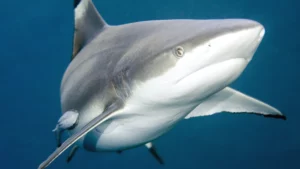 | 1.2–1.6 m (4–5 ft) | Low | Shallow reef flats at Perhentian, Tioman, Payar, Kota Kinabalu and MabulThe shark most visitors see, often in knee-deep water. Responsible for the two minor Pulau Payar bites, both at fish-feeding spots. |
Whitetip Reef SharkTriaenodon obesus | 1.2–1.6 m (4–5 ft) | Low | Ledges and caves at Sipadan, Layang-Layang and MabulRests on the sand by day on nearly every Sipadan dive; hunts in packs at night. Harmless. |
Grey Reef SharkCarcharhinus amblyrhynchos | 1.5–2.5 m (5–8 ft) | Moderate | Sipadan's drop-off and points; Layang-Layang wallsThe signature shark of Sabah's deep sites. Territorial toward crowding divers; no Malaysian incident. |
Silvertip SharkCarcharhinus albimarginatus | 2–2.5 m (7–8 ft) | Moderate | Deep corners of Layang-Layang and SipadanBig, confident reef shark with white-edged fins that approaches divers closely on the walls. |
Scalloped Hammerhead SharkSphyrna lewini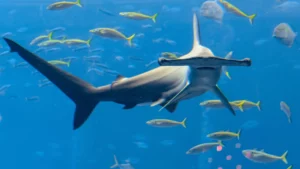 | 2.5–3.5 m (8–12 ft) | Low | Layang-Layang in April–May; Sipadan's deep points at dawnSchools of dozens at Layang-Layang are Malaysia's headline shark encounter. Critically endangered worldwide. |
Great Hammerhead SharkSphyrna mokarran | 3.5–4.5 m (11–15 ft) | Moderate | Rare; deep water off Sabah and the South China SeaOccasional sightings and landings. Retention is restricted under CITES; no Malaysian incident. |
Winghead SharkEusphyra blochii | 1.2–1.6 m (4–5 ft) | Low | Muddy shallows of the Strait of Malacca and the Sarawak coastThe hammerhead with a head almost half its body length. A small coastal species taken in gillnets; endangered. |
Whale SharkRhincodon typus | 6–12 m (20–40 ft) | Low | Lankayan March–May; Tenggol August–October; passing SipadanFilter feeder; harmless. Malaysia's only fully protected shark under federal law since 1999. |
Zebra Shark ('Leopard Shark' locally)Stegostoma tigrinum | 2–2.5 m (7–8 ft) | Low | Sand patches at Sipadan, Perhentian and TiomanAdults spotted, juveniles striped. Completely placid; often approached too closely by snorkellers. |
Tawny Nurse SharkNebrius ferrugineus | 2.5–3.2 m (8–10 ft) | Low | Caves at Sipadan and Layang-Layang; shallows of the west coastThe Indo-Pacific nurse shark. Docile; the 2017 Bagan Lalang bite was a fisherman handling a juvenile. |
Brownbanded Bamboo SharkChiloscyllium punctatum | 0.9–1.2 m (3–4 ft) | Low | Under coral heads on every reef; Mabul, Kapalai, PerhentianThe commonest reef shark for divers in Malaysia. Nocturnal, harmless, and sold as food on the west coast. |
Whitespotted Bamboo SharkChiloscyllium plagiosum | 0.7–0.95 m (2–3 ft) | Low | Rocky reefs and rubble on both coastsSmall, spotted and placid; it can survive out of water for hours, which is why it turns up alive in markets. |
Grey Bamboo SharkChiloscyllium griseum | 0.6–0.75 m (2–2.5 ft) | Low | Muddy shallows of the Strait of MalaccaA plain-coloured bamboo shark of the west coast, landed in large numbers by trawlers. |
| Hasselt's Bamboo SharkChiloscyllium hasseltii | 0.5–0.6 m (1.5–2 ft) | Low | Coastal mud and sand off the peninsula and SarawakOne of the smallest sharks in Malaysia; a regular in market surveys, never in dive logs. |
Slender Bamboo SharkChiloscyllium indicum | 0.55–0.65 m (2 ft) | Low | Inshore shelf of the Strait of MalaccaA slim, spotted bottom-dweller of turbid water; harmless. |
Coral CatsharkAtelomycterus marmoratus | 0.6–0.7 m (2 ft) | Low | Reef crevices at Mabul, Lankayan and Kota Kinabalu on night divesA beautifully marbled little shark that squeezes into holes by day. Harmless. |
Blacktip SharkCarcharhinus limbatus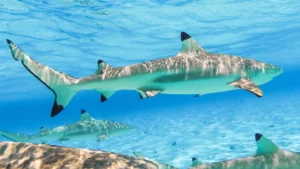 | 1.5–2 m (5–7 ft) | Moderate | Coastal waters of both coasts, more offshore than the reef speciesFast, jumping hunter of schooling fish. Confused with the blacktip reef shark; no Malaysian bite recorded. |
| Spot-tail SharkCarcharhinus sorrah | 1.2–1.6 m (4–5 ft) | Low | Coastal shelf of the peninsula and BorneoOne of the most landed sharks in Malaysia and a staple of the fish markets. Shy in the water. |
Bull SharkCarcharhinus leucas | 2.2–3.2 m (7–11 ft) | High | Rare; estuaries and river mouths of Sabah and SarawakGenuinely recorded but uncommon, and never involved in a Malaysian incident. Avoid murky river mouths at dusk. |
Tiger SharkGaleocerdo cuvier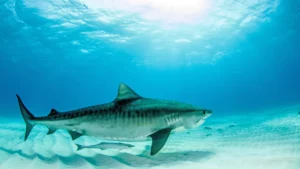 | 3–4.5 m (10–15 ft) | High | Deep water off Sabah; occasional at Layang-Layang and SipadanThe one resident species with a serious bite history elsewhere. Rare on Malaysian reefs; seen by divers, not swimmers. |
Silky SharkCarcharhinus falciformis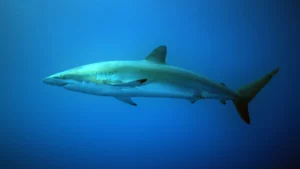 | 2–3 m (7–10 ft) | Moderate | Open South China Sea and Sulu Sea, often with tunaSleek pelagic shark and a major bycatch of the tuna fishery. Occasionally at Layang-Layang. |
| Oceanic Whitetip SharkCarcharhinus longimanus | 2–3 m (7–10 ft) | High | Deep open water far offshore; never on the reefsBold pelagic shark that follows boats. A risk to people adrift in open ocean, irrelevant to beach swimmers. |
Pelagic Thresher SharkAlopias pelagicus | 2.5–3.5 m (8–12 ft) incl. tail | Low | Deep walls of Layang-Layang and Sipadan, early morningRecognised by a tail as long as its body. Harmless; an occasional bonus on the deep corners. |
Shortfin Mako SharkIsurus oxyrinchus | 2.5–3.5 m (8–11 ft) | Moderate | Rare; deep offshore water of the South China SeaTaken occasionally by longliners far from shore. Not a coastal species here. |
Blue SharkPrionace glauca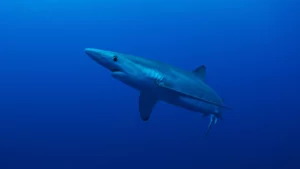 | 2–3 m (7–10 ft) | Low | Rare; oceanic water beyond the shelfA cool-water pelagic shark at the edge of its range in Malaysia; longline bycatch only. |
Milk SharkRhizoprionodon acutus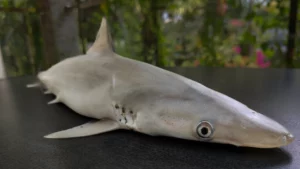 | 0.9–1.1 m (3–3.5 ft) | Low | Inshore waters of the Strait of Malacca and SarawakA slim, schooling coastal shark landed in quantity. Harmless. |
Spadenose SharkScoliodon laticaudus | 0.5–0.7 m (2 ft) | Low | Muddy estuaries and shallows of the west coastThe most numerous shark in Malaysian markets, often sold whole. Tiny and harmless. |
Grey Sharpnose SharkRhizoprionodon oligolinx | 0.6–0.8 m (2–2.5 ft) | Low | Coastal shelf of the peninsula and BorneoAnother small coastal shark of turbid water, common in gillnet catches. |
Whitecheek SharkCarcharhinus dussumieri | 0.7–0.9 m (2–3 ft) | Low | Inshore shelf on both coastsA small requiem shark with a black-tipped second dorsal fin; a regular in the trawl catch. |
Graceful SharkCarcharhinus amblyrhynchoides | 1.2–1.6 m (4–5 ft) | Low | Coastal waters of the peninsula and BorneoA stout coastal shark that looks like a small blacktip. Shy; no incident anywhere in its range. |
Borneo SharkCarcharhinus borneensis | 0.6–0.7 m (2 ft) | Low | Mukah, Sarawak; known from only a few specimensOne of the rarest sharks in the world, rediscovered in a Sarawak fish market in 2004. Critically endangered. |
Zebra Bullhead SharkHeterodontus zebra | 0.8–1.2 m (3–4 ft) | Low | Deeper shelf off Sabah and SarawakA striped, pig-snouted bottom shark that crushes shellfish. Rarely seen alive; harmless. |
Bluntnose Sixgill SharkHexanchus griseus | 3.5–4.8 m (11–16 ft) | Low | Deep slopes off Sabah and Layang-Layang, 200 m and belowA primitive deep-water giant known from deep longline catches; no contact with people. |
Great White SharkCarcharodon carcharias | 4–6 m (13–20 ft) | n/a | Not recorded in MalaysiaIncluded only because it is the most-asked question. Cold-water species; the 2001 'white shark' label is a misidentification. |
The species people ask about most is the great white shark, and it is not here. Great whites need water of roughly 12–24 °C and Malaysian seas never drop below 27 °C; there is no confirmed record, and the 2001 Pangkor case that lists a “white shark” almost certainly involved a tiger or bull shark misidentified by fishermen in the Strait of Malacca. Bull sharks are genuinely recorded but rare, mostly around the river mouths of Borneo, and tiger sharks are deep-water visitors to Sabah rather than reef residents. The Borneo shark, a species known from only a handful of specimens, was rediscovered in the fish market at Mukah in Sarawak in 2004 after decades without a record.
Fish-market surveys add a group of small coastal sharks that a snorkeller will never see but that make up much of the Malaysian catch: the hooktooth shark, snaggletooth shark, sicklefin weasel shark, blackspot shark, hardnose shark and sliteye shark, all from the muddy shelf of the Strait of Malacca and the Sarawak coast.
Where to see sharks in Malaysia
Malaysia's shark sites split by coast and by season. Sabah delivers the big encounters and can be dived most of the year; the peninsula's east-coast islands give easy reef-shark snorkelling from March to October and close during the northeast monsoon. These are the places that reliably produce sharks.
- Sipadan, SabahThe best shark dive in Malaysia and one of the best in Asia. Whitetip reef sharks rest on every ledge, grey reef sharks patrol Barracuda Point and South Point, and scalloped hammerheads, leopard (zebra) sharks and the occasional whale shark come past the drop-off. Around 176 permits a day; book months ahead.
- Layang-Layang, South China SeaA remote atoll 300 km off Kota Kinabalu with walls falling to 2,000 m. Scalloped hammerheads school here in April and May, with silvertips, grey reef sharks and threshers on the deep corners. Open roughly March to August.
- Lankayan, Sulu SeaA sand-cay island north of Sandakan where whale sharks pass through between March and May, and bamboo sharks, coral catsharks and blacktip reef sharks live on the surrounding reefs year-round.
- Mabul and Kapalai, SabahThe muck-diving islands next to Sipadan. Brownbanded and whitespotted bamboo sharks under coral heads, coral catsharks on night dives, and juvenile blacktip reef sharks on the house reefs; the place to see the small sharks that Sipadan's walls hide.
- Tunku Abdul Rahman Park, Kota KinabaluFive islands 15 minutes from the city. Blacktip reef sharks in the shallows off Sapi and Manukan and bamboo sharks under the ledges; an easy first shark for snorkellers.
- Perhentian Islands, TerengganuThe peninsula's best snorkelling reef sharks. Blacktip reef sharks patrol Shark Point and the shallows off Long Beach in knee-deep water at high tide, and leopard (zebra) sharks rest on the sand at Tokong Laut. March to October only.
- Tioman and Tenggol, east coastTioman's Renggis Island has resident blacktip reef sharks a short swim from the beach; Tenggol, further north, is the peninsula's whale shark spot from August to October and has turtles and bamboo sharks on its steep reef.
- Pulau Payar Marine Park, KedahThe reef off Langkawi where juvenile blacktip reef sharks swarm the shallows in front of the visitor platform, drawn by decades of fish feeding. Also the site of two of Malaysia's five recorded bites, both minor and both from that feeding.
If you only have one trip, fly to Tawau for Sipadan and stay on Mabul: the wall gives you hammerheads and grey reef sharks, the house reef gives you bamboo sharks, and the same operators run to Lankayan in whale shark season. Perhentian is the answer for families who want to snorkel with reef sharks from the beach.
Best time of year to see sharks in Malaysia
The water is warm all year, 27–30 °C at the surface everywhere in Malaysia, so the calendar is set by monsoons and by the seasonal movements of a few species rather than by temperature.
- Peninsular east coast, March to October: the only season. Perhentian, Redang, Tioman and Tenggol close from November to February when the northeast monsoon brings rough seas and most resorts shut. Blacktip reef sharks are on the reefs throughout the open season; Tenggol's whale sharks appear from August to October.
- Sabah, year-round: Sipadan is diveable in every month, with the calmest seas and best visibility from April to December. Hammerheads are most reliable on Sipadan's deep points early in the morning from around March to June.
- Layang-Layang, March to August: the resort opens only in this window. Scalloped hammerhead schools peak in April and May; the atoll closes for the rest of the year.
- Whale sharks: Lankayan from March to May, Tenggol from August to October, with sporadic sightings at Sipadan and off Kota Kinabalu in between.
- Strait of Malacca, all year: no season for the coastal species, which are landed at Penang and Perak ports in every month.
Bamboo sharks, coral catsharks and tawny nurse sharks are on the reefs in every month; the difference between seasons for them is visibility, not presence.
Shark attacks in Malaysia: what the record actually shows
For a country with thousands of kilometres of tropical coast and millions of beach visitors, Malaysia's incident list is short and mild. SharkSider tracks every reported case in its own database, updated weekly on the shark attacks in Malaysia page. These are the most recent records; the country has only five in total:
- 2017 · Bagan Lalang Beach, SepangFishing / Wading — Minor injury to thigh, provoked incidentSpecies: Juvenile nurse shark · not fatal
- 2011 · Palau Payar, KedahSnorkeling — Laceration to dorsum of right footSpecies: Blacktip reef shark · not fatal
- 2009 · Pulau Payar Island, Strait of MalaccaFeeding fish — Minor injurySpecies: Blacktip reef shark pup · not fatal
- 2001 · Pulau Pangkor (Pangkor Island), Off the western coast of peninsular MalaysiaUnknown — Bones recovered by fishermen in 300-kg [662-lb] white shark’s gutSpecies: Shark involvement prior to death was not confirmed · not fatal
- 1968 · Pulau Aur, JohorLeaving the water — Hand laceratedSpecies not identified · not fatal
Five records since 1968 and no deaths. Two of the five come from a single place and a single cause: Pulau Payar, where visitors have hand-fed reef fish from the platform for decades and juvenile blacktip reef sharks have learned to join the scrum. In 2009 a tourist feeding fish was nipped, and in 2011 a snorkeller had the top of a foot cut open; both are classic cases of a small shark grabbing a hand or foot amid bait. The 2017 case at Bagan Lalang was a fisherman handling a juvenile nurse shark in the shallows, listed as provoked. The 1968 record at Pulau Aur is a lacerated hand as a person left the water, with no species identified. The 2001 Pangkor entry is different in kind: human remains were recovered from a 300-kilogram shark landed by fishermen, and whether the person was attacked or died first and was scavenged was never established. The “white shark” label attached to that case is almost certainly a misidentification, since great whites are not found in the warm, shallow Strait of Malacca.
The pattern is the same one seen across South-East Asia: the only sharks that bite people in Malaysia are small reef sharks excited by food in the water, and the only serious injuries come from the sea itself. Drownings and boat accidents at the east-coast islands vastly outnumber anything a shark has done. The tiger shark and the bull shark, the two species here with a genuine record of serious bites elsewhere, live in deep water off Sabah or in Bornean river mouths and have never been involved in a Malaysian incident. If you want the standard precautions: do not feed fish where sharks gather, keep your hands out of holes, and stay out of murky estuary water at dusk.
Is it safe to swim and snorkel with sharks in Malaysia?
Yes, and the reef sharks are the reason many people come. Blacktip reef sharks at Perhentian and Tioman are shy; a snorkeller who floats still will usually get a slow pass and then watch the shark turn away. The Pulau Payar animals are the exception because they associate people with food, so keep your hands closed and your feet up in front of the platform and do not join the fish feeding. Bamboo sharks, coral catsharks and zebra sharks are as placid as sharks get and will tolerate a careful diver a metre away; do not touch or pull them from under ledges, which is how the rare bamboo shark nip happens.
Grey reef sharks at Sipadan and Layang-Layang are bolder and can be territorial toward divers who crowd them on a wall. If one hunches its back, drops its pectoral fins and swims in stiff S-curves, back off slowly along the reef. That display is a diver's problem, not a snorkeller's. Whale sharks are harmless, but keep 3–4 m clear of the tail and never touch; the Sabah operators brief swimmers on how to enter the water quietly rather than jumping in on top of the animal.
The realistic hazards are elsewhere: strong currents at Sipadan's Barracuda Point, boat traffic in the Semporna channels, box jellyfish on some peninsula beaches in the wet season, and rip currents on the open east-coast beaches. Tawny nurse sharks in Sipadan's caves and the odd tiger shark in deep water off Sabah are seen by divers with guides, not by people swimming off a beach.
Shark conservation in Malaysia
Malaysia has a complicated relationship with sharks. It ranks among the world's top ten shark-fishing nations in FAO landings statistics and is one of the largest importers of shark fin, a trade concentrated in Kuala Lumpur, Penang and Johor Bahru. Most of the domestic catch is not targeted: sharks come up in trawl nets and on longlines set for other fish, and the small coastal species of the Strait of Malacca, spadenose, spot-tail, bamboo and milk sharks, are sold as cheap food. Under federal law only the whale shark is fully protected, through the Fisheries (Control of Endangered Species of Fish) Regulations of 1999, and CITES-listed species such as hammerheads, threshers, silky sharks and makos require permits to trade.
The real gains have come from protecting places rather than species. Sipadan has been managed as a no-take reserve since the resorts were cleared in 2004, and its reef sharks recovered visibly within a decade. Tun Sakaran Marine Park around Semporna followed in 2004 and Tun Mustapha Park in northern Sabah in 2016, and Sabah's state government has repeatedly pushed for a ban on shark landings inside its waters. On the peninsula, the marine parks around Perhentian, Redang, Tioman and Payar are no-fishing zones, which is why their reef sharks are so tame. Malaysia has also published two National Plans of Action for sharks and stopped serving shark fin at official government functions in 2014.
The gaps are obvious to anyone who walks through a fish market: no size limits or quotas for the coastal species, weak enforcement outside the parks, and a fin trade that still moves through Malaysian ports. If you want to help, dive with operators that support Sabah's shark-protection campaign, refuse shark fin soup at wedding dinners where it is still served, and report sightings of hammerheads and whale sharks to the local monitoring projects. Our guide on why sharks are endangered covers the wider picture, and our page on shark fin soup explains why the trade matters so much in this part of the world.
Sharks in neighbouring waters
Malaysia shares its sharks with the whole Coral Triangle and the Sunda Shelf. Indonesia, across the Celebes Sea and the Strait of Malacca, has the same reef species on a vastly larger scale and the world's biggest shark fishery. Thailand continues the peninsula's reefs north to the Similan Islands, Singapore sits at the tip of the Strait with a surprising list of coastal species, and the Philippines, just north of Sabah, has the thresher sharks of Malapascua and the whale sharks of Donsol. Vietnam and Cambodia cover the rest of the South China Sea and the Gulf of Thailand. For the rest of Asia and beyond, start at our sharks around the world hub.
Frequently asked questions
Are there sharks in Malaysia?
Yes. Around 33 species have a solid record in Malaysian waters. Blacktip reef sharks, whitetip reef sharks, grey reef sharks and bamboo sharks are the ones divers and snorkellers meet, scalloped hammerheads school at Layang-Layang and Sipadan, and whale sharks pass Lankayan and Tenggol in season. Many small coastal species live in the Strait of Malacca.
Have there been shark attacks in Malaysia?
Only five recorded incidents since 1968, none fatal. Two were minor bites from blacktip reef sharks at Pulau Payar's fish-feeding platform, one was a fisherman handling a juvenile nurse shark, one a cut hand in 1968, and the 2001 Pangkor case involved remains found inside a shark with no attack confirmed. The attacks page tracks new cases weekly.
Are there great white sharks in Malaysia?
No. There is no confirmed record of a great white in Malaysia. The species prefers water of 12–24 °C, and Malaysian seas stay above 27 °C all year. A 2001 report of a 'white shark' in the Strait of Malacca was almost certainly a tiger or bull shark misidentified by fishermen.
Is it safe to swim with sharks in Malaysia?
Yes. The reef sharks at Perhentian, Tioman and Sipadan are shy and have never seriously hurt anyone. Avoid joining fish feeding at Pulau Payar, where juvenile blacktip reef sharks have nipped hands and feet, keep your hands out of holes, and stay out of murky river mouths at dusk, where bull sharks are occasionally recorded.
Where is the best place to see sharks in Malaysia?
Sipadan in Sabah, for whitetip and grey reef sharks on every dive plus hammerheads and passing whale sharks. Layang-Layang is the spot for scalloped hammerhead schools in April and May. For snorkellers, the Perhentian Islands and Tioman have blacktip reef sharks in the shallows from March to October.
Can you see whale sharks in Malaysia?
Yes, seasonally. Lankayan Island in the Sulu Sea has whale sharks from March to May, and Tenggol on the peninsula's east coast from August to October. Sightings at Sipadan and off Kota Kinabalu are sporadic. The whale shark has been fully protected under Malaysian federal law since 1999.
Are there hammerhead sharks in Malaysia?
Yes. Scalloped hammerheads school at Layang-Layang, an atoll 300 km off Sabah, with the peak in April and May, and appear on Sipadan's deep points early in the morning. Great hammerheads are rare deep-water visitors, and the small winghead shark lives in the muddy shallows of the Strait of Malacca.
What is the most common shark in Malaysia?
On the reefs, the blacktip reef shark, seen in the shallows of most marine-park islands, and the brownbanded bamboo shark, found under coral heads on nearly every dive. In the fish markets of the west coast, the spadenose shark and spot-tail shark are landed in the greatest numbers.
When is the best time to see sharks in Malaysia?
Sabah is diveable all year, with the calmest conditions from April to December and hammerheads most reliable from March to June. Layang-Layang opens only from March to August. The peninsula's east-coast islands are open from March to October and close during the northeast monsoon from November to February.
Is shark fishing legal in Malaysia?
Mostly yes. Only the whale shark is fully protected under federal law, and CITES-listed species need trade permits. Sharks are landed as bycatch across the country and Malaysia is one of the world's largest shark fin importers. Fishing is banned inside the marine parks, including Sipadan, Tun Mustapha Park and the peninsula's island parks.
References

A small team focused on researching sharks and making marine biology easy to understand. Every page is reviewed against current species records and the SharkSider attack database, and updated when new incidents or research appear.
Published January 6, 2023 · Last updated September 21, 2026 · Incident data from the SharkSider attack database (5 records for Malaysia, 0 fatal).


