Yes, New Zealand has sharks, more than 70 species in all. The ones you are most likely to meet are the bronze whaler, the school shark, the rig, the spiny dogfish and the broadnose sevengill shark. The great white shark is a genuine resident, most reliably found around Stewart Island, the Chatham Islands and the Otago coast.
The risk is real but small. SharkSider's database holds 146 entries for New Zealand from 1850 to 2024, 27 of them fatal; 116 of those entries, with 15 deaths, are dated from 1900 onwards. Sixty-one of those records are from 2000 onwards and six were deaths, four in New Zealand itself: Clark Island in 2009, Muriwai in 2013, Waihi Beach in 2021 and the Chatham Islands in 2024. Most modern injuries are minor bites from sevengill sharks in the shallow surf of Southland and Otago.
- Shark species recorded32 profiled below (70+ nationally)
- ProtectionGreat white protected 2007; finning banned 2014
- Most seen from the beachBronze whaler (summer, North Island)
- Signature encounterGreat white cage diving, Stewart Island
- Incidents in the database146 entries (1850–2024), 27 fatal; 116 since 1900, 15 fatal
- Water temperature10–22 °C, south to north

On this page
- Why New Zealand has so many sharks
- List of the different types of sharks in New Zealand
- Where to see sharks in New Zealand
- Best time of year to see sharks in New Zealand
- Shark attacks in New Zealand: what the record actually shows
- Is it safe to swim and snorkel with sharks in New Zealand?
- Shark conservation in New Zealand
- Sharks in neighbouring waters
- Frequently asked questions
- References
Why New Zealand has so many sharks
New Zealand's shark list is long because the country is long. The Kermadec Islands in the far north sit in subtropical water at 22 °C where Galapagos sharks swarm around volcanic rock; Stewart Island and the Chatham Islands in the south sit in 10 °C water shared with fur seals and albatrosses. In between, the two main islands offer warm harbours, kelp reefs, surf beaches and the fiords of the south-west, and two ocean currents meet along the coast: the warm East Auckland Current sliding down the north-east, and the cold Southland Current pushing up from the sub-Antarctic. Where they collide, off Kaikōura and the East Cape, the water is thick with squid, barracouta and mackerel, which is what blue sharks, makos and threshers follow.
Then there is the deep. New Zealand's exclusive economic zone is one of the largest on Earth and most of it is more than 1,000 m deep, including the Chatham Rise, the Hikurangi Trench and the Kaikōura Canyon, which drops to 1,200 m within a few kilometres of the beach. Those slopes are home to the sharks that make the national list so unusual: goblin sharks, frilled sharks, sixgills, sleeper sharks, and the lanternsharks and kitefin sharks that produce their own light. A 2021 study of kitefin sharks trawled from the Chatham Rise confirmed the species as the largest bioluminescent vertebrate known. In total New Zealand records more than 70 shark species, and around 113 chondrichthyans once the rays and chimaeras are counted.
Protection came in steps. The great white shark, mangō taniwha, was protected under the Wildlife Act in April 2007, both in New Zealand waters and for New Zealand-flagged vessels anywhere in the world. The basking shark, whale shark and deepwater nurse shark followed in 2010 and the oceanic whitetip in 2013. Shark finning, removing fins and dumping the body at sea, was outlawed from October 2014, with the last species brought under the rule by 2016. The commercial species, school shark, rig and spiny dogfish, are managed under catch quotas, and the country's National Plan of Action for sharks, first written in 2008 and revised in 2013 and 2022, sets the targets for the rest.
List of the different types of sharks in New Zealand
The table covers the species with a solid New Zealand record, from the sharks a swimmer might actually see to the deep-sea species known from research trawls. Sizes are typical adult lengths, not record fish, and the risk column is about swimmers and surfers rather than divers who go looking. A few New Zealand names need translating: the bronze whaler is the same species called the copper shark elsewhere, the rig or “lemon fish” of the fish-and-chip shop is the spotted estuary smooth-hound, the school shark is the tope, and the carpet shark is the endemic draughtsboard shark, which swells up with water when threatened.
| Species | Adult size | Risk to swimmers | Where in New Zealand & notes |
|---|---|---|---|
Great White SharkCarcharodon carcharias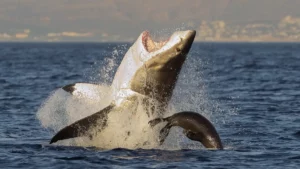 | 4–6 m (13–20 ft) | High | Stewart Island, Chatham Islands, Otago coast; juveniles in Kaipara and Manukau harboursKnown locally as the white pointer. Protected since 2007; involved in most of the country's fatal incidents. |
Bronze Whaler (Copper Shark)Carcharhinus brachyurus | 2.2–3 m (7–10 ft) | Moderate | North Island surf beaches and harbours from November to AprilThe shark most often seen from New Zealand beaches. Also called the copper shark; responsible for several minor bites on spearfishers. |
Broadnose Sevengill SharkNotorynchus cepedianus | 2–3 m (7–10 ft) | Moderate | Shallow southern bays and fiords: Oreti Beach, Porpoise Bay, Riverton, FiordlandA primitive shark with seven gill slits that hunts in knee-deep surf. Behind most of the modern South Island bites, none fatal. |
Shortfin Mako SharkIsurus oxyrinchus | 2–3.2 m (7–10 ft) | Moderate | Offshore, especially Kaikōura, the Bay of Plenty and Northland in summerThe word mako is Māori. New Zealand's makos are famous for biting boats and outboards; risk is to anglers, not swimmers. |
Blue SharkPrionace glauca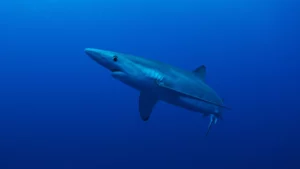 | 2–3 m (7–10 ft) | Low | Open water over the Kaikōura Canyon and along the east coastCurious and slow-moving around snorkellers; the star of Kaikōura's pelagic trips. Heavily caught on tuna longlines. |
Smooth Hammerhead SharkSphyrna zygaena | 2.5–4 m (8–13 ft) | Low | Northern harbours and bays in summer; juveniles in the Hauraki GulfThe only hammerhead in New Zealand. Pups in the warm shallows of Northland; no local bite on record. |
School Shark (Tope)Galeorhinus galeus | 1.3–1.8 m (4–6 ft) | Low | Everywhere on the shelf; harbours in summer for puppingA major commercial species managed under quota. Slim, toothy-looking but harmless; lives to 50 years and more. |
Rig (Spotted Estuary Smooth-hound)Mustelus lenticulatus | 1–1.4 m (3–4.5 ft) | Low | Estuaries and harbours all round the country, especially in springEndemic to New Zealand and sold as 'lemon fish'. Eats crabs with flat crushing teeth; cannot bite a person. |
| Spiny DogfishSqualus acanthias | 0.8–1.2 m (2.5–4 ft) | Low | Cool shelf waters of the South Island in huge schoolsProbably the most numerous shark in New Zealand. Has a venomous spine in front of each dorsal fin; handle with care. |
Carpet Shark (Draughtsboard Shark)Cephaloscyllium isabellum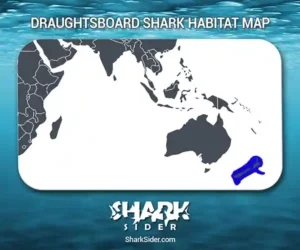 | 0.8–1 m (2.5–3.3 ft) | Low | Under ledges on rocky reefs everywhere; Goat Island, Poor Knights, WellingtonEndemic swellshark that gulps water to wedge itself into crevices. The shark most divers see; completely harmless. |
Porbeagle SharkLamna nasus | 1.5–2.5 m (5–8 ft) | Low | Cold offshore water south of Cook Strait and around the sub-Antarctic islandsA warm-blooded mackerel shark built for cold water. Bycatch of the tuna longline fleet; no New Zealand incident on record. |
Thresher SharkAlopias vulpinus | 3–5 m (10–16 ft) incl. tail | Low | Coastal and offshore waters of both islands, sometimes seen leapingHerds and stuns baitfish with a tail as long as its body. Harmless; occasionally caught by game fishers. |
Bigeye Thresher SharkAlopias superciliosus | 3–4 m (10–13 ft) incl. tail | Low | Deep offshore water off the North IslandHuge eyes for hunting squid in the dark. Known here from longline catches rather than sightings. |
Basking SharkCetorhinus maximus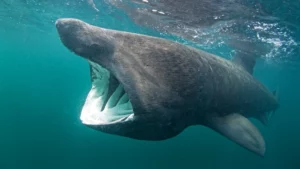 | 6–9 m (20–30 ft) | Low | Historically Kaikōura and the West Coast in spring; now rarely seenReremai in Māori. A plankton filter feeder whose sightings collapsed in the 1990s; protected since 2010. |
Whale SharkRhincodon typus | 6–10 m (20–33 ft) | Low | Occasional summer visitor to Northland and the Bay of PlentyReaches New Zealand only at the warm end of the year, usually singly. Protected since 2010. |
Tiger SharkGaleocerdo cuvier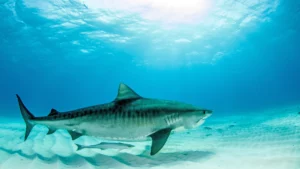 | 3–4.5 m (10–15 ft) | High | Kermadec Islands; rare stray in Northland during warm summersA tropical species at the edge of its range. Not involved in any mainland New Zealand incident. |
Galapagos SharkCarcharhinus galapagensis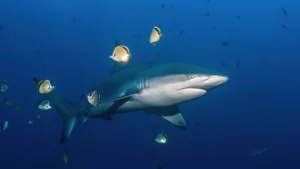 | 2–3 m (7–10 ft) | Moderate | Kermadec Islands in large numbers; occasionally the Three KingsBold, inquisitive reef shark of oceanic islands. Divers at Raoul Island may be circled by dozens. |
| Oceanic Whitetip SharkCarcharhinus longimanus | 2–3 m (7–10 ft) | High | Open subtropical water around the Kermadecs and far northProtected in New Zealand since 2013. A danger in open ocean, never on a beach. |
Bluntnose Sixgill SharkHexanchus griseus | 3–4.8 m (10–16 ft) | Low | Deep slopes all round the country; occasionally shallower at nightA giant of the deep that rises toward the surface after dark. Placid; filmed by submersibles off Kaikōura. |
Sharpnose Sevengill SharkHeptranchias perlo | 1–1.4 m (3–4.5 ft) | Low | Outer shelf and upper slope, mainly off the North IslandThe small, big-eyed cousin of the broadnose sevengill. Snaps when landed, otherwise never met by people. |
Goblin SharkMitsukurina owstoni | 3–4 m (10–13 ft) | Low | Deep water off both islands; New Zealand has some of the most records in the worldPink, flabby, with a blade-shaped snout and jaws that shoot forward. A living fossil known mainly from trawl bycatch. |
Frilled SharkChlamydoselachus anguineus | 1.5–2 m (5–6.5 ft) | Low | Continental slopes, 500–1,000 mEel-shaped with 300 needle teeth and a two-year gestation. Occasionally hauled up by deep-water trawlers. |
Deepwater Nurse Shark (Smalltooth Sand Tiger)Odontaspis ferox | 3–4 m (10–13 ft) | Low | Deep reefs and seamounts off the North IslandProtected under the Wildlife Act since 2010. Big, slow and rarely encountered. |
Kitefin Shark (Seal Shark)Dalatias licha | 1–1.6 m (3–5 ft) | Low | Chatham Rise and other slopes at 300–1,000 mConfirmed in 2021, from New Zealand specimens, as the largest glowing vertebrate known. Its belly emits a soft blue light. |
Leafscale Gulper SharkCentrophorus squamosus | 1–1.5 m (3–5 ft) | Low | Deep slopes, 500–1,500 mSlow-breeding deep-sea dogfish once targeted for liver oil. Vulnerable to trawling. |
Portuguese DogfishCentroscymnus coelolepis | 0.9–1.2 m (3–4 ft) | Low | Very deep water on the Chatham Rise and Hikurangi marginOne of the deepest-living sharks, recorded below 3,000 m. Bycatch of the orange roughy fishery. |
Prickly DogfishOxynotus bruniensis | 0.5–0.7 m (1.6–2.3 ft) | Low | Outer shelf and slope around both islandsA humpbacked, sail-finned oddity with rough skin. Feeds on the egg cases of other sharks and chimaeras. |
Cookiecutter SharkIsistius brasiliensis | 0.4–0.55 m (1.3–1.8 ft) | Low | Open ocean north of the country; its round bite scars appear on tuna, dolphins and whalesTakes plug-shaped bites from larger animals. Glows to lure them in; never meets swimmers. |
Southern LanternsharkEtmopterus granulosus | 0.4–0.6 m (1.3–2 ft) | Low | Chatham Rise and slopes around the South IslandOne of the glowing sharks studied in 2021. Light organs along the belly hide its silhouette from predators below. |
Blackbelly LanternsharkEtmopterus lucifer | 0.4–0.5 m (1.3–1.7 ft) | Low | Upper slopes around both islandsSmall, abundant and bioluminescent. A common bycatch that is now recorded rather than discarded. |
Pygmy SharkEuprotomicrus bispinatus | 0.2–0.27 m (8–11 in) | Low | Open ocean, migrating to the surface at nightOne of the smallest sharks on Earth. Occasionally washed up or caught in research nets off New Zealand. |
| Southern Sleeper SharkSomniosus antarcticus | 3–4.4 m (10–14 ft) | Low | Deep cold water around the South Island and sub-AntarcticThe southern relative of the Greenland shark, not the Pacific sleeper listed in older guides. Sluggish and enormous. |
Port Jackson SharkHeterodontus portusjacksoni | 1–1.5 m (3–5 ft) | n/a | Only a handful of stray records; an Australian speciesIncluded because it appears on older New Zealand lists. Not a resident. |
Two species people ask about are genuinely absent. The bull shark does not occur in New Zealand at all; it is a tropical and warm-temperate species whose nearest populations are in Fiji and on the east coast of Australia, and every “bull shark” reported from a New Zealand harbour has been a bronze whaler. Tropical reef sharks, the blacktips, whitetips and grey reef sharks of the Pacific islands, do not reach the mainland either; the Kermadec Islands are their southern limit. The silky shark, listed in older New Zealand guides, is a warm-water pelagic species with only stray records around the Kermadecs, so it is left off the table. The tiger shark and whale shark are included because both turn up in Northland and the Bay of Plenty in warm summers, but neither is something a swimmer should expect to see.
Where to see sharks in New Zealand
New Zealand's sharks are spread over a very long coastline and much of the action is seasonal, so these are the places where an encounter is reliable enough to plan a trip around.
- Stewart Island and Foveaux StraitThe great white capital of the country. Adult whites, many over 4 m, gather around the seal colonies of the Titi Islands and Edwards Island from about December to June. Cage-diving boats run from Bluff in season under Department of Conservation permit; the industry spent years in court with local pāua divers, so check that trips are currently operating before you book.
- Chatham IslandsEight hundred kilometres east of Christchurch, the Chathams hold the other great white stronghold, around Pitt Island and the fishing grounds. There is no tourist operation; the sharks are met by pāua divers and crayfish boats, and the November 2024 fatality here involved a diver and a great white.
- KaikōuraThe Kaikōura Canyon brings blue water within a short boat ride, and summer pelagic trips drift over it for blue sharks and shortfin makos, with occasional bronze whalers and threshers. Snorkelling with blue sharks here is one of the country's best-kept secrets. December to April.
- Poor Knights Islands, NorthlandA marine reserve since 1981 and New Zealand's most famous dive site. Bronze whalers patrol the arches in summer, stingrays gather in the hundreds, and carpet sharks rest under the ledges on night dives. Hammerheads and the odd mako pass through the blue water off the walls.
- Goat Island (Cape Rodney–Okakari Point), LeighThe country's first marine reserve, created in 1975, and a snorkel site straight off the beach. Carpet sharks under every second ledge, and bronze whalers and eagle rays cruising the reserve in late summer. Best for families and first-timers.
- Fiordland: Milford, Doubtful and Dusky soundsBelow the dark freshwater layer of the fiords, broadnose sevengill sharks patrol the shallows in surprisingly clear water. Divers meet them at close range on the sheltered walls of Doubtful and Dusky sounds, where they are inquisitive but rarely aggressive.
- Kermadec Islands (Rangitāhua)A thousand kilometres north-east of Auckland, this marine reserve holds Galapagos sharks in numbers found almost nowhere else, with oceanic whitetips, silvertips and occasional tiger sharks in the blue. Reached only by expedition vessel; the payoff is a reef that has never been fished.
- Bay of Plenty and Coromandel surf beachesFrom Papamoa to Whangamata, bronze whalers, hammerheads and the occasional juvenile great white feed close to shore in January and February, and drone footage of sharks cruising among swimmers is now an annual news story. Watch from the sand at dawn or dusk.
For a single trip, the Poor Knights and Goat Island are the easiest sharks in the country and need nothing more than a snorkel. Kaikōura is the choice for open-water blue sharks and makos, and Stewart Island for the great whites. Everything else is a matter of being on the right beach in the right week of summer.
Best time of year to see sharks in New Zealand
Water temperature runs the calendar. Coastal sharks arrive and leave with the seasons, and the shark population of a given beach in February looks nothing like the same beach in July.
- Summer and early autumn, December to April: the peak for almost everything. Bronze whalers, smooth hammerheads and school sharks move into the northern harbours and surf beaches to feed and pup, blue sharks and makos come inshore over the Kaikōura Canyon, and sevengill sharks patrol the shallow bays of Southland and Otago. Nearly every bite in the modern record falls in these months, simply because that is when both sharks and people are in the water.
- Great white season at Stewart Island, December to June: the sharks arrive as the water warms and stay through the autumn seal-pup season, with the largest females seen from February to April. In winter most of them migrate north, and satellite tags have tracked Stewart Island sharks to Tonga, Fiji, New Caledonia and the Great Barrier Reef before they return.
- Winter, June to September: the north is quiet apart from resident school sharks and rig; the deep-water fisheries continue year-round. Porbeagles and spiny dogfish are the cold-water sharks that stay.
- Basking sharks: once seen at the surface in spring and summer off Kaikōura and the West Coast in their hundreds. Sightings collapsed in the 1990s and are now rare, which is why they are protected.
Temperatures range from about 22 °C in Northland at the end of summer down to 15 °C in winter, and from 15 °C to under 10 °C around Stewart Island. A 5 mm wetsuit is the minimum for Foveaux Strait at any time of year; a 7 mm suit or drysuit is the norm.
Shark attacks in New Zealand: what the record actually shows
New Zealand has one of the longest shark incident records in the Southern Hemisphere, and unlike many countries the record is honest about what happened. SharkSider keeps every reported case in its own database, updated weekly on the shark attacks in New Zealand page. The six most recent entries are shown below (the full list is on the attacks page):
- 2024 · Chatham Islands, Bay of WaitangiDiving — Not stated but injuries fatalSpecies: Great White Shark · fatal
- 2023 · Riverton, South IslandWading — Significant injury to legSpecies: Sevengill shark · not fatal
- 2023 · Cape Pallister, North IslandFree diving — Minor injury. wetsuit shreddedSpecies: White shark · not fatal
- 2022 · Cobden, South IslandSurfing — No injury, shark leapt on surfboardSpecies not identified · not fatal
- 2022 · Friendly Bay, Oamaru, South IslandSwimming — Puncture woundsSpecies: Sevengill shark · not fatal
- 2021 · Pororari River, South IslandSwimming — Laceration to big toeSpecies not identified · not fatal
The database holds 146 entries for New Zealand between 1850 and 2024, of which 27 were fatal. The 116 entries dated from 1900 onwards, with 15 deaths, are the ones counted in the summary line on this page; the other 30, with 12 deaths, are nineteenth-century cases. The deaths cluster in two eras. Sixteen of them happened by 1912, when swimming in working harbours such as Wellington, Auckland, Napier and Kaipara was common and the water was full of fish waste; and four fell in the 1960s around Dunedin and Taranaki, including the well-known St Clair Beach (1964), St Kilda (1967) and Otago Harbour (1968) cases, all attributed to great white sharks, followed by a spearfisher killed by a bronze whaler at Te Kaha in 1976. From 2000 onwards there are 61 records and six deaths. Four of those occurred in the Cook Islands, which the file groups with New Zealand, and the six deaths break down as two in the Cook Islands and four in New Zealand itself: a swimmer from a capsized kayak at Clark Island in 2009, a swimmer at Muriwai near Auckland in 2013, a swimmer at Waihi Beach in the Bay of Plenty in January 2021, and a diver in the Chatham Islands in November 2024. Great white sharks were identified in the 2009, 2013 and 2024 cases.
Read the non-fatal entries and a clear pattern emerges. Sevengill sharks account for most of the recent bites, nearly all of them on the South Island's southern beaches: Oreti Beach, Porpoise Bay, Riverton and Oamaru, where the sharks hunt in the shallow surf that swimmers and boogie-boarders use, with occasional cases as far north as Taranaki and Hawke's Bay. The injuries are punctures and lacerations to legs and hands, painful but not life-threatening. Bronze whalers appear in the North Island entries, usually nipping spearfishers or people wading with fish, and makos show up biting boats, outboards and the fishermen who land them. Several records are flagged as provoked or doubtful: a stingray injury reported as a shark bite, a swimmer who stepped on a shark, a spearfisher who prodded one with his gun. Surfing, swimming, fishing and spearfishing account for about two-thirds of all activities in the file. The standard advice holds: avoid river mouths, seal colonies and fish-cleaning areas, stay out of murky water at dawn and dusk, and if you spearfish, get the catch out of the water fast.
Is it safe to swim and snorkel with sharks in New Zealand?
For almost every beach on almost every day, yes. Tens of millions of swims happen each summer and the average year produces two or three minor bites and, roughly every four to five years, a death. The sharks a swimmer is most likely to be near, bronze whalers and school sharks in the north and sevengills in the south, are feeding on fish, not people, and a bite is usually a single investigative snap followed by a retreat. Carpet sharks, rig and spiny dogfish are harmless. If you see a bronze whaler from the beach, the sensible response is to get out calmly and let it pass, not to chase it with a jet ski, which is how one person in the record ended up with a punctured pontoon.
Great whites deserve more respect. New Zealand's juveniles use the shallow harbours of the north, Kaipara and Manukau in particular, as nursery grounds, and adults hunt fur seals at Stewart Island, the Chathams and the Otago Peninsula. Swimming, spearfishing and kayaking close to seal colonies is the one activity in New Zealand with a real shark risk, and the 2009, 2013 and 2024 fatalities all fit that description. The cage-diving boats at Stewart Island operate under a permit that forbids feeding the sharks directly and sets distances from the seal colonies; go with them rather than hoping for a free encounter from a kayak.
On the snorkel sites, the etiquette is simple. Carpet sharks at Goat Island and the Poor Knights will let you approach to arm's length; do not touch them, and do not pick one up to watch it swell. Sevengills in Fiordland are inquisitive and may circle a diver several times; keep your fins between you and the shark and back toward the wall. Blue sharks at Kaikōura are curious and mouthy and will nudge a camera, which is why the operators put a guide in the water with you.
Shark conservation in New Zealand
New Zealand's sharks are managed as a fishery first and a wildlife asset second, and the two halves have been slowly converging. Rig and school shark have been inside the Quota Management System since 1986 and spiny dogfish since 2004, with annual catch limits and reporting; rig remains the “lemon fish” in most fish-and-chip shops. The problem species were the ones nobody targeted: basking sharks drowned in West Coast trawl nets in such numbers that a species once seen in hundreds all but vanished from the surface, and deep-water dogfish and gulper sharks were dumped as bycatch of the hoki and orange roughy fleets. Protection of the basking shark in 2010, the finning ban of 2014 and mandatory reporting of protected-species bycatch have closed the worst of those gaps.
The great white story is the one that has changed most. Before 2007 whites were caught for jaws and trophy photographs and shot by fishermen who saw them as competition; since protection the Stewart Island population has been studied for nearly two decades with satellite tags and photo-identification, and the same individuals return year after year. New Zealand also carries a diplomatic role: the country nominated the great white, basking shark and other species for international protection through CMS and CITES. What remains unfinished is the deep sea. Dozens of the species in the table live on slopes that are still trawled, and for most of them nobody knows the population size. Marine reserves such as the Poor Knights, Goat Island, Fiordland and the Kermadecs protect the reef sharks well, but the open-water and deep-water species depend on the fisheries rules holding. Our guide on why sharks are endangered explains why slow-growing species such as school sharks and porbeagles take decades to recover from overfishing.
Sharks in neighbouring waters
New Zealand's nearest neighbour is Australia, whose shark fauna shares the great white, bronze whaler, sevengill and school shark and adds the bull shark and tropical reef species; its attack record is the largest in the Southern Hemisphere. To the north, the Pacific islands are a different world of warm-water reef sharks: Fiji with its bull shark dives at Beqa Lagoon, Tonga and Samoa with blacktip and grey reef sharks, the Cook Islands, whose incidents share a file with New Zealand's, Vanuatu and Papua New Guinea at the edge of the Coral Triangle. Stewart Island's great whites visit several of these countries every winter. Every other coast we have profiled, Pacific or otherwise, is on the sharks around the world page.
Frequently asked questions
Are there sharks in New Zealand?
Yes, more than 70 species. The common coastal sharks are the bronze whaler, school shark, rig and spiny dogfish, with sevengill sharks in the southern bays and smooth hammerheads in northern harbours in summer. Great whites live around Stewart Island, the Chatham Islands and Otago, and dozens of deep-sea species inhabit the slopes offshore.
Have there been shark attacks in New Zealand?
Yes. SharkSider's database lists 146 entries from 1850 to 2024, 27 of them fatal, of which 116 entries and 15 deaths are dated from 1900 onwards. Since 2000 there have been 61 records and six deaths, four in New Zealand itself: Clark Island in 2009, Muriwai in 2013, Waihi Beach in 2021 and the Chatham Islands in 2024. Most recent bites are minor injuries from sevengill sharks in the southern surf.
Are there great white sharks in New Zealand?
Yes. New Zealand has a resident population, with adults gathering around the seal colonies of Stewart Island and the Chatham Islands from December to June and juveniles using northern harbours such as Kaipara and Manukau as nurseries. They have been fully protected since 2007, and tagging shows many migrate to the tropical Pacific in winter.
Is it safe to swim at New Zealand beaches?
Yes, on almost every beach and day. Bronze whalers and sevengills feed on fish close to shore in summer and occasionally deliver a single investigative bite, but deaths average one every four to five years across the whole country. Avoid seal colonies, river mouths and murky water at dawn and dusk, and get out calmly if a shark is sighted.
Can you cage dive with great white sharks in New Zealand?
Yes, at Stewart Island. Cage-diving boats leave Bluff in the summer and autumn season, roughly December to June, for the seal islands of Foveaux Strait, where adult whites of 4 m and more are seen. The industry has spent years in court with local pāua divers, so confirm that trips are running before you travel.
Do bull sharks live in New Zealand?
No. Bull sharks are a tropical and warm-temperate species and the nearest populations are in Fiji and eastern Australia. Sharks reported as bull sharks in New Zealand harbours are almost always bronze whalers, which are stocky, similar in colour and enter the same estuaries in summer.
What is the most common shark in New Zealand?
By numbers, the spiny dogfish, which schools in enormous numbers on the South Island shelf, followed by the school shark and rig that supply the fish-and-chip trade. The shark beachgoers actually see is the bronze whaler, which cruises North Island surf beaches from November to April, and divers most often meet the endemic carpet shark.
Which sharks in New Zealand glow in the dark?
Several deep-sea species. A 2021 study of sharks trawled from the Chatham Rise confirmed that the kitefin shark, the southern lanternshark and the blackbelly lanternshark all produce blue light from organs on their bellies, and named the kitefin shark the largest bioluminescent vertebrate known. The cookiecutter shark also glows.
When is the best time to see sharks in New Zealand?
Summer and early autumn, December to April. Bronze whalers, hammerheads and makos come inshore in the north, blue sharks and makos gather over the Kaikōura Canyon, and great whites arrive at Stewart Island from December with the biggest animals seen between February and April. Winter is quiet apart from the deep-water and cold-water species.
Are sharks protected in New Zealand?
Partly. The great white, basking shark, whale shark, deepwater nurse shark and oceanic whitetip are fully protected under the Wildlife Act, shark finning has been banned since 2014, and commercial species such as rig, school shark and spiny dogfish are managed under catch quotas. Many deep-sea species are still taken as trawl bycatch.
References

A small team focused on researching sharks and making marine biology easy to understand. Every page is reviewed against current species records and the SharkSider attack database, and updated when new incidents or research appear.
Published December 10, 2022 · Last updated September 21, 2026 · Incident data from the SharkSider attack database (116 records for New Zealand, 15 fatal).


