
Yes, there are sharks in Samoa: 17 species with solid records around Upolu, Savai'i and the smaller islands. The ones you are likely to see are the blacktip reef shark, the whitetip reef shark, the grey reef shark and the sicklefin lemon shark inside and just outside the lagoons; silvertips, tiger sharks and silky sharks live along the outer reef and the drop-off.
The safety picture is reassuring. SharkSider's database holds 10 records for Samoa since 1900 and only two deaths: a fisherman in 1939 and a man towing a dead whale out to sea off Lano, Savai'i, in August 2023. The other cases are fishermen bitten while handling catch, a surf ski with its tail bitten off in 2018 and a surfer's leg lacerated at Lalomanu in November 2025. No swimmer or snorkeller in a Samoan lagoon has been seriously hurt in the modern record.
- Shark species recorded17 with solid records
- Protected sinceMarch 2018 (national shark sanctuary)
- Most seen from the beachBlacktip reef shark
- Signature encounterGrey reef and silvertip sharks in the Savai'i passes
- Incidents in the database10 since 1900 (2 fatal); 1 older, 1890
- Water temperature27–30 °C year-round

On this page
- Why Samoa has so many sharks
- List of the different types of sharks in Samoa
- Where to see sharks in Samoa
- Best time of year to see sharks in Samoa
- Shark attacks in Samoa: what the record actually shows
- Is it safe to swim and snorkel with sharks in Samoa?
- Shark conservation in Samoa
- Sharks in neighbouring waters
- Frequently asked questions
- References
Why Samoa has so many sharks
Samoa's islands are the tops of shield volcanoes, and that shape decides where the sharks are. Upolu and Savai'i rise steeply from the ocean floor, so the fringing reef that surrounds them is narrow: a shallow lagoon a few hundred metres wide, a reef crest where the surf breaks, and then an outer slope that drops quickly into water thousands of metres deep. Reef sharks that would be spread across a wide shelf elsewhere are squeezed into this thin band, and the passes that cut through the reef, where the lagoon drains on the falling tide, concentrate fish, current and sharks in one place. Every village on Upolu's south coast has a pass and a name for the sharks that use it; in Samoan a shark is a malie, and the blacktip reef shark of the lagoons is the malie aloalo.
Beyond the reef the islands act as an oasis in a very empty ocean. Currents hitting the volcanic slopes push nutrients to the surface, and the deep water between Upolu and Savai'i, the Apolima Strait, and the seamounts of the wider Samoan chain gather tuna, flying fish and squid, which in turn draw the pelagic sharks: silkies, oceanic whitetips, blue sharks, makos and the occasional whale shark. Samoa's exclusive economic zone is about 120,000 km², more than forty times the land area, and almost all of it is this kind of deep, blue, shark-friendly water.
The final factor is law and custom. Samoan villages have managed their own reef fisheries for centuries through the fono, the council of chiefs, and more than a hundred villages now run formal fish reserves under the national fisheries programme; sharks were never a staple food here. In March 2018 the government went further and declared the whole exclusive economic zone a shark sanctuary, banning the commercial catch, sale and export of sharks and rays. Reef shark numbers around the villages that enforce their reserves are visibly higher than around those that do not, and the sanctuary now gives the pelagic species the same protection offshore.
List of the different types of sharks in Samoa
The table covers every shark with a dependable record in Samoan waters, from the lagoon flats to the deep blue beyond the reef. Sizes are realistic adults, not the biggest ever caught. The risk column is about swimmers and snorkellers in and around the lagoons, not about divers or fishermen who put themselves next to a shark on purpose. Two names deserve a note: the lemon shark of Samoa is the Indo-Pacific sicklefin lemon shark, not the Atlantic species, and the nurse shark is the tawny nurse shark, a different animal from the Caribbean one.
| Species | Adult size | Risk to swimmers | Where in Samoa & notes |
|---|---|---|---|
Blacktip Reef SharkCarcharhinus melanopterus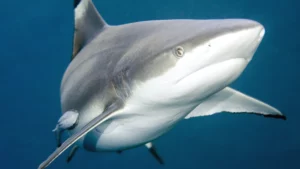 | 1.2–1.6 m (4–5 ft) | Low | Every lagoon and reef flat, often in knee-deep waterThe malie aloalo, the shark of the beach fale. Shy; the rare bites are nips to the ankles of waders. |
Whitetip Reef SharkTriaenodon obesus | 1.2–1.6 m (4–5 ft) | Low | Caves and ledges on the outer reef; Palolo DeepSleeps under coral by day, hunts in the reef at night. Harmless to people. |
Grey Reef SharkCarcharhinus amblyrhynchos | 1.5–2.5 m (5–8 ft) | Moderate | Reef passes and drop-offs, especially Savai'i and AleipataThe signature shark of Samoan dives. Territorial toward divers who crowd it; not a swimmer's problem. |
Silvertip SharkCarcharhinus albimarginatus | 2–2.5 m (7–8 ft) | Moderate | Deep outer walls and passesBigger and bolder than the grey reef shark, with white-edged fins. Makes close passes on wall dives. |
Tiger SharkGaleocerdo cuvier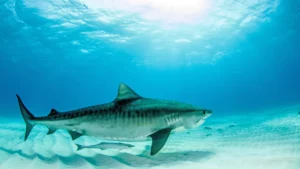 | 3–4.5 m (10–15 ft) | High | Outer slopes; occasionally the passes and surf breaksSuspected in the 2025 Lalomanu surfing bite. The one species here with a serious record worldwide. |
Sicklefin Lemon SharkNegaprion acutidens | 2.2–3 m (7–10 ft) | Low | Sandy lagoons and mangrove edges; NamuaThe Indo-Pacific lemon shark. Slow and placid; juveniles nurse in the lagoon shallows. |
Tawny Nurse SharkNebrius ferrugineus | 2.5–3.2 m (8–10 ft) | Low | Reef caves and ledges by dayThe nurse shark of the Pacific, unrelated to the Caribbean one. Docile unless handled. |
Blacktip SharkCarcharhinus limbatus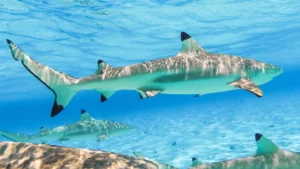 | 1.5–2 m (5–6.5 ft) | Moderate | Outer lagoon and reef slope, more offshore than its reef cousinChases schooling fish at speed and leaps clear of the water. Told from the blacktip reef shark by its plain anal fin. |
Bull SharkCarcharhinus leucas | 2.2–3.2 m (7–10.5 ft) | Moderate | Recorded but uncommon; deeper bays and river mouthsSamoa's steep islands have few estuaries, so bulls are scarce. Not confirmed in any Samoan incident. |
Galapagos SharkCarcharhinus galapagensis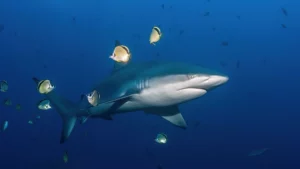 | 2.5–3 m (8–10 ft) | Moderate | Offshore banks and seamounts, deep outer slopesAn oceanic-island reef shark, confident around divers. Older lists called it highly aggressive; it is not. |
Silky SharkCarcharhinus falciformis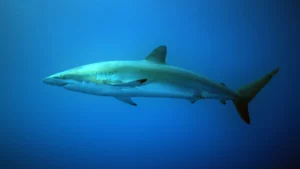 | 2–3 m (7–10 ft) | Moderate | Blue water beyond the reef; Apolima StraitFollows tuna schools and boats. The main shark bycatch of the Pacific longline fleets. |
| Oceanic Whitetip SharkCarcharhinus longimanus | 2–3 m (7–10 ft) | High | Open ocean well offshoreAn open-ocean shark that will approach anything floating. A risk to people adrift, never in the lagoons. |
Blue SharkPrionace glauca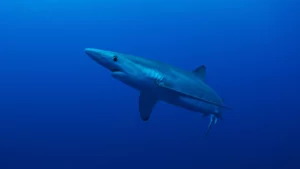 | 2–3 m (7–10 ft) | Low | Deep oceanic water, mostly in the cooler monthsTaken on longlines around the EEZ; rarely near the islands themselves. |
Shortfin Mako SharkIsurus oxyrinchus | 2.5–3.5 m (8–12 ft) | Moderate | Offshore with the tunaFast pelagic hunter known from the longline and game-fishing records. Offshore only. |
Scalloped Hammerhead SharkSphyrna lewini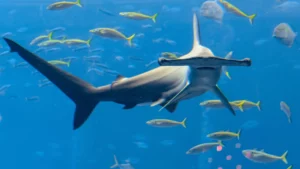 | 2.5–3.5 m (8–12 ft) | Low | Deep slopes and the Apolima Strait; occasionalSeen by divers and fishermen at depth. Critically endangered worldwide. |
Pelagic Thresher SharkAlopias pelagicus | 2.5–3.5 m (8–12 ft) incl. tail | Low | Open ocean; longline recordsStuns fish with its whip of a tail. Harmless and rarely seen from shore. |
Whale SharkRhincodon typus | 5–10 m (16–33 ft) | Low | Passing through the strait and along the north coast; occasionalFilter feeder, harmless. No tours exist in Samoa; sightings are chance encounters from boats. |
The species people ask about most is the one that is not here. There is no record of a great white shark in Samoan waters; they are temperate animals that prefer 12–24 °C, and Samoa's sea never cools below about 27 °C. The bull shark is on the list but only just: it is recorded from the Samoan islands, yet with no large rivers or estuaries it is uncommon, and the claim on older versions of this page that the 2010 fisherman's chest wound “must have been a bull shark” is guesswork; the database records the species as unknown. Whale sharks do pass through, but there is no whale shark watching industry in Samoa and a sighting is luck rather than a booking.
Where to see sharks in Samoa
Samoa has a small dive industry, one centre in Apia and one on Savai'i, and most sharks are seen by snorkellers from the beach or by divers on the outer reef. These are the places with the most reliable sightings.
- Palolo Deep Marine Reserve, ApiaA protected hole in the reef a short swim from the capital's waterfront, dropping from 3 m to 30 m. Blacktip and whitetip reef sharks around the rim, and the easiest shark sighting in the country for a snorkeller.
- Aleipata Islands and Lalomanu, south-east UpoluNu'utele and Nu'ulua islets off the famous Lalomanu beach, inside a marine protected area. Grey reef sharks and silvertips on the outer walls, blacktips in the lagoon, and the Aga Reef surf break where the November 2025 bite happened.
- Savai'i south coast: Salelologa to Satupa'iteaThe base of Savai'i's dive centre, with wall dives and swim-throughs into the deep. Grey reef sharks in numbers on the passes, whitetips in the caves, and tiger sharks reported by fishermen off the drop-off.
- Apolima Strait and ManonoThe deep channel between Upolu and Savai'i, where a copra schooner wrecked in 1914 and a survivor was bitten. Today it is where boat crews see silky sharks and, occasionally, hammerheads and whale sharks in the current.
- Namua Island, UpoluA small island with a beach fale and a reef flat that sharks use at high tide. Blacktip reef sharks and juvenile lemon sharks in knee-deep water at dawn and dusk.
- Fagaloa Bay, north-east UpoluA steep-sided bay where the reef is almost absent and deep water comes close to the villages. Grey reef sharks and the occasional pelagic species, best seen from a kayak or boat in calm weather.
- Salamumu and Coconuts, south coast surf breaksReef-pass surf breaks that are also shark highways on the falling tide. Surfers regularly see blacktips and grey reef sharks in the line-up, and reef-pass breaks like these are where Samoa's surfing incidents come from.
If you want a guaranteed shark and you are not a diver, Palolo Deep or Namua at high tide will give you blacktips within an hour. Divers should head to Savai'i, where the passes hold the grey reef and silvertip sharks that are the country's signature encounter.
Best time of year to see sharks in Samoa
Samoa sits 14 degrees south of the equator and the sea temperature hardly moves, so the seasons are about wind, rain and swell rather than warmth.
- May to October (dry season): south-east trade winds, less rain, the calmest lagoons and the best visibility on the outer reef, often 30 m or more. This is the diving season on Savai'i and the time to see grey reef and silvertip sharks in the passes. Swells from the Southern Ocean bring the biggest surf to the south coast from May to September.
- November to April (wet season): hotter, wetter and humid, with the cyclone season running through the same months. Rivers push sediment into the lagoons after storms and visibility drops, but the pelagic sharks are closer to the islands, and the north-coast surf breaks come alive.
- Tiger sharks: present year-round on the outer slopes; the 2025 Lalomanu bite happened in November and the 2023 Lano death in August, so there is no safe season to assume they are absent.
- Whale sharks: occasional, with most reports from the wet season when plankton is thickest in the strait and along the north coast.
Surface water stays between 27 and 30 °C in every month, which is why Samoa keeps its reef sharks all year and why cold-water species such as the great white never arrive.
Shark attacks in Samoa: what the record actually shows
Samoa's list is short, but it is more recent than most people expect. SharkSider records every case on the shark attacks in Samoa page. The database holds 10 records dated 1900 or later, two of them fatal, plus one from 1890, when a bather in Apia Harbour lost both legs. The cannery-harbour deaths at Pago Pago in the 1950s belong to American Samoa, a separate territory, and are not counted here. These are the six most recent records (the full list, updated weekly, is on the attacks page):
- 2025 · Aga Reef Resort LalomanuSurfing — Lacerations to right legSpecies: Suspected Tiger shark · not fatal
- 2023 · Lano, Savai'i islandTowing a dead whale out to sea — FatalSpecies not identified · fatal
- 2018 · UpoloSurf skiing — No injury, tail of surf ski bitten offSpecies not identified · not fatal
- 2017 · Nofoali’i, Upolu IslandFishing — Injuries to hands and legsSpecies not identified · not fatal
- 2010Fishing — Serious wounds to chestSpecies not identified · not fatal
- 1958 · North of Northeast Samoa, South Pacific OceanPlaced hand in disemboweled shark’s jaws — Hand lacerated provoked incidentSpecies not identified · not fatal
The pattern is unusually clear. Fishermen dominate the record. The 1939 death was a man fishing; the 2010 case was a fisherman with serious chest wounds; the 2017 incident at Nofoali'i on Upolu's north coast injured a fisherman's hands and legs; the 1958 injury was a man who put his hand into the jaws of a shark he had just gutted; and the August 2023 death off Lano, Savai'i, was a man who had gone out to tow a dead whale away from the shore, an act that put him in the water beside the single strongest shark attractant in the ocean. Blood, struggling fish and a carcass explain almost the whole list.
The second group is surfers. A surf-skier off Upolu in October 2018 had the tail of the ski bitten off and was not hurt, and in November 2025 a surfer at Aga Reef off Lalomanu suffered lacerations to the right leg from what was thought to be a tiger shark. Reef passes are where sharks hunt on the falling tide and where the waves are, so the overlap is not surprising. What is missing from the record is any modern injury to a swimmer or snorkeller in a Samoan lagoon; the only bather cases are the 1890 Apia Harbour attack and the 1913 leg lost in the same harbour, both from an era when the harbour was full of ship and fish waste.
The tiger shark is the species that matters here, as it is across the tropical Pacific. The standard advice covers the Samoan risks precisely: do not fish or spearfish with catch tied to your body, stay out of the water near a dead animal or a fish-cleaning site, surf the passes with company and not at dusk, and if a large shark shows interest, leave the water calmly along the reef rather than paddling out into the channel.
Is it safe to swim and snorkel with sharks in Samoa?
In the lagoons, yes, and the sharks are part of the pleasure. The blacktip reef shark you will see from your beach fale at high tide is nervous of people and will turn away the moment you move towards it; the whitetip reef sharks resting under coral heads at Palolo Deep will let you hover above them. Juvenile sicklefin lemon sharks use the sandy flats as a nursery and are slow, yellowish and harmless. The lagoon hazards worth more attention are the reef itself on a low tide, strong outflow through the passes as the tide drops, and stonefish in the rubble.
Divers on the outer reef meet the grey reef shark and the silvertip, both of which are confident and will come close. Neither is “highly aggressive”, whatever older lists claimed; a grey reef shark that hunches its back and drops its pectoral fins is asking for space, and the right response is to back off slowly along the reef, keeping it in view. Silvertips will make repeated close passes on a wall dive and lose interest when they realise you are not food. The Galapagos shark of the offshore banks behaves the same way.
Whale sharks are harmless and if one turns up beside your boat in the strait you can slip in quietly and swim alongside at a few metres' distance. Oceanic whitetips and silky sharks are open-water animals that follow boats; they are the reason to stay close to the vessel on a blue-water dive and not to drift far from the group. Tiger sharks are seen on the deep slopes and, very rarely, in the passes; treat any sighting as the end of the session.
Shark conservation in Samoa
Samoa's shark sanctuary, declared in March 2018, made the country one of a growing group of Pacific island nations, alongside Palau, the Marshall Islands, the Cook Islands and French Polynesia, to close its entire exclusive economic zone to commercial shark fishing. The law prohibits the targeting, retention, sale and export of all sharks and rays, and sits on top of an earlier sanctuary for whales, dolphins and turtles from 2003 and the Fisheries Management Act of 2016. Inshore, the village fish reserves managed by the fono under the community fisheries programme give reef sharks refuges around more than a hundred villages, and the Aleipata and Safata marine protected areas on Upolu add formal no-take zones.
The pressure comes mainly from outside. Samoa's own longline fleet is small, but the waters around the islands are fished by foreign tuna longliners and purse seiners, and sharks, especially silkies, oceanic whitetips and blue sharks, die as bycatch on those lines whether or not they are landed. Oceanic whitetips in the western and central Pacific have declined by more than 90% over three generations, and enforcement across 120,000 km² of ocean with a handful of patrol vessels is hard. Coral bleaching, cyclones such as Evan in 2012 and Gita in 2018, and the 2009 tsunami that struck the Aleipata coast have all damaged the reef habitat the inshore sharks depend on.
The response has been practical. Samoa's Ocean Strategy for 2020–2030 commits to protecting 30% of its waters and to a marine spatial plan that maps shark habitat, observer coverage on longliners is rising, and dive operators report shark sightings to the fisheries division. If you visit, choose operators that respect the village reserves, never buy shark jaws or fins sold as souvenirs, and read our page on why sharks are endangered for the wider Pacific picture.
Sharks in neighbouring waters
Samoa shares its sharks with the rest of the tropical South Pacific. Tonga, to the south, adds humpback whale season to the same reef species; Fiji, to the west, has the region's most famous bull and tiger shark dive at Beqa Lagoon and a shark reserve of its own. The Cook Islands and French Polynesia, to the east, are both full shark sanctuaries with lemon shark and grey reef shark encounters that draw divers from around the world, while Vanuatu lies further west along the same island arc. Far to the south, New Zealand has the cold-water species, great whites included, that never reach Samoa. The rest of the Pacific, and every other country page, is on the sharks around the world index.
Frequently asked questions
Are there sharks in Samoa?
Yes. Seventeen species have solid records around Upolu, Savai'i and the smaller islands. Blacktip reef sharks live in every lagoon, whitetip and grey reef sharks hold the outer reef and the passes, and silvertips, tiger sharks, silky sharks and oceanic whitetips use the deep water beyond. The whole EEZ has been a shark sanctuary since 2018.
Have there been shark attacks in Samoa?
A few. SharkSider's database holds 10 records since 1900 with two deaths: a fisherman in 1939 and a man towing a dead whale out to sea off Lano, Savai'i, in 2023. The rest involve fishermen handling catch, a surf ski bitten in 2018 and a surfer's leg lacerated at Lalomanu in November 2025. No lagoon swimmer has been seriously hurt in modern times.
Is it safe to swim in Samoa?
Yes. The lagoons inside the reef hold only small, shy sharks, and no snorkeller or swimmer has been seriously injured there in the modern record. The incidents involve fishing, surfing on the reef passes and a whale carcass. Avoid the water near fish waste or dead animals, surf the passes with company and not at dusk, and the risk is very low.
Are there great white sharks in Samoa?
No. There is no record of a great white in Samoan waters. The species prefers water of 12–24 °C and Samoa's sea stays between 27 and 30 °C all year. Large sharks reported by fishermen off the drop-off are tiger sharks, silvertips or oceanic whitetips.
Are there tiger sharks in Samoa?
Yes. Tiger sharks live along the deep outer slopes of both main islands and occasionally enter the reef passes, and one was suspected in the November 2025 surfing injury at Aga Reef off Lalomanu. They are rarely seen by snorkellers in the lagoons, and they are fully protected under the 2018 sanctuary.
Can you see whale sharks in Samoa?
Occasionally, but not on demand. Whale sharks pass through the Apolima Strait and along the north coast, mostly in the wet season when plankton is thickest, and boat crews see one now and then. Samoa has no whale shark tour industry, so a sighting is a lucky bonus rather than something you can book.
Where is the best place to see sharks in Samoa?
For snorkellers, Palolo Deep Marine Reserve in Apia and Namua Island at high tide give reliable blacktip and whitetip reef sharks. For divers, the passes and walls off Savai'i's south coast and the Aleipata islands off Lalomanu are where grey reef sharks and silvertips gather, particularly in the May to October dry season.
Do bull sharks live in Samoa?
They are recorded, but they are uncommon. Bull sharks like river mouths and estuaries, and Samoa's steep volcanic islands have few of either. No Samoan incident has been confirmed as a bull shark; the 2010 fisherman's injury is listed with the species unknown, despite older claims that the wound size proved it was a bull.
Is shark fishing legal in Samoa?
No. In March 2018 Samoa declared its entire 120,000 km² exclusive economic zone a shark sanctuary, banning the commercial catch, sale and export of all sharks and rays. Village fish reserves protect the reefs inshore. Foreign tuna longliners still catch sharks as bycatch in the wider region, which is the main remaining pressure.
When is the best time to see sharks in Samoa?
May to October, the dry season, brings calm lagoons, trade winds and the clearest water on the outer reef, which is when the Savai'i passes deliver the best grey reef and silvertip dives. The reef sharks are present all year; the wet season from November to April lowers visibility but brings pelagic species and whale sharks closer to the islands.
References

A small team focused on researching sharks and making marine biology easy to understand. Every page is reviewed against current species records and the SharkSider attack database, and updated when new incidents or research appear.
Published January 25, 2023 · Last updated September 21, 2026 · Incident data from the SharkSider attack database (10 records for Samoa, 2 fatal).


