
Yes, there are sharks in Sri Lanka, around 60 species in all. The ones you are most likely to meet are the blacktip reef shark, the whitetip reef shark, the whale shark, the grey reef shark and, on offshore trips, the silky shark. The great white shark, despite what older guides claim, has no confirmed modern record in Sri Lankan waters.
The safety picture is reassuring. SharkSider's database holds 15 entries for Sri Lanka going back to 1817, nine of them dated after 1900, with four deaths, the last in 1957 and unconfirmed. No swimmer, snorkeller or diver has been bitten by a shark in Sri Lankan waters in the database since 1970, and most of the older cases involved Colombo Harbour, spearfishing or shipwrecks rather than a beach.
- Shark species recorded30 profiled below (about 60 nationally)
- ProtectionWhale shark, threshers & oceanic whitetip protected; fins-attached rule since 2015
- Most seen from the beachBlacktip reef shark (Pigeon Island)
- Signature encounterWhale sharks off Kalpitiya, Mirissa and Trincomalee
- Incidents in the database15 (1817–2004), 4 fatal; no bite since 1970
- Water temperature27–30 °C year-round

On this page
- Why Sri Lanka has so many sharks
- List of the different types of sharks in Sri Lanka
- Where to see sharks in Sri Lanka
- Best time of year to see sharks in Sri Lanka
- Shark attacks in Sri Lanka: what the record actually shows
- Is it safe to swim and snorkel with sharks in Sri Lanka?
- Shark conservation in Sri Lanka
- Sharks in neighbouring waters
- Frequently asked questions
- References
Why Sri Lanka has so many sharks
Look at a depth chart and the island's shark list makes sense. Sri Lanka's continental shelf is narrow, only 20 to 40 km wide along most of the coast, and beyond it the seabed drops to more than 1,000 m. Off Trincomalee a submarine canyon cuts almost into the harbour itself, and off Dondra Head in the south the shelf edge is close enough that blue whales feed within sight of the lighthouse. Deep, cold, nutrient-rich water is therefore never far from the beach, and the two monsoons stir it to the surface twice a year. That is what feeds the pelagic sharks, the threshers, makos, blue sharks, silky sharks and hammerheads, that Sri Lankan fishermen have landed for generations.
Closer to shore the island offers something for every other kind of shark. The Gulf of Mannar and Palk Bay in the north-west are shallow, warm and carpeted with seagrass, a nursery for milk sharks, spadenose sharks and bamboo sharks. Coral reefs at Hikkaduwa, Bar Reef and Pigeon Island hold the reef sharks. The lagoons at Negombo, Puttalam and Batticaloa and the river mouths of the east coast are the kind of brackish water that lemon sharks, and occasionally bull sharks, use as pupping grounds. Add a 1,300 km coastline that faces three different bodies of water, the Arabian Sea side, the Bay of Bengal side and the open Indian Ocean to the south, and you have a country with about 60 recorded shark species, more than most nations ten times its size.
Protection has been slower to arrive than in the neighbouring Maldives. Sri Lanka has long been one of the Indian Ocean's biggest shark-landing nations, mostly as bycatch in the tuna gillnet and longline fleets that sail from Negombo, Beruwala and Tangalle. The turning point came with the National Plan of Action for sharks in 2013 and a set of fisheries regulations in 2015 that banned the catching of thresher sharks and oceanic whitetips, protected the whale shark and required every shark to be landed with its fins naturally attached, which ended finning at sea. Sharks are still caught in large numbers, but the animals visitors come to see, the whale sharks and reef sharks, are now legally off limits.
List of the different types of sharks in Sri Lanka
The table covers the species with a solid record in Sri Lankan waters, from the reef sharks you can see from a snorkel to the deep-water species known mainly from the fish markets. Sizes are realistic adult lengths rather than record specimens, and the risk column refers to swimmers and snorkellers, not to divers who go looking. Two naming points matter here: the lemon shark of Sri Lanka is the sicklefin lemon shark (Negaprion acutidens), not the Atlantic species, and the “leopard shark” that local dive guides mention is the zebra shark (Stegostoma tigrinum).
| Species | Adult size | Risk to swimmers | Where in Sri Lanka & notes |
|---|---|---|---|
Blacktip Reef SharkCarcharhinus melanopterus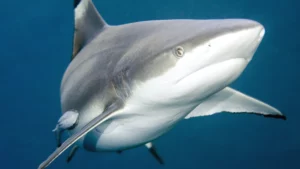 | 1.2–1.6 m (4–5 ft) | Low | Pigeon Island, Bar Reef and the Hikkaduwa reef flat, in knee- to chest-deep waterThe shark most visitors see in Sri Lanka. Shy, patrols the shallows in small groups; the only bites on record are nips to the feet of waders. |
Whitetip Reef SharkTriaenodon obesus | 1.2–1.6 m (4–5 ft) | Low | Resting under ledges and in wrecks at Hikkaduwa, Trincomalee and Bar ReefSlender and sluggish by day, hunts in the reef at night. Tolerates divers closely as long as it is not cornered. |
Grey Reef SharkCarcharhinus amblyrhynchos | 1.5–2.5 m (5–8 ft) | Moderate | Current-swept outer reefs: Great and Little Basses, deep Trincomalee sitesFar less common than in the Maldives after decades of fishing. Holds its ground against divers; back away slowly if it arches its back. |
Blacktip SharkCarcharhinus limbatus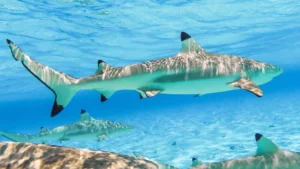 | 1.5–2.5 m (5–8 ft) | Moderate | Open coastal water and reef edges all round the island; common in landingsThe larger, faster cousin of the reef blacktip, chasing sardine and mackerel schools. Told apart by the plain anal fin. |
Spinner SharkCarcharhinus brevipinna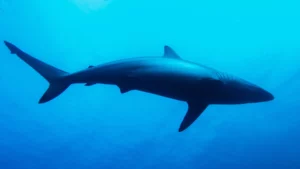 | 1.8–2.5 m (6–8 ft) | Low | Coastal shelf waters, especially off the west and north-west coastsNamed for the spinning leaps it makes when feeding on baitfish. Regular in the Negombo fish market. |
Silky SharkCarcharhinus falciformis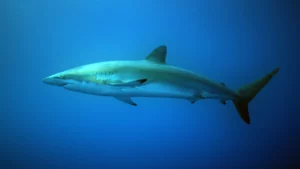 | 2–3 m (7–10 ft) | Moderate | Beyond the shelf edge with the tuna schoolsThe most-landed shark in Sri Lanka, taken by the offshore tuna fleet. Rarely seen by divers except at the Basses. |
Silvertip SharkCarcharhinus albimarginatus | 2–2.5 m (7–8 ft) | Moderate | Deep outer reefs: Great Basses, the Trincomalee canyon edgeBold reef shark with white-edged fins that approaches divers closely. Uncommon here. |
Sandbar SharkCarcharhinus plumbeus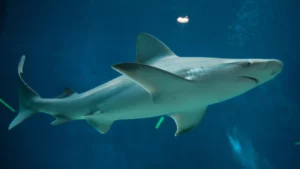 | 1.5–2.2 m (5–7 ft) | Low | Sandy shelf bottoms, mostly known from fishery landingsTall-finned, heavy-bodied and placid. Almost never implicated in bites anywhere. |
Bull SharkCarcharhinus leucas | 2–3.4 m (7–11 ft) | High | River mouths and lagoons; rare, known mainly from occasional landingsGenuinely recorded around Sri Lanka but seldom seen. The 1950 Heda Oya estuary bite may have involved one, though a lemon shark is more likely. |
Tiger SharkGaleocerdo cuvier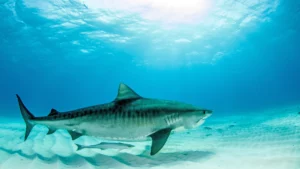 | 3–4.5 m (10–15 ft) | High | Deep reef edges and open water; landed occasionally by offshore boatsPresent all round the island but rarely enters shallow bays. The species with the most serious bite history worldwide; no Sri Lankan case attributed to it. |
Sicklefin Lemon SharkNegaprion acutidens | 2.5–3 m (8–10 ft) | Low | Estuaries, lagoons and sandy bays; the Colombo wrecksThe Indo-Pacific lemon shark and the only lemon shark in Sri Lanka. Slow and yellowish; docile unless hooked or fed. |
Tawny Nurse SharkNebrius ferrugineus | 2.5–3.2 m (8–10 ft) | Low | Caves and wrecks around Trincomalee and the south coastSri Lanka's nurse shark (the Atlantic nurse shark is a different species). Sleeps by day in groups; harmless if left alone. |
Zebra Shark ('Leopard Shark' locally)Stegostoma tigrinum | 2–2.5 m (7–8 ft) | Low | Sandy patches beside reefs at Bar Reef and Trincomalee, resting by daySpotted as an adult, striped as a pup. Completely placid; a favourite of underwater photographers. |
Whale SharkRhincodon typus | 5–10 m here (adults to 12 m+) | Low | Kalpitiya and Bar Reef Feb–Apr, Mirissa Nov–Apr, Trincomalee Jun–SepFilter feeder, harmless and protected. Sri Lanka lies on a migration route rather than hosting a resident population. |
Scalloped Hammerhead SharkSphyrna lewini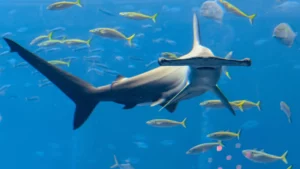 | 2.5–3.5 m (8–12 ft) | Low | Shelf edge and seamounts; pups use shallow bays in the north-westCritically endangered worldwide and still landed here in numbers. Schools are occasionally met on deep dives at the Basses. |
Great Hammerhead SharkSphyrna mokarran | 3.5–4.5 m (11–15 ft) | Moderate | Deep coastal water; solitary; seen mostly at the fish marketsHunts rays on the bottom. A big, powerful shark, but bites on people are very rare and none is recorded in Sri Lanka. |
Winghead SharkEusphyra blochii | 1.2–1.8 m (4–6 ft) | Low | Shallow muddy coasts of the Gulf of Mannar and Palk BayA small hammerhead with a head almost half as wide as its body is long. Harmless; heavily fished in the north. |
Pelagic Thresher SharkAlopias pelagicus | 2.5–3.5 m (8–12 ft) incl. tail | Low | Open ocean beyond the shelf; once a major fishery speciesStuns sardines with a tail as long as its body. Fully protected in Sri Lanka since 2015. |
Bigeye Thresher SharkAlopias superciliosus | 3–4 m (10–13 ft) incl. tail | Low | Deep water offshore, rising toward the surface at nightHuge upward-facing eyes for hunting in the dark. Protected alongside the other threshers. |
Shortfin Mako SharkIsurus oxyrinchus | 2–3.2 m (7–10 ft) | Moderate | Offshore with the tuna; a regular longline catchThe fastest shark in the sea. Never meets swimmers; the risk is to fishermen handling one on deck. |
Longfin Mako SharkIsurus paucus | 2.5–4 m (8–13 ft) | Low | Deep tropical water far offshoreSlower, longer-finned and much rarer than the shortfin. Known here almost entirely from longline landings. |
Blue SharkPrionace glauca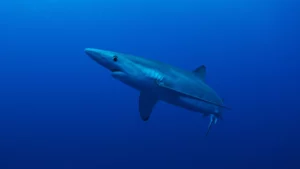 | 2–3 m (7–10 ft) | Low | Open ocean south of the island, mainly in the cooler monthsA wanderer of the high seas and a common tuna-boat bycatch. Not a coastal species here. |
| Oceanic Whitetip SharkCarcharhinus longimanus | 2–3 m (7–10 ft) | High | Blue water beyond the shelf, following boats and tuna schoolsThe shark that followed torpedoed ships in the Second World War, which is likely what bit the 1939-45 survivor in the record. Protected since 2015; never seen from a beach. |
Milk SharkRhizoprionodon acutus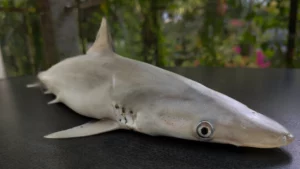 | 0.8–1.1 m (2.5–3.5 ft) | Low | Shallow coastal water and lagoons everywhere; the commonest small shark in the marketsTiny, harmless and abundant. Its name comes from an old belief that eating it improved a mother's milk. |
Spadenose SharkScoliodon laticaudus | 0.6–0.9 m (2–3 ft) | Low | Muddy inshore water of the north and west; enters estuariesOne of the smallest requiem sharks, with a flat shovel snout. Harmless to people. |
Snaggletooth SharkHemipristis elongata | 1.5–2.4 m (5–8 ft) | Low | Coastal shelf water; a regular sight in the Negombo marketWeasel shark with hooked, protruding teeth. Heavily fished across the northern Indian Ocean. |
Pondicherry SharkCarcharhinus hemiodon | 0.8–1 m (2.5–3.3 ft) | Low | River mouths of the south-east; photographed in the Menik Ganga in 2019Critically endangered and feared extinct until Sri Lankan sightings in 2019. One of the rarest sharks on Earth. |
Coral CatsharkAtelomycterus marmoratus | 0.5–0.7 m (1.5–2.3 ft) | Low | Crevices in shallow coral reefs; seen on night divesSlender, spotted and nocturnal. Completely harmless; hides by day inside the reef. |
Whitespotted Bamboo SharkChiloscyllium plagiosum | 0.7–0.9 m (2–3 ft) | Low | Reef flats and seagrass of the north-westA bottom-dweller that walks on its fins. Lays eggs in leathery cases among the coral. |
Grey Bamboo SharkChiloscyllium griseum | 0.6–0.75 m (2–2.5 ft) | Low | Shallow muddy and rocky bottoms in the Gulf of Mannar and Palk BayPlain-coloured cousin of the whitespotted bamboo shark. Often caught in shore nets and returned. |
Great White SharkCarcharodon carcharias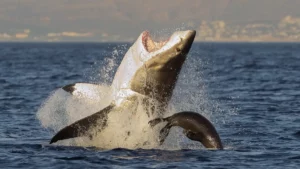 | 4–6 m (13–20 ft) | n/a | No confirmed modern record in Sri LankaListed only because it is the most-asked question. A cool-water species; old Sri Lankan checklists carry it on doubtful historical reports. |
Three species from older Sri Lankan shark lists do not belong on a visitor's checklist. The great white shark is a cool-water animal that hunts seals in water of 12–24 °C; Sri Lanka's sea never drops below about 27 °C, and there is no confirmed modern specimen from the island, so the old claim that great whites “swim regularly” here should be retired. The broadnose sevengill shark is a temperate species of South Africa, Australia and the Americas and does not occur in the tropical northern Indian Ocean. And the Atlantic lemon shark (Negaprion brevirostris) is a Caribbean and West African fish; every lemon shark in Sri Lanka is the sicklefin. Bull sharks are genuinely recorded, but so rarely that most Sri Lankan fishermen have never seen one.
Where to see sharks in Sri Lanka
Sri Lanka is better known for whales than sharks, which means the shark sites are quieter than they deserve to be. These are the places where sightings are reliable enough for local operators to build trips around them.
- Pigeon Island National Park, NilaveliThe easiest shark encounter in the country. A short boat ride from Nilaveli beach near Trincomalee, the reef around the island holds a resident group of blacktip reef sharks that cruise the shallows in one to three metres of water. Snorkelling only, ranger-controlled, season May to October.
- Bar Reef Marine Sanctuary, KalpitiyaThe largest coral reef system in Sri Lanka, protected since 1992, off the Kalpitiya peninsula in the north-west. Blacktip and whitetip reef sharks on the reef, and whale sharks passing along its deep edge from roughly February to April. Diveable from November to April.
- Mirissa and WeligamaThe blue whale capital of the south coast doubles as its whale shark run. Between November and April the whale-watching boats regularly find whale sharks feeding at the surface a few kilometres off Dondra Head, sometimes with spinner dolphins and pilot whales alongside.
- Great Basses and Little Basses reefs, KirindaTwo lighthouse reefs on the south-east coast, famous since Arthur C. Clarke dived them in the 1960s. Strong currents, big grouper and jacks, and regular grey reef, blacktip and occasional silvertip and hammerhead sharks. Only diveable in a short calm window around March and April.
- Trincomalee: Swami Rock and the harbour wrecksThe deep canyon off Trincomalee brings pelagic water close to shore. Dives at Swami Rock, Coral Island and the wrecks inside the bay turn up whitetip reef sharks, tawny nurse sharks and, on the outer sites, the occasional whale shark between June and September.
- Hikkaduwa and UnawatunaThe south-west's classic reefs and wreck dives. Not shark-dense, but whitetip reef sharks rest under the ledges at Kiralagala and the deeper wrecks, and juvenile blacktips appear on the Hikkaduwa National Park reef flat. Best from November to April.
- The Colombo wrecksA string of cargo wrecks and the Taprobane East reef sit within half an hour of the capital in 20–40 m of water. Sharks are a bonus rather than the point, but sicklefin lemon sharks and blacktips are seen on the deeper wrecks in the calm season.
If you have a single week, the east coast between May and October is the surest bet for reef sharks, and the west and south coasts between November and April for whale sharks. Most operators in Nilaveli, Kalpitiya and Mirissa also run trips to the reefs described above, so a snorkeller can see blacktips in the morning and a whale shark in the afternoon without ever putting on a tank.
Best time of year to see sharks in Sri Lanka
Sri Lanka has two monsoons and they arrive on opposite sides of the island, so the island always has a calm coast, and that is the coast to be on.
- South-west monsoon, May to September: rough seas and rain on the west and south coasts; the east coast is flat and clear. This is the season for Trincomalee, Nilaveli and Pigeon Island's blacktip reef sharks, and for whale sharks off the east coast, usually June to September.
- North-east monsoon, November to February: the east goes rough and the west and south turn calm. Diving at Kalpitiya, Hikkaduwa and Unawatuna opens, and the Mirissa whale-watching season begins in November and runs to April.
- Whale sharks: the west coast peak is February to April, when the animals pass Bar Reef and Kalpitiya; the south coast sees them through the blue whale season from November to April; the east coast takes over in mid-year.
- Great and Little Basses: a narrow window in March and April between the two monsoons when the currents ease enough to dive.
The water is 27–30 °C at the surface all year, so a shorty wetsuit is plenty and the resident reef sharks never migrate. What changes is visibility: 20–30 m in the calm season on either coast, and often under 5 m during the monsoon on the exposed side.
Shark attacks in Sri Lanka: what the record actually shows
For a country with so many sharks and so many people in the water, Sri Lanka's incident list is remarkably thin and remarkably old. SharkSider keeps every reported case in its own database, updated weekly on the shark attacks in Sri Lanka page. The six most recent entries are shown below (the full list is on the attacks page):
- 2004 · Pasikudha, Eastern ProvinceSwept out to sea by the tsunami, she clung to a log for 24 hours — No injurySpecies: No shark involvement · not fatal
- 1970 · Colombo Harbor, Western ProvinceSpearfishing / freediving — Swim fins badly torn by the shark's teethSpecies not identified · not fatal
- 1960 · Pigeon Island, Eastern ProvinceSpearfishing — No injurySpecies: Blacktail reef shark · not fatal
- 1960 · Manayaweli Cove, Trincomalee, Eastern ProvinceCollecting ornamental fish — No injury, beat off shark with his collecting netSpecies: Blacktip reef shark · not fatal
- 1957 · Colombo Harbor, Western ProvinceFishing — Fatal, but shark involvement not confirmedSpecies: Shark involvement prior to death was not confirmed · fatal
- 1950 · Heda Oya Estuary, Eastern ProvinceShark fishing — Buttock removedSpecies: Possibly a lemon shark · not fatal
The database holds 15 entries for Sri Lanka, filed under both its modern name and the colonial name Ceylon, running from 1817 to 2004. Nine are filed with a date of 1901 or later and are the ones counted in the summary line on this page; the other six are nineteenth-century cases. Four were fatal, and every one of them is at least 70 years old: a swimmer at Colombo in 1817, a swimmer below the English fort at Trincomalee some time between 1845 and 1853, a swimmer in Colombo Harbour in 1898, and a fisherman in the same harbour in 1957 whose death may not have involved a shark at all; only the last falls inside the dated count. The most recent case, from December 2004, is not an attack: it records a woman swept out to sea by the tsunami who clung to a log for 24 hours with no shark involvement.
Strip those out and the pattern is clear. Almost every injury happened either in Colombo Harbour, a working port where sharks once followed the fish waste, or to men with speared fish in the water. The 1970 entry, the last true shark encounter in the file, is a spearfisher in Colombo Harbour whose swim fins were shredded; the Pigeon Island and Trincomalee entries from the 1960s are blacktip reef sharks nosing at spearfishers and fish collectors and leaving without injury; the 1950 case at the Heda Oya estuary was a shark fisherman badly bitten by what was probably a sicklefin lemon shark he had hooked. A conch diver bitten in the Gulf of Mannar in 1817, a bather at Trincomalee in 1871, a diver who lost a leg in 1896, a Mannar fisherman with a bitten foot and a torpedoed ship's passenger in the Second World War complete the list. Not a single swimmer or snorkeller off a tourist beach appears in it. Ordinary beach dangers in Sri Lanka are the rip currents on the south and west coasts, which claim lives every year, not sharks. The standard precautions still apply: stay out of harbours and river mouths at dusk, never swim near fishing boats or fish-cleaning, and do not spearfish with a catch on your belt.
Is it safe to swim and snorkel with sharks in Sri Lanka?
Yes. The sharks a swimmer can actually meet in Sri Lanka, the blacktip reef sharks of Pigeon Island and Bar Reef and the whitetips resting under the ledges at Hikkaduwa, are timid animals that treat a person as a large, noisy inconvenience. At Pigeon Island the blacktips often swim within a few metres of snorkellers in water barely deep enough to float in; keep still and they carry on with their patrol, thrash around and they leave. The only documented blacktip reef shark bites anywhere are nips to the ankles of people wading through their hunting flats, and even those are rare.
Whale shark trips off Mirissa, Kalpitiya and Trincomalee are the country's big-animal encounter and the animals are harmless. The risk runs the other way: a boat crowding a feeding shark, or a swimmer grabbing a fin. Follow the same code that works everywhere: slip in quietly, keep 3 m from the body and 4 m from the tail, no touching, no flash photography, and choose a boat whose skipper cuts the engine well before the animal. Sri Lanka's whale-watching industry grew fast and not every operator is careful; the better ones in Mirissa now follow Wildlife Department guidelines on approach distance.
The pelagic species, the silky sharks, makos and oceanic whitetips, live beyond the shelf edge where swimmers never go. Divers on the Great Basses or the deep Trincomalee sites may see a grey reef shark hold its ground or a silvertip come in for a look, which is normal behaviour that calls for a slow retreat along the reef, not a bolt for the surface.
Shark conservation in Sri Lanka
Sri Lanka's relationship with sharks has been shaped by its fishing fleet. For decades the island ranked among the top shark-catching nations in the Indian Ocean, with silky sharks, threshers, hammerheads and makos landed in bulk at Negombo, Beruwala and the Tangalle fisheries harbour, most of them taken by multi-day boats fishing gillnets and longlines for tuna far beyond the shelf. Fins went to East Asia and the meat was dried for the local market. The result was visible on the reefs: grey reef sharks that were common at the Great Basses in the 1960s became scarce, and the sawfishes that once entered the island's rivers have effectively disappeared.
The last decade has brought real change. The 2013 National Plan of Action set catch monitoring and species protection in motion, and the 2015 regulations banned thresher shark and oceanic whitetip catches, protected the whale shark and required fins to be landed attached, which removed the incentive for finning at sea. Silky sharks, the main landed species, remain legal to catch but are now recorded at the harbours. On the habitat side, the Bar Reef Marine Sanctuary (1992), Hikkaduwa National Park and Pigeon Island National Park (upgraded in 2003) protect the three reefs where visitors are most likely to see sharks. And in 2019 the country delivered one of the best shark stories of the decade: the Pondicherry shark, a small river-mouth species feared extinct for decades, was photographed alive in the Menik Ganga river, a reminder of how much is still unknown about Sri Lankan sharks. Our guide to why sharks are endangered explains why slow-breeding species recover so slowly once fishing eases.
Sharks in neighbouring waters
Sri Lanka shares its sharks with the rest of the northern Indian Ocean. India lies across the Palk Strait, and the Gulf of Mannar is a single shared nursery for small coastal sharks. The Maldives, an hour's flight to the south-west, offers the same reef species in far greater numbers under a nationwide fishing ban. To the east, Thailand, Malaysia and Indonesia add the Coral Triangle's wobbegongs and walking sharks, while Oman covers the western Arabian Sea with its own whale shark aggregations. The whole Indian Ocean and beyond is on our sharks around the world page.
Frequently asked questions
Are there sharks in Sri Lanka?
Yes. About 60 shark species are recorded in Sri Lankan waters, from blacktip reef sharks in the shallows of Pigeon Island to threshers, hammerheads and silky sharks beyond the shelf edge. Whale sharks pass the coast with the monsoons, and the fish markets of Negombo show how many species live offshore.
Have there been shark attacks in Sri Lanka?
Very few, and none recent. SharkSider's database lists 15 entries from 1817 to 2004, nine of them dated after 1900, with four deaths, the last in 1957 and unconfirmed. Nobody has been bitten by a shark in Sri Lankan waters in the file since 1970, and most of the older cases involved Colombo Harbour, spearfishing or shipwrecks rather than beaches.
Are there great white sharks in Sri Lanka?
No confirmed modern record exists. Great whites prefer water of 12–24 °C and Sri Lanka's sea stays at 27–30 °C all year. Older checklists carry the species on doubtful historical reports, and every recent great white sighting has turned out to be a tiger, bull or oceanic whitetip shark.
Is it safe to swim in Sri Lanka with sharks around?
Yes. The sharks a swimmer can meet are blacktip and whitetip reef sharks, which are shy and harmless if left alone, and whale sharks, which are filter feeders. The genuine danger on Sri Lankan beaches is rip currents on the south and west coasts, not sharks. Avoid harbours and river mouths at dusk.
Where can I snorkel with sharks in Sri Lanka?
Pigeon Island National Park near Trincomalee is the best place, with resident blacktip reef sharks in one to three metres of water between May and October. Bar Reef off Kalpitiya has reef sharks from November to April, and whale shark snorkelling trips run from Kalpitiya, Mirissa and Trincomalee in season.
When is the best time to see whale sharks in Sri Lanka?
February to April on the west coast around Kalpitiya and Bar Reef, November to April off Mirissa on the south coast alongside the blue whale season, and roughly June to September off Trincomalee on the east coast. The animals follow the plankton around the island as the monsoons switch sides.
Are there tiger sharks or bull sharks in Sri Lanka?
Both are recorded, but neither is common near beaches. Tiger sharks patrol the deep reef edges and are occasionally landed by offshore boats. Bull sharks are rare and known mostly from river mouths and fishery landings. No incident in the Sri Lankan record is confirmed to involve either species.
Can you dive with sharks in Sri Lanka?
Yes. The Great and Little Basses reefs off Kirinda offer grey reef, blacktip and occasional silvertip and hammerhead sharks in a short March to April window. Trincomalee's Swami Rock and wrecks have whitetip reef and tawny nurse sharks from May to October, and Hikkaduwa's ledges hold whitetips in the calm season.
Is shark fishing legal in Sri Lanka?
Partly. Sri Lanka remains a major shark-fishing nation, mainly as bycatch of the offshore tuna fleet. Since 2015, however, catching thresher sharks and oceanic whitetips has been banned, the whale shark is protected, and every shark must be landed with its fins attached, which ended finning at sea.
What is the most common shark in Sri Lanka?
For visitors, the blacktip reef shark, which lives on the shallow reefs at Pigeon Island, Bar Reef and Hikkaduwa. In the fish markets the answer is the silky shark, the main species landed by the tuna fleet, followed by small coastal species such as the milk shark and spadenose shark.
References

A small team focused on researching sharks and making marine biology easy to understand. Every page is reviewed against current species records and the SharkSider attack database, and updated when new incidents or research appear.
Published January 16, 2023 · Last updated September 21, 2026 · Incident data from the SharkSider attack database (9 records for Sri Lanka, 1 fatal).


