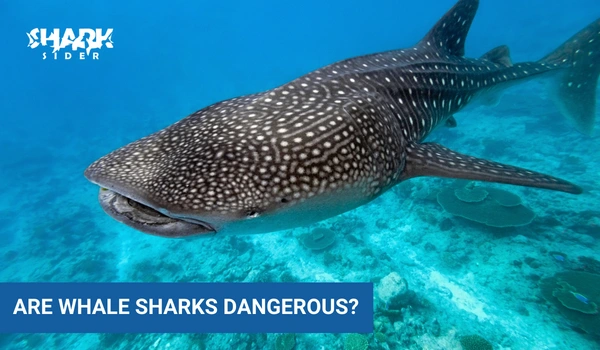
No. Two entries in the SharkSider incident database involve a whale shark and neither injured anyone: a boat off South Africa in 1976 whose propeller shaft was buckled, and a boat bumped off Mozambique in a report logged before 2004.
The animal filters plankton and small fish through its gills, and the thousands of teeth in its mouth are roughly six millimetres long and take no part in feeding. What risk exists around a whale shark is mechanical rather than predatory: a tail stroke from a body weighing several tonnes, or a swimmer and a boat working the same patch of water at once.
- Entries in our database2, both boat collisions
- People injured on record0
- IUCN Red List statusEndangered
On this page
What the incident record actually holds
Two entries in our database name a whale shark, and they are worth reading rather than counting. On 12 March 1976 a boat off Robberg Point in South Africa's Western Cape came off worse than the shark: nobody aboard was hurt, but the propeller shaft was buckled. The second entry, logged from Inhambane Province in Mozambique and dated only as before 2004, records a shark bumping a boat with no injury to anyone in it.
That is the whole file. No bite, no fatality, nobody in the water hurt, across a database that merges the International Shark Attack File and the Global Shark Attack File with reports we check ourselves. For a species that meets snorkellers by the thousand every season off Mexico, the Philippines, Australia, the Maldives and Mozambique, an empty injury column is not a statistical fluke — it is what the animal is.
It is worth being precise about the wording, because the old version of this page and a good many others claim there has never been a single reported incident of any kind. There have been two. Neither involved a person, and both read like a large fish and a small boat occupying the same water. That distinction is the difference between a fact and a slogan, and the shark attack records are only useful if they are kept that way.
Why a whale shark could not bite you if it tried
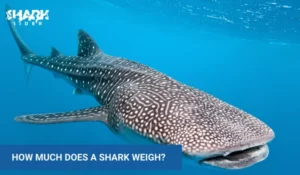
Rhincodon typus is a filter feeder, and its whole head is built for the job. Water is taken in either by suction, with the shark hanging vertically and gulping, or by ram feeding, with the mouth held open as it swims forward. Inside, twenty filter pads sieve out copepods, krill, fish eggs, small schooling fish and squid, and the water leaves through the gill slits. Prey items are measured in millimetres.
The teeth are still there, in around three hundred rows, but each one is about six millimetres long and none of them is used in feeding at all. They are a leftover from an ancestor that ate differently, and no mechanism exists for closing them on anything the size of an arm. The mouth is wide — well over a metre across on a large animal — but width is not the same as bite.
Size figures deserve the same caution. Reports of eighteen and twenty metres circulate widely, but they are estimates made at sea rather than measurements, and most verified individuals come in around twelve metres. Published weights are almost all calculated from length rather than weighed. The whale shark profile keeps the measured numbers separate from the reported ones, and the same approach applies to the other filter-feeding sharks.
The hazards that are real
The tail is the one part of a whale shark that can genuinely hurt somebody. A caudal fin two or three metres tall, swung by an animal of several tonnes, does not need any intent behind it; swimmers who position themselves behind a shark rather than beside it occasionally take a blow, and the standard briefing on every reputable trip is to stay off the tail end. Guidance for swimming with whale sharks exists almost entirely for this reason.
The second hazard is traffic. Where whale sharks aggregate, boats gather too, and most of the injuries reported at these sites are propeller injuries — to people in the water, and very visibly to the sharks themselves, which carry healed fin and back scars from strikes. A surfacing shark and a moving tender are a worse combination than a shark and a snorkeller ever is.
Third is crowding. Large groups chasing one animal push it into deeper water, interrupt its feeding and put more bodies in the propeller zone. Countries with established tourism have written rules about this, and the useful thing about them is that they are all designed around the two problems above rather than around any risk of being eaten. Compared with the species that do appear repeatedly in the record — the great white, the tiger shark and the bull shark — the whale shark barely registers, which is why it opens our list of the least dangerous sharks.
What happens if you touch one
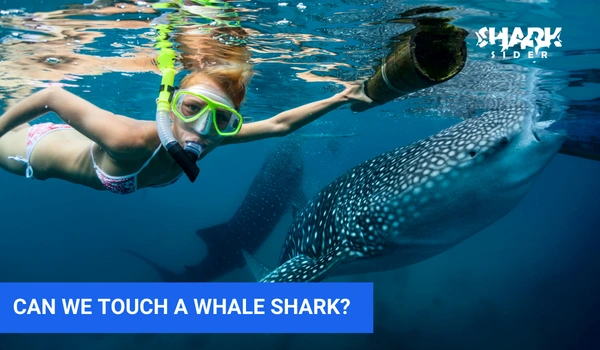
The answer has more to do with the shark than with you. A whale shark's skin carries a mucus layer over armoured placoid scales, and that mucus is a working part of the animal's defence against bacteria and parasites. Rubbing it off leaves a patch of skin exposed, and hands, fins and wetsuits all do exactly that. Riding a shark by holding a fin adds a second problem: the animal dives to escape, cutting short a feeding bout it may have travelled a long way for.
This is why touching is prohibited at almost every managed site rather than merely discouraged. At Ningaloo Reef in Western Australia, swimmers must stay three metres from the body and four metres from the tail; Mexico, the Philippines and the Maldives all run comparable distance rules with licensed operators and capped group sizes. Feeding sharks to hold them in one place, as happens at a small number of sites, changes their behaviour and keeps them from moving on.
None of this is about danger to the swimmer. It is about the fact that the encounter is asymmetric: you leave after twenty minutes, and the shark is still there.
The threat runs the other way
The IUCN lists the whale shark as Endangered, and the pressures are the familiar ones. Targeted fisheries in several countries have been closed but not everywhere; the fins are large and valuable and still move through the fin trade; and the species is slow-growing and late to mature, which means a population knocked down does not come back quickly. Ship strikes in busy coastal water are an additional and under-counted cause of death.
They are also not without natural enemies, contrary to the usual claim. Juveniles are taken by blue marlin and by large sharks, and killer whales have been filmed killing and feeding on whale sharks in the Gulf of California. A whale shark is enormous but it is not invulnerable, and the smallest ones are prey like anything else.
If you want the wider picture of what is actually pushing shark numbers down, and what has been shown to work against it, the why sharks are endangered page and the IUCN Red List entry are the places to start. The species list at types of sharks carries the status for every shark we profile.
Frequently asked questions
Are whale sharks dangerous to humans?
No. Our database holds two entries involving whale sharks and neither hurt a person: a South African boat with a buckled propeller shaft in 1976 and a Mozambique boat that was bumped before 2004. The species filters plankton, and its teeth play no part in feeding at all.
Has a whale shark ever attacked a person?
No attack on a person appears in our records or in the international files. Both entries attributed to the species involve boats rather than swimmers, and neither produced an injury. Given how many thousands of people snorkel with them every season, an empty column is meaningful rather than accidental.
Are whale sharks friendly?
They are indifferent rather than friendly, which is better. A whale shark that is feeding will often keep its course with swimmers alongside, and some individuals are noticeably tolerant of boats. That is habituation, not affection, and it does not survive being touched, chased or cut off from the plankton it is working through.
Can a whale shark swallow a person?
No. The mouth is over a metre wide on a large animal but the throat behind it is narrow, and the filter pads that sieve out plankton sit directly in the path. There is no route through a whale shark large enough for a person, and nothing in its feeding behaviour that would try.
Why should you not touch a whale shark?
Because the mucus layer on its skin is part of its defence against bacteria and parasites, and hands, fins and wetsuits strip it off. Touching also makes the shark dive and abandon a feeding bout. Managed sites in Australia, Mexico and the Philippines set minimum distances for exactly these reasons.
What is the real danger when swimming with whale sharks?
The tail and the boats. A caudal fin two or three metres tall carries enough force to injure a swimmer who drifts behind the animal, and propeller strikes are the most common injury reported at aggregation sites, to people and to the sharks. Staying alongside the body avoids both.
Do whale sharks have teeth?
Yes, around three hundred rows of them, each about six millimetres long, and none of them plays any role in feeding. They are an inheritance from an ancestor with a different diet. Food is captured by twenty filter pads inside the mouth and the water is expelled through the gill slits.
Do whale sharks have any predators?
Yes, despite the common claim that they have none. Juveniles are taken by blue marlin and by large sharks, and killer whales have been filmed killing and feeding on whale sharks in the Gulf of California. Adults are rarely attacked, but the species is not outside the food web.
References

A small team focused on researching sharks and making marine biology easy to understand. Every page is reviewed against current species records and the SharkSider attack database, and updated when new incidents or research appear.
Published February 19, 2023 · Last updated September 23, 2026 · Filed under FAQ.