
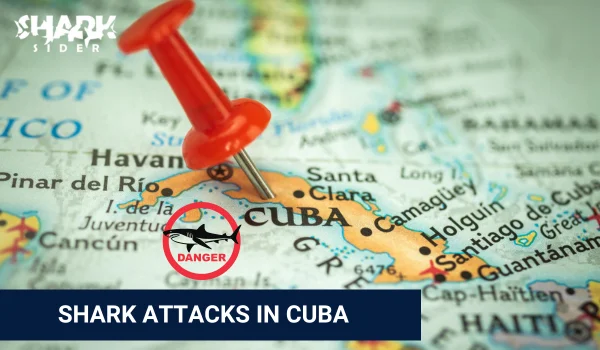
Cuba has 49 recorded shark incidents in the SharkSider database (1749–2023), 26 of them fatal. Thirty-five are dated since 1900. Havana and its province dominate the file with 20 entries and 13 deaths, from the harbour cases of the 1700s and 1800s to the three Miramar beach deaths of August 1931 and the Cojímar fishing cases of the 1950s. Since 2000 there have been 9 incidents and 3 deaths, the latest a spearfisher killed by a bull shark at Puerto Escondido, Mayabeque, on 9 May 2023.
The modern pattern differs from the old one. The historical deaths are mostly people in harbour water after falling from ships and boats, and the 1950s, the busiest decade with 10 entries and 4 deaths, are dominated by fishing and spearfishing accidents. The recent cases are swimmers at Guardalavaca in Holguín (2017 and 2019) and spearfishers at Guantánamo and Mayabeque. The bull shark is the most frequently identified species, and a tiger shark killed a night bather at Guardalavaca in November 2017.
On this page
- Why Cuba's record is long, old and centred on Havana
- Cuban places with recorded shark incidents
- The complete Cuban record, all 49 entries
- The sharks behind Cuba's incidents
- Reading the Cuban record as a safety guide
- Cuba in the Caribbean and world picture
- Records from Cuba's neighbours
- Frequently asked questions
- References
Why Cuba's record is long, old and centred on Havana
Cuba is the largest island in the Caribbean, with roughly 5,700 kilometres of coast, and it sits at a crossroads of shark habitat. The Gulf Stream runs along its north-west shore within sight of Havana, the Old Bahama Channel and the Nicholas Channel bring deep water close to the north-central cays, and on the south-east the island drops into the Cayman Trench, the deepest water in the Caribbean. Inside those edges are vast, lightly developed shallows: the Jardines de la Reina, the Sabana-Camagüey archipelago, the Zapata swamp and hundreds of kilometres of mangrove. Decades of limited coastal development and restricted fishing have left Cuba with some of the healthiest shark populations in the region, from bull sharks in the lagoons to silky and Caribbean reef sharks on the outer walls.
The human half of the story is Havana. For three centuries the city was the busiest port in the Spanish Caribbean, and a port full of ships, fish waste and men who could not swim is exactly where the oldest shark records in the Americas come from. Nine of the 49 entries are set in Havana Harbor itself, and the earliest of them, from 1749, is the case that became famous: a swimmer whose right leg was severed at the knee and who, according to the record, went on to become Lord Mayor of London and to commission the painting "Watson and the Shark" from John Singleton Copley. Two of the other harbour deaths are as unusual as any in the database, a man on horseback in 1892 and a balloonist whose craft crashed into the water in 1893.
The record then moves to the beaches. As Havana grew westward into Vedado and Miramar in the 1920s and 1930s, bathing became fashionable, and in August 1931 three swimmers were killed in nine days; the note attached to the last of them says wire netting was installed at local beaches afterwards. The 1950s belong to the shark fishermen of Cojímar, the village east of the city where Hemingway kept his boat, and the recent decades to a different Cuba: resort swimmers on the Holguín coast and spearfishers along both ends of the island. In all, 14 entries are older than 1900, 35 are dated since, and the first record of the twenty-first century (a swimmer bitten off the Blau Costa Verde resort in January 2001) is separated from the last of the twentieth (1957) by more than forty years of silence.
Cuban places with recorded shark incidents
Eight groups of places account for the file. The first three are all within Havana Province, which holds 20 of the 49 entries.
- Havana HarborNine entries, five of them deaths, nearly all involving people who ended up in the water from ships. Besides the 1749 leg amputation, a bather lost a leg in 1846 and a man swimming to escape imprisonment in 1873 had both legs so badly bitten that they were amputated. A man riding a horse was killed in June 1892, a balloonist whose balloon crashed in the harbour was killed in May 1893, and men who fell overboard were killed in October 1903, September 1904 (one leg severed below the knee and the other above it, by a second shark) and July 1921. The 1895 entry, a shipwreck, is recorded as probable drowning followed by scavenging.
- Miramar, Vedado and Jaimanitas: Havana's bathing beachesIn July 1930 a swimmer at La Playa, Vedado, had his right arm and leg bitten and both were amputated. Then came August 1931: a swimmer killed at Miramar on the 23rd, with rescuers watching the shark try to drag him under by the leg; a swimmer killed a quarter of a mile offshore at the Miramar subdivision on the 25th; and a swimmer killed at the Vedado Baths on the 31st, after which wire netting went up at the local beaches. In May 1933 a person swimming to shore from a capsized sailboat off the Jaimanitas Yacht Club was killed.
- Cojímar and the Havana shark fisheryFive Cojímar entries, three fatal, and one more from Havana itself. A person who slipped from a rock into the water at Cojímar was killed in 1945. In 1955 a fisherman clubbing a hooked shark had his forearm slashed from wrist to elbow, and in an undated case filed as before 1957 a shark fisherman knocked overboard was bitten on the hip and killed; both count as provoked. In 1957 a 3.7 m shark struck a fishing boat without hurting anyone, a death at Cojímar the same year is queried in the file as accident or infanticide, and in Havana a man fishing for sharks became entangled in his line and was pulled beneath the surface.
- Guardalavaca and the Holguín coastThe modern hotspot: three entries and two deaths since 2001. A swimmer off the Blau Costa Verde resort had his left arm bitten by a 2 m shark in January 2001; a person bathing at night at Guardalavaca Beach was killed by a tiger shark on 4 November 2017; and another swimmer was killed at the same beach on 4 December 2019. These are the only fatal cases in the file involving resort swimmers.
- Guantánamo and Cape MaisíSix entries, none of them entered as fatal. Two spearfishers at Boquerón were injured on 12 August 1954 by a 58-inch nurse shark that one of their party had shot, and two more spearfishers were bitten on the leg by bull sharks at Guantánamo in January 2009. The other two lines are wartime and maritime: the Esso Bolivar, torpedoed and shelled by U-126 south-east of Guantánamo Bay in March 1942 with the loss of eight of her fifty crew, and two boys from the Danish ship Grete Maersk who went into the water off Cape Maisí in December 1948; after two hours a shark bit and killed one, while the other washed ashore alive.
- Santiago de CubaA swimmer was killed at Santiago in July 1898, and in a second 1898 case off the city 13 men were in the water after their sailboat sank and 6 were taken by sharks. The one modern entry is from Uvero, west of the city, where a swimmer's left foot was severed by a 3 m shark on 20 January 2005.
- Nuevitas, Caibarién, Remedios and Santa Lucía (north-central coast)Five entries, four of them deaths from small boats. A boat from the ship Josephine capsized in a squall at Remedios in June 1867; at Nuevitas Harbor in 1898 four men were killed by sharks while trying to swim ashore and one survived; at Caibarién in August 1904 a captain and two sailors clinging to the hull of their capsized boat were pulled off by sharks; and a death is recorded off Nuevitas in December 1913. The only recent case is a diver at Santa Lucía, Camagüey, whose left forearm was bitten by a 2.5 m bull shark in October 2004.
- Matanzas, Cienfuegos and the western provincesMatanzas has two nineteenth-century deaths: a man sitting on the gunwale of a boat taken by a large shark in April 1839, and a man painting a ship in 1867 who was pulled off his float and never recovered. At Cienfuegos in November 1929 a shark attacked a fishing boat, the fisherman jumped overboard, was bitten on the arm, killed the shark with a knife and later lost the arm. The two newest entries in the whole file are from the west: a fisherman's arm bitten at Playa Majana, Artemisa, on 25 March 2023, and a spearfisher killed by a bull shark at Puerto Escondido, Mayabeque, on 9 May 2023.
The complete Cuban record, all 49 entries
The figures, the decade chart and the table below come straight from the SharkSider database, which draws on the International Shark Attack File, the Global Shark Attack File and verified local reports and is updated weekly. Fatal entries are shown in red. Fourteen of the 49 entries are from before 1900; they appear in the collapsed decades at the foot of the table, while the chart begins at 1900.
- Recorded incidents49 (35 since 1900)
- Fatal26
- Years covered1749–2023
- Since 20009 incidents, 3 fatal
- Most common activitySwimming & wading
- Most identified sharkBull shark
- 31900s
- 11910s
- 31920s
- 61930s
- 31940s
- 101950s
- 52000s
- 22010s
- 22020s
The most recent incidents
- 9 May 2023 · Puerto Escondido, MayabequeSpearfishing — FatalShark: Bull shark · fatal
- 25 March 2023 · Playa Majana, ArtemisaFishing — Arm bittenShark not identified · not fatal
- 4 December 2019 · Guardalavaca Beach, HolquinSwimming — FatalShark not identified · fatal
- 4 November 2017 · Guardalavaca Beach, Holquin ProvinceNight bathing — FatalShark: Tiger shark · fatal
- 25 January 2009 · Guantanamo Bay, Guantanamo ProvinceSpearfishing — Severe lacerations to lower left legShark: Bull shark · not fatal
- January 2009 · Guantanamo, Guantanamo ProvinceSpearfishing — Lacerations to right calfShark: Bull shark · not fatal
Every recorded incident
| Date | Place | Activity | What happened | Shark | Outcome |
|---|---|---|---|---|---|
| 9 May 2023 | Puerto Escondido, Mayabeque | Spearfishing | Fatal | Bull shark | Fatal |
| 25 March 2023 | Playa Majana, Artemisa | Fishing | Arm bitten | — | Survived |
| 4 December 2019 | Guardalavaca Beach, Holquin | Swimming | Fatal | — | Fatal |
| 4 November 2017 | Guardalavaca Beach, Holquin Province | Night bathing | Fatal | Tiger shark | Fatal |
| 25 January 2009 | Guantanamo Bay, Guantanamo Province | Spearfishing | Severe lacerations to lower left leg | Bull shark | Survived |
| January 2009 | Guantanamo, Guantanamo Province | Spearfishing | Lacerations to right calf | Bull shark | Survived |
| 20 January 2005 | Uvero, Santiago de Cuba Province | Swimming | Left foot severed | 3 m [10'] shark | Survived |
| 31 October 2004 | Santa Lucia, Camaguey Province | Diving | Left forearm bitten | 2.5 m [8.25'] bull shark | Survived |
| 24 January 2001 | Off Blau Costa Verde resort, Holquin Province | Swimming | Left arm bitten | 2 m [6.75'] shark | Survived |
| 21 June 1957 | Yucatan Channel | M.v. tropical sank. sole survivor rode oil drums for 8 days without food or water. | No injury, no attack, sharks in vicinity when the sea was calm | Invalid | Survived |
| 1957 | Cojimar, Havana Province | — | Fatal, but was it an accident or infanticide? | 3.7 m [12'] shark | Fatal |
| 1957 | Cojimar, Havana Province | Fishing | No injury to occupant, shark stuck boat | 3.7 m [12'] shark | Survived |
| 1957 | Havana, Havana Province | Fishing for sharks | Fatal, became entangled in fishing line and pulled below the surface | — | Fatal |
| Before 1957 | Cojimar, Havana Province | Shark fishing, knocked overboard | Fatal, hip bitten provoked incident | — | Fatal |
| 7 May 1956 | — | Free diving, working on u/w scenes for motion picture | Fatal | — | Fatal |
| 1955 | Cojimar, Havana Province | Fishing | Forearm slashed wrist to elbow by hooked shark he was trying to club to death provoked incident | "a little shark" | Survived |
| 12 August 1954 | Boqueron, Guantanamo Province | Spearfishing | Knee bitten by shark that his dive buddy had shot provoked incident | Nurse shark, 58", 34-lb | Survived |
| 12 August 1954 | Boqueron, Guantanamo Province | Spearfishing | Right thigh & left calf injured by speared shark provoked incident | Nurse shark, 58", 34-lb | Survived |
| 15 July 1950 | Caribbean Sea | Swept off deck of s.s.frontenac enroute from west indies to us | Found at 21h30 by searchlight. had been constantly harassed by sharks & had numerous lacerations | — | Survived |
| 14 December 1948 | 10 miles off Cape Maisi, Guantanamo Province | 2 messboys (jeppsen) & tony latona (13) were playing on the afterdeck of the danish ship grete maersk. jeppsen fell overboard, latona threw a lifebelt then jumped in to help him. ship didn’t notice they were missing | 2 hours later shark bit jeppsen’s feet, arm, knee & finally killed him. tony, clothing torn but alive, washed ashore on cuban coast | — | Survived |
| 1945 | Cojimar, Havana Province | Playing on rock, slipped & fell into the water | Fatal | — | Fatal |
| 8 March 1942 | 30 nm southeast of Guantanamo Bay, Guantanamo Province | Esso bolivar was torpedoed & shelled by the german submarine u-126 | Of her crew of 50, eight perished, including the two injured men | — | Survived |
| 3 May 1933 | Off Jaimanitas Yacht Club, Havana, Havana Province | Swimming to shore from capsized sailboat | Fatal | — | Fatal |
| 8 November 1932 | — | Hurricane & tidal wave | No details recorded | — | Survived |
| 31 August 1931 | Vedado Baths, Miramar, Havana, Havana Province | Swimming | Fatal (wire netting installed at local beaches after this incident.) | — | Fatal |
1930s — 3 incidents, 2 fatal
| Date | Place | Activity | What happened | Shark | Outcome |
|---|---|---|---|---|---|
| 25 August 1931 | Miramar subdivision, Havana, Havana Province | Swimming a quarter mile offshore | Fatal, right leg bitten | — | Fatal |
| 23 August 1931 | Miramar, Havana, Havana Province | Swimming | Fatal, "rescuers saw shark trying to drag him under by the leg" | — | Fatal |
| 19 July 1930 | LaPlaya Beach / Vedado, Havana, Havana Province | Swimming | Right arm & leg bitten, arm & leg surgically amputated | — | Survived |
1920s — 3 incidents, 1 fatal
| Date | Place | Activity | What happened | Shark | Outcome |
|---|---|---|---|---|---|
| 21 November 1929 | Cienfuegos, Cienfuegos Province | Fishing | Shark attacked his boat, threatening to capsize it. he jumped overboard & shark bit his arm. he knifed & killed shark. later his arm was surgically amputated | — | Survived |
| 14 January 1923 | 20 miles from Havana, Caribbean Sea | Seaplane columbus ditched in the sea | Although this incident is listed elsewhere as a shark attack, the account of the disaster suggests the 4 who perished probably drowned. five people survived | Atkins' remains were recovered from a dusky shark, C. obscurus, by Capt. W. F. Young, shark fisherman | Survived |
| 21 July 1921 | Havana Harbor | Fell overboard | Fatal | — | Fatal |
1910s — 1 incident, 1 fatal
| Date | Place | Activity | What happened | Shark | Outcome |
|---|---|---|---|---|---|
| 26 December 1913 | Off Neuvitas | — | Fatal | — | Fatal |
1900s — 3 incidents, 3 fatal
| Date | Place | Activity | What happened | Shark | Outcome |
|---|---|---|---|---|---|
| September 1904 | Havana Harbor, Havana Province | Lost his footing & fell overboard | Fatal, left leg severed below knee, right leg severed above knee by a second shark | — | Fatal |
| August 1904 | Caibarien Harbor, Villa Clara Province | Ship's boat capsized in squall, captain & 2 sailors clinging onto hull | Fatal, shark pulled them off hull of boat | — | Fatal |
| 4 October 1903 | Havana Harbor, Havana Province | Fell overboard | Fatal | — | Fatal |
1890s — 6 incidents, 5 fatal
| Date | Place | Activity | What happened | Shark | Outcome |
|---|---|---|---|---|---|
| July 1898 | Santiago de Cuba, Santiago de Cuba Province | Swimming | Fatal | — | Fatal |
| 1898 | Off Santiago de Cuba, Santiago de Cuba Province | 13 men in the water after sailboat capsized & sank | Fatal, 7 survived but 6 were taken by sharks | — | Fatal |
| 1898 | Nuevitas Harbor, Camaguey Province | Attempting to escape by swimming to shore | Fatal, 4 were killed by sharks, 1 survived | — | Fatal |
| 18 September 1895 | Havana Harbor, Havana Province | Shipwreck | Probable drowning & scavenging | Questionable | Survived |
| 17 May 1893 | Havana Harbor, Havana Province | His balloon crashed in the harbor | Fatal | — | Fatal |
| 20 June 1892 | Havana Harbor, Havana Province | Riding a horse | Fatal | — | Fatal |
1870s — 1 incident, 0 fatal
| Date | Place | Activity | What happened | Shark | Outcome |
|---|---|---|---|---|---|
| November 1873 | Havana Harbor, Havana Province | Swimming / escaping imprisonment | Legs severed bitten, later surgically amputated | — | Survived |
1860s — 3 incidents, 2 fatal
| Date | Place | Activity | What happened | Shark | Outcome |
|---|---|---|---|---|---|
| 26 June 1867 | Remedios, Villa Clara Province | Boat from ship josephine capsized in squall | Fatal | — | Fatal |
| 1867 | Matanzas, Matanzas Province (north coast) | Painting a ship | Fatal, pulled off float by shark, body not recovered | — | Fatal |
| 25 September 1861 | 60 miles off Trinidad de Cuba | Deserting the bark nazarene | Lacerations | — | Survived |
1840s — 1 incident, 0 fatal
| Date | Place | Activity | What happened | Shark | Outcome |
|---|---|---|---|---|---|
| 20 August 1846 | Havana Harbor, Havana Province | Bathing | Leg severed | — | Survived |
1830s — 1 incident, 1 fatal
| Date | Place | Activity | What happened | Shark | Outcome |
|---|---|---|---|---|---|
| 14 April 1839 | Matanzas, Matanzas Province (north coast) | Sitting on gunwale of boat | Fatal | "a large shark" | Fatal |
1820s — 1 incident, 1 fatal
| Date | Place | Activity | What happened | Shark | Outcome |
|---|---|---|---|---|---|
| 28 August 1826 | — | Hbm magpie foundered in a squall | Fatal | — | Fatal |
1740s — 1 incident, 0 fatal
| Date | Place | Activity | What happened | Shark | Outcome |
|---|---|---|---|---|---|
| 1749 | Havana Harbor, Havana Province | Swimming | Right leg severed at knee. in 1796 he became lord mayor of london. in 1778 he commissioned american artist, john singleton copley, to paint the incident: watson and the shark | — | Survived |
Some guidance on reading the Cuban table. A number of rows are maritime disasters rather than attacks on swimmers: the foundering of HBM Magpie in 1826, the seaplane Columbus that ditched 20 miles from Havana in 1923 (the four who died probably drowned, though remains were recovered from a dusky shark), a hurricane entry from 1932 with no details, the torpedoing of the Esso Bolivar in 1942, and the sinking of the M.V. Tropical in the Yucatán Channel in 1957, whose sole survivor spent eight days on oil drums with sharks nearby but was never touched and whose entry is marked invalid. Four cases are provoked, all involving hooked or speared sharks at Boquerón and Cojímar. Several rows describe more than one victim but count as a single entry, notably the two multi-victim 1898 cases and the 1904 Caibarién capsizing. The 1948 Grete Maersk line is filed as non-fatal because it follows the boy who survived, even though the account records his companion's death, and the 1957 Cojímar death is queried in the file as either an accident or an infanticide. Where a species or size appears, it is what witnesses reported.
The sharks behind Cuba's incidents
Bull shark. The species named most often in the Cuban file and the one behind its most recent death. A 2.5 m bull shark bit a diver at Santa Lucía in 2004, bull sharks bit two spearfishers at Guantánamo in January 2009, and a bull shark killed a spearfisher at Puerto Escondido in May 2023. Bull sharks live in Cuba's mangrove lagoons, river mouths and harbours, which is why they are also the likeliest, though unrecorded, culprit in the old Havana Harbor cases.
Tiger shark. Named once, in the death of a night bather at Guardalavaca in November 2017. Tiger sharks patrol the deep drop-offs of the north-east coast, and swimming after dark is the classic circumstance for an encounter.
Nurse shark. Both 1954 Boquerón injuries came from a single 58-inch, 34-pound nurse shark that had been speared, a species that bites only when handled or cornered.
Unidentified large sharks. The 3.7 m animal of the two 1957 Cojímar entries, the 3 m shark that severed a foot at Uvero in 2005, the 2 m shark at the Blau Costa Verde resort in 2001 and the "large shark" at Matanzas in 1839 were never identified. The 1923 seaplane entry names a dusky shark, but only as the animal from which remains were later recovered. Cuba's most abundant reef sharks, the Caribbean reef shark and the silky shark that divers meet at the Jardines de la Reina, do not appear anywhere in the file. The guide to the sharks of Cuba covers all of them.
Reading the Cuban record as a safety guide
The file is clear about which situations have hurt people in Cuban waters.
- Do not swim at night. The 2017 Guardalavaca death is the one modern resort fatality with a known circumstance, and it was a night bathe. Stay out of the water between dusk and dawn on the north-east coast.
- Spearfishers are the most exposed group today. Four of the 9 entries since 2000 involve spearfishing or diving, including the 2023 death. Fish on a float line, get the catch out of the water at once and surface with a partner.
- Keep close to shore. The 1931 Miramar victim who died a quarter of a mile out and the 2001 resort swimmer both illustrate the same point: distance from the beach is distance from help.
- Leave hooked and speared sharks alone. The Cojímar and Boquerón cases of the 1950s all began with a shark that had already been caught.
- Stay out of port and harbour water. Nine Havana Harbor entries, and a string of small-boat capsizings on the north coast, are a reminder that port water with fish waste and shipping is where Cuban sharks have historically found people.
Our page on how to survive a shark attack explains what to do if a shark approaches: stay upright and calm, keep it in view, move steadily towards the boat or the shore, and fight back at the eyes and gills only if it makes contact.
Cuba in the Caribbean and world picture
The International Shark Attack File confirms around 60 to 80 unprovoked bites a year worldwide, and Cuba contributes to that count only occasionally: 9 incidents in the whole period since 2000, against 89 in the Bahamas over the same years and 42 in Mexico. Jamaica, a much smaller island, has 8 since 2000 and a total of 32. What sets Cuba apart is the depth of its history, with 14 entries before 1900 and a fatality rate of more than half, a product of the harbour and shipwreck cases that fill the old decades. The nearest comparison is Florida, ninety miles across the strait, which has a fraction of Cuba's fatality rate and many times its number of bites, because Florida's incidents are mostly small blacktips nipping surfers rather than large sharks meeting people in harbour water. Every country and state is compared on the shark attacks overview.
Records from Cuba's neighbours
To the north, the Bahamas has the biggest file in the Caribbean; to the east, Haiti and the Dominican Republic share Hispaniola's short record; to the south, Jamaica and the Cayman Islands face the same deep trench; and to the west, Mexico has the Yucatán and its Caribbean resorts. The species living around the island are described in sharks in Cuba.
Frequently asked questions
How many shark attacks have there been in Cuba?
The SharkSider database holds 49 shark incidents for Cuba between 1749 and 2023, 26 of them fatal. Thirty-five are dated since 1900. Since 2000 there have been 9 incidents and 3 deaths, at Guardalavaca in Holguín in 2017 and 2019 and at Puerto Escondido in Mayabeque in 2023.
When was the last shark attack in Cuba?
The most recent entry is from 9 May 2023, when a spearfisher was killed by a bull shark at Puerto Escondido, Mayabeque, west of Havana. Six weeks earlier, on 25 March 2023, a fisherman at Playa Majana in Artemisa had his arm bitten and survived.
Is it safe to swim in Cuba?
Yes, for beach swimmers the risk is very small. Cuba has recorded 9 incidents since 2000: four involved swimmers, four spearfishers or divers, and one a fisherman. Swim by day, stay within reach of the shore and avoid night bathing, which is the circumstance of the 2017 Guardalavaca death.
Have there been shark attacks at Varadero?
No. Varadero has no entry in the database. Matanzas Province, where Varadero lies, has two nineteenth-century deaths at Matanzas itself, in 1839 and 1867, both involving men on boats rather than bathers. Nothing has been recorded on that stretch of coast since.
Have there been shark attacks at Guardalavaca?
Yes, two fatal ones. A person bathing at night at Guardalavaca Beach was killed by a tiger shark on 4 November 2017, and a swimmer was killed at the same beach on 4 December 2019. A swimmer off the nearby Blau Costa Verde resort was bitten on the arm by a 2 m shark in January 2001 and survived.
Which sharks attack people in Cuba?
The bull shark is named more often than any other species: at Santa Lucía in 2004, twice at Guantánamo in January 2009 and in the fatal Puerto Escondido case of May 2023. A tiger shark killed a night bather at Guardalavaca in 2017, and a speared nurse shark injured two spearfishers at Boquerón in 1954.
Are there bull sharks in Cuba?
Yes. Bull sharks live in Cuba's mangrove lagoons, harbours and river mouths on both coasts, and they are the most frequently identified species in the country's incident file, including the spearfisher's death at Puerto Escondido in May 2023 and the 2.5 m shark that bit a diver at Santa Lucía in 2004.
What happened in Havana in August 1931?
Three swimmers were killed in nine days on Havana's western beaches: at Miramar on 23 August, a quarter of a mile off the Miramar subdivision on 25 August, and at the Vedado Baths on 31 August. The database notes that wire netting was installed at the local beaches after the third death.
Is the painting "Watson and the Shark" based on a real attack in Cuba?
Yes. The oldest entry in Cuba's file, from 1749, records a swimmer in Havana Harbor whose right leg was severed at the knee. According to the record he became Lord Mayor of London in 1796 and in 1778 commissioned John Singleton Copley to paint the incident as "Watson and the Shark".
Are there shark attacks at Guantánamo Bay?
Six entries are recorded for Guantánamo Province, none of them entered as fatal. Two spearfishers were bitten on the leg by bull sharks in January 2009, two were injured by a speared nurse shark at Boquerón in 1954, and the remaining lines are the wartime torpedoing of the Esso Bolivar in 1942 and the Grete Maersk case off Cape Maisí in 1948.
References

A small team focused on researching sharks and making marine biology easy to understand. Every page is reviewed against current species records and the SharkSider attack database, and updated when new incidents or research appear.
Published August 19, 2023 · Last updated September 22, 2026 · 49 records for Cuba in the SharkSider attack database (26 fatal), updated weekly.


