
Yes, there are sharks in Saint Lucia, about 16 species with solid records, but you have to look for them. The ones divers actually meet are the nurse shark, the Caribbean reef shark and, on the sandy shallows, juvenile lemon sharks and blacktips; tiger sharks, silkies, hammerheads and makos live offshore in the deep channels between the islands and rarely come near the beaches.
The safety reality is as good as it gets in the Caribbean. The SharkSider database has no recorded shark attack for Saint Lucia, fatal or otherwise, in more than a century and a half of records, and the island's calm west-coast beaches from Rodney Bay to Soufrière are among the safest in the region. The real hazards are the Atlantic currents on the east coast, sea urchins and the sun.
- Shark species recorded16 with solid records
- ProtectionSoufrière Marine Management Area 1995; Pitons UNESCO site 2004
- Most seen from the beachNurse shark
- Signature encounterCaribbean reef sharks on the Piton walls
- Incidents in the databaseNone recorded
- Water temperature26–27 °C in winter, 28–29 °C in summer

On this page
- Where sharks live in Saint Lucian waters
- List of the different types of sharks in Saint Lucia
- Where to see sharks in Saint Lucia
- Best time of year to see sharks in Saint Lucia
- Shark attacks in Saint Lucia: what the record actually shows
- Is it safe to swim and snorkel in Saint Lucia?
- Shark conservation in Saint Lucia
- Sharks in neighbouring waters
- Frequently asked questions
- References
Where sharks live in Saint Lucian waters
Saint Lucia has two coasts that could belong to different islands. The west, or Caribbean, side is sheltered, calm and deep: the volcanic slopes of the Pitons and the Soufrière hills continue underwater as walls that fall from a few metres to more than 300 m within a swim of the beach. This is where almost all the island's diving happens and where its reef sharks live, on the coral-covered shelves and ledges between 5 and 40 m before the wall drops into the blue. The east, or Atlantic, side takes the full force of the trade-wind swell; it has a wider, shallower shelf, sandy bays such as Pointe Sable and the Maria Islands, and a rougher, more productive sea where fishermen from Dennery and Micoud land the pelagic fish, sharks included, that live in the current.
Between the islands the water is deep and fast. The Saint Lucia Channel to the north, towards Martinique, and the Saint Vincent Passage to the south are both more than 1,000 m deep, and the North Equatorial Current pushes Atlantic water through them into the Caribbean. That flow carries tuna, dolphinfish, wahoo and marlin, and with them the ocean-going sharks: silkies, oceanic whitetips, makos, blue sharks and the occasional whale shark. Saint Lucia's sport-fishing fleet out of Rodney Bay and Marigot Bay meets these animals a few kilometres offshore; beach-goers never do.
What the island lacks is the wide, shallow bank habitat that makes places such as the Bahamas or Belize so shark-rich. The insular shelf is narrow, there are only a few small mangrove lagoons, in the south around Savannes Bay and Mankòtè, and the reefs have been fished by pot and line for centuries. Sharks are therefore present but thin on the ground, and the species a snorkeller is most likely to find is the nurse shark, tucked under a ledge in daylight. In Saint Lucian Kwéyòl a shark is a wèkin, from the French requin, and a nurse shark is often just wèkin dòmi, the sleeping shark.
List of the different types of sharks in Saint Lucia
The table lists every shark with a dependable record around Saint Lucia, from the reef shelves off Soufrière to the deep channels on either side of the island. Sizes are realistic adults, not record fish. The risk column concerns a swimmer or snorkeller at a Saint Lucian beach, which for every species here is a low-probability event: the island has never recorded a bite. Two corrections to older lists: the “blacktip reef shark” of the Indo-Pacific does not occur anywhere in the Atlantic, and the black-tipped shark of Saint Lucian shallows is the blacktip shark, Carcharhinus limbatus; and the nurse shark tops out at about 3 m, not the 18 to 32 feet once printed here, which is a whale shark's measurement.
| Species | Adult size | Risk to swimmers | Where in Saint Lucia & notes |
|---|---|---|---|
Nurse SharkGinglymostoma cirratum | 2.2–3 m (7–10 ft) | Low | Under ledges at Anse Chastanet; inside the Lesleen M wreckThe shark of Saint Lucia. Rests by day, harmless unless grabbed. Older lists gave it a whale shark's size. |
Caribbean Reef SharkCarcharhinus perezi | 2–2.5 m (7–8 ft) | Moderate | Piton walls and Keyhole Pinnacles, below 20 mThe most common shark on Saint Lucian dives, though still an occasional sighting. Curious, not dangerous. |
Lemon SharkNegaprion brevirostris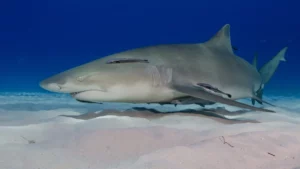 | 2.4–3 m (8–10 ft) | Low | Sandy shallows and the Savannes Bay mangrovesJuveniles use the island's few mangrove lagoons as a nursery. Slow and easily seen at dawn. |
Blacktip SharkCarcharhinus limbatus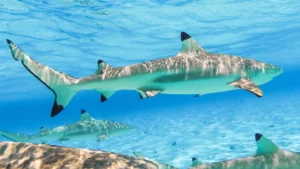 | 1.5–2 m (5–6.5 ft) | Moderate | Sand channels and bay mouths on the west coastThe Atlantic's black-tipped shark; the Indo-Pacific blacktip reef shark on older lists is not found here. |
Blacknose SharkCarcharhinus acronotus | 1.2–1.4 m (4–4.5 ft) | Low | Sandy shelf and seagrass, south and east coastsA small shark with a dark smudge on the snout, taken in the inshore fishery. |
| Caribbean Sharpnose SharkRhizoprionodon porosus | 0.8–1.1 m (2.5–3.5 ft) | Low | Shallow coastal water and river mouthsThe smallest shark on the list and the one most often landed by pot and line fishermen. Harmless. |
Bull SharkCarcharhinus leucas | 2.2–3.2 m (7–10.5 ft) | Moderate | Uncommon; deeper bays and the larger river mouthsCaribbean-wide but scarce on an island with few estuaries. Never involved in a Saint Lucian incident. |
Tiger SharkGaleocerdo cuvier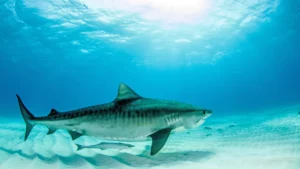 | 3–4.5 m (10–15 ft) | High | Deep water and the Atlantic side; met by fishing boatsPresent offshore, rarely near the west-coast beaches. The species to respect, on the rare day you see one. |
Silky SharkCarcharhinus falciformis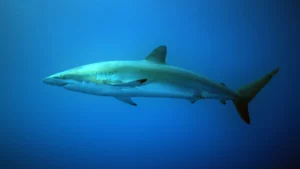 | 2–3 m (7–10 ft) | Moderate | The channels and the blue water off the PitonsFollows tuna and occasionally visits the pinnacle dives. The main shark bycatch of the island's longlines. |
| Oceanic Whitetip SharkCarcharhinus longimanus | 2–3 m (7–10 ft) | High | Open ocean beyond the shelfBold pelagic shark of the deep channels. A risk to people adrift, never to beach-goers. |
Shortfin Mako SharkIsurus oxyrinchus | 2.5–3.5 m (8–12 ft) | Moderate | Offshore, with the marlin and tunaThe fastest shark, met by the Rodney Bay charter fleet. Endangered; release is encouraged. |
Blue SharkPrionace glauca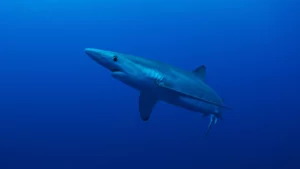 | 2–3 m (7–10 ft) | Low | Deep oceanic water, mainly in the cooler monthsA longline record rather than a dive sighting. Harmless and far offshore. |
Scalloped Hammerhead SharkSphyrna lewini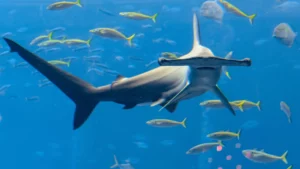 | 2.5–3.5 m (8–12 ft) | Low | Deep along the Piton walls; occasionalSeen now and then by divers at depth on the drift sites. Critically endangered. |
Great Hammerhead SharkSphyrna mokarran | 3.5–4.5 m (11–15 ft) | Moderate | Shelf edge and channels; rareLanded occasionally by east-coast fishermen. A rare privilege for a diver. |
Bigeye Thresher SharkAlopias superciliosus | 3.3–4 m (11–13 ft) incl. tail | Low | Deep water in the channels; longline recordsHunts below the surface at night. Never seen from shore. |
Whale SharkRhincodon typus | 5–10 m (16–33 ft) | Low | Passing through the channels; a few sightings a yearReported by whale-watching and fishing boats. Filter feeder; harmless. No season to book around. |
Two sharks people search for are worth a word. The great white shark has no record in the Windward Islands: it is a cool-water animal whose Atlantic range reaches the Gulf of Mexico and the Bahamas in winter but not the 27 °C eastern Caribbean. The bull shark is on the list because it occurs throughout the Caribbean and has been caught by Saint Lucian fishermen, but with only small rivers and few estuaries on the island it is uncommon here and has never been involved in an incident. Whale sharks pass through the channels and are seen a few times a year by fishing and whale-watching boats, but there is no whale shark season to plan around.
Where to see sharks in Saint Lucia
Saint Lucia's dive sites are concentrated on the sheltered west coast between Anse Cochon and the Pitons, most of them inside marine reserves. Sharks are not guaranteed on any of them, but these are the sites where they turn up most often.
- Anse Chastanet Reef, SoufrièreA shallow reef starting a few metres off the beach and sloping to a wall, inside the Soufrière Marine Management Area. Nurse sharks under the ledges at 10–20 m, and the easiest place on the island for a snorkeller to see one.
- Superman's Flight, Petit PitonA drift dive along the base of Petit Piton where the wall drops past 500 m. Caribbean reef sharks cruise the drop-off, and the current brings the occasional hammerhead or eagle ray up from the deep.
- Coral Gardens and Gros PitonThe wall below the larger Piton, covered in gorgonians and barrel sponges. Reef sharks on the outer edge in the cooler months; nurse sharks in the crevices.
- Keyhole Pinnacles, SoufrièreFour volcanic spires rising from the deep to within a few metres of the surface. A fish-rich site where Caribbean reef sharks and, on rare occasions, silky sharks come in from the blue.
- Lesleen M wreck, Anse CochonA 50 m freighter sunk as an artificial reef in 1986 in 20 m of water. Nurse sharks rest inside the hull and on the sand beside it; a favourite site for night dives.
- Anse La Raye and the Canaries reefsThe Canaries and Anse La Raye Marine Management Area, a quieter stretch north of Soufrière with sloping reef and sand channels. Juvenile lemon sharks and blacktips on the sand at dawn.
- Pigeon Island and Rodney BayThe north-west corner, with shallow reef off the national landmark and the sport-fishing marina. Nurse sharks on the reef; makos, silkies and tiger sharks are the sharks the charter boats meet offshore.
- Maria Islands and Pointe Sable, Vieux FortThe south-east tip, a nature reserve with mangroves, seagrass and Atlantic reef. Juvenile sharks use the seagrass and the Savannes Bay mangroves as a nursery; access is by permit with a guide.
If sharks are the goal, dive the Piton walls in the December to May dry season with one of the Soufrière operators and ask for the deeper drift sites. For a guaranteed nurse shark, Anse Chastanet at midday or the Lesleen M at night are the safest bets.
Best time of year to see sharks in Saint Lucia
Saint Lucia has a dry season and a wet season rather than a winter, and the sharks respond to visibility, swell and the movement of baitfish.
- December to May (dry season): water of 26–27 °C, the calmest seas on the west coast and visibility of 20–30 m on the Piton walls. The best months for reef sharks on the drop-offs and the peak of the sport-fishing season offshore, when makos and silkies follow the tuna through the channels.
- June to November (wet season): 28–29 °C, afternoon showers and more sediment from the rivers after rain, which reduces visibility near the river mouths. Diving continues all year; nurse sharks are on the reefs in every month.
- June to November (hurricane season): Saint Lucia is hit less often than the northern islands, but storms such as Tomas in 2010 have caused serious damage. Late August to October is the period to watch.
- Whale sharks and whales: the whale-watching boats that follow sperm whales and pilot whales off the west coast between November and April also report the occasional whale shark in the channels.
Surface temperature never falls below about 26 °C, which is why the island keeps its reef and nurse sharks year-round and why the great white never visits.
Shark attacks in Saint Lucia: what the record actually shows
This is the shortest section on any of our country pages, because there is nothing to list. SharkSider's database, which draws on the International Shark Attack File and on regional press going back to the 1800s, contains no shark attack for Saint Lucia, provoked or unprovoked, fatal or not:
No incidents are recorded in the SharkSider database for this country.
That is not a gap in the record; it reflects the island. Saint Lucia's swimming beaches are on the sheltered west coast, where the shelf is narrow, the water is clear and the sharks are mostly nurse sharks and a few Caribbean reef sharks living below snorkelling depth. The species with a serious bite history elsewhere in the Caribbean, the tiger shark and the bull shark, are offshore or rare here, and the island has neither the shark-feeding dives nor the large spearfishing culture that generate most of the modern bites in the region. The Atlantic east coast, where the bigger sharks are landed, is too rough for swimming and is used by fishermen rather than tourists.
None of this makes the water shark-proof, and the usual sense applies: do not swim at dusk or at night, stay away from fishing boats cleaning their catch off Dennery, Anse La Raye or Vieux Fort, do not carry speared fish on your body, and give a large shark, if you ever see one, the water. The regional context is on our page of shark attacks around the world; the nearest islands with recorded incidents are Barbados and Grenada, and even those lists are short.
Is it safe to swim and snorkel in Saint Lucia?
Yes. Reduit Beach at Rodney Bay, Marigot Bay, Anse Chastanet, Sugar Beach between the Pitons and the dozens of coves in between are calm, clear and sheltered from the trade winds, and none has ever had a shark incident. The hazards that actually send visitors to the clinic are sea urchins on the reef edges, sunburn, the occasional jellyfish in late summer and, on the Atlantic side, rip currents and surf; most east-coast beaches are unsafe for swimming for that reason alone.
The sharks you might meet while snorkelling are all easy company. A nurse shark under a ledge at Anse Chastanet will stay put while you look and only leaves if you crowd it or, worse, try to touch its tail, which is the one way anyone has ever been bitten by one. A Caribbean reef shark passing along the wall below you will make a wide circle and go; hold still and enjoy it. Juvenile lemon sharks and blacktips on the sandy shallows at dawn bolt at the first splash.
Divers going deeper on the Piton walls should follow the guide's briefing on the current, which is a far greater risk than the reef sharks. If a silky shark comes in from the blue at Keyhole Pinnacles, stay with the group, keep it in sight and finish the dive normally. Whale sharks are harmless, and if a whale-watching boat finds one in the channel you can slip in beside it at a respectful distance; do not touch it and do not block its path.
Shark conservation in Saint Lucia
Saint Lucia protects its sharks mostly by protecting their habitat. The Soufrière Marine Management Area, created in 1995 after years of conflict between fishermen, divers and hotels, zoned 11 km of the south-west coast into marine reserves, fishing priority areas and recreation zones, and its no-take reserves around Anse Chastanet, the Pitons and Rachette Point have become the reference for how a small island can manage a reef. The Pitons Management Area was inscribed as a UNESCO World Heritage site in 2004, the Canaries and Anse La Raye area is managed on the same model, and the Maria Islands and Pointe Sable in the south are nature reserves with mangrove and seagrass nurseries.
What the island does not have is shark-specific law. There is no sanctuary of the kind declared by the Bahamas, Honduras or the British Virgin Islands, and sharks are landed legally in the small-scale fishery under the Fisheries Act, mostly as bycatch on the lines set for tuna and dolphinfish off the east coast and in the channels. Catches are modest, but the species involved, silkies, oceanic whitetips, hammerheads and makos, are all threatened across the Atlantic, and each one landed at Dennery or Vieux Fort comes out of a population that is already in decline. Saint Lucia is a member of the Caribbean Regional Fisheries Mechanism, which has drafted a regional shark plan, and a party to CITES, which now regulates trade in makos, hammerheads, silkies and oceanic whitetips.
The pressures on the reefs themselves are the ones that will decide the future of the inshore sharks: bleaching in 2005 and 2023, sediment from the hills after heavy rain, damage from Hurricane Tomas in 2010, and the lionfish invasion that reached the island in 2011. If you visit, dive with operators inside the marine management areas, pay the reserve fee that funds the rangers, and never buy shark jaws or teeth sold as souvenirs. Our page on why sharks are endangered explains what is at stake across the region.
Sharks in neighbouring waters
Saint Lucia's sharks are the sharks of the whole Lesser Antilles chain. Martinique lies 40 km to the north across the Saint Lucia Channel and Saint Vincent 40 km to the south, both with the same reef species. Barbados, 160 km east in the open Atlantic, has a longer species list and a handful of recorded incidents; Dominica, two islands north, offers sperm whales and deep volcanic walls much like Soufrière's; and Grenada and Trinidad and Tobago close the chain to the south, where the shelf widens towards Venezuela and the sharks become more numerous. Further north, the British Virgin Islands have protected all sharks since 2014. Our sharks around the world index lists every coast we cover.
Frequently asked questions
Are there sharks in Saint Lucia?
Yes, about 16 species have solid records, but the island's narrow shelf and long fishing history keep them scarce. Divers most often meet nurse sharks and Caribbean reef sharks on the Soufrière and Piton reefs; lemon sharks and blacktips use the sandy shallows, and tiger sharks, silkies, hammerheads and makos live offshore in the deep channels.
Have there been shark attacks in Saint Lucia?
No. The SharkSider database, which includes the International Shark Attack File and regional press back to the 1800s, has no recorded shark attack for Saint Lucia, fatal or non-fatal, provoked or unprovoked. The sheltered west-coast beaches hold only nurse and reef sharks, and the island has no shark-feeding dives or large spearfishing culture.
Is it safe to swim in the sea in Saint Lucia?
Yes. The Caribbean beaches from Rodney Bay to Sugar Beach are calm, clear and have never had a shark incident. The real hazards are sea urchins, sunburn and, on the Atlantic east coast, rip currents and surf that make most of those beaches unsafe for swimming regardless of sharks.
Can you swim or dive with sharks in Saint Lucia?
You can see them while diving, but nobody feeds or guarantees them. Nurse sharks are reliable under the ledges at Anse Chastanet and inside the Lesleen M wreck, and Caribbean reef sharks appear on the deeper Piton drift dives such as Superman's Flight. There are no dedicated shark dives of the kind run in the Bahamas or Fiji.
Are there great white sharks in Saint Lucia?
No. Great whites are cool-water animals whose Atlantic range reaches the Gulf of Mexico and the Bahamas in winter but not the 26–29 °C waters of the Windward Islands. There is no record of one in Saint Lucia or anywhere in the Lesser Antilles.
Are there bull sharks or tiger sharks in Saint Lucia?
Both are recorded but rarely seen. Bull sharks are uncommon because the island has few estuaries; tiger sharks live in deep water and along the Atlantic side, where fishing boats meet them. Neither has ever been involved in an incident on the island, and neither is a realistic concern on the west-coast swimming beaches.
What is the most common shark in Saint Lucia?
The nurse shark. It rests under ledges on almost every reef between Anse Cochon and the Pitons, and snorkellers see it in the shallows at Anse Chastanet. Among free-swimming sharks the Caribbean reef shark is the one divers encounter most, though even it is an occasional sighting rather than a regular one.
When is the best time to see sharks in Saint Lucia?
December to May, the dry season, brings calm seas, 26–27 °C water and 20–30 m visibility on the Piton walls, which is when reef sharks are most often seen on the drift dives and when the offshore charter fleet meets makos and silkies. Nurse sharks are present all year, and whale sharks are occasional visitors with no fixed season.
Is shark fishing legal in Saint Lucia?
Yes. Saint Lucia has no shark sanctuary or shark-specific ban, and sharks are landed in the small-scale fishery, mostly as bycatch on tuna and dolphinfish lines off the east coast. Fishing is prohibited in the marine reserves of the Soufrière Marine Management Area, and CITES rules now regulate trade in makos, hammerheads and silky sharks.
References

A small team focused on researching sharks and making marine biology easy to understand. Every page is reviewed against current species records and the SharkSider attack database, and updated when new incidents or research appear.
Published January 31, 2023 · Last updated September 21, 2026 · Incident data from the SharkSider attack database (0 records for Saint Lucia, 0 fatal).


