
Yes, there are sharks in Puerto Rico, 34 species with solid records, and the reef species are easy to find if you dive. The nurse shark is the one you will see most, resting under ledges from Culebra to La Parguera; Caribbean reef sharks patrol the drop-offs at Mona and Desecheo; lemon and blacktip sharks work the mangrove flats and beaches; and tiger and bull sharks are present but seldom seen. Offshore, silky sharks and scalloped hammerheads gather along the walls.
The danger is small. SharkSider's database records just two incidents for Puerto Rico, in 2015 and 2025, and no fatality: a spearfisher off Cabo Rojo bitten on the hand while handling his catch, and a wader at Carolina Beach near San Juan bitten on the thigh by a shark that was never identified. Set against the millions of people who swim, surf and dive around the island every year, that is one of the lowest rates in the Caribbean.
- Shark species recorded34 with solid records
- ProtectionUS federal shark laws; fin sales banned 2023; no-take reserves at Desecheo, Culebra, Rincón
- Most seen from the beachNurse shark; juvenile lemon and blacktip sharks on the flats
- Signature encounterReef sharks on the Mona and Desecheo walls
- Incidents in the database2 (2015–2025), 0 fatal
- Water temperature26 °C in February, 29 °C in September

On this page
- Why Puerto Rico has so many sharks
- List of the different types of sharks in Puerto Rico
- Where to see sharks in Puerto Rico
- Best time of year to see sharks in Puerto Rico
- Shark attacks in Puerto Rico: what the record actually shows
- Is it safe to swim and snorkel with sharks in Puerto Rico?
- Shark conservation in Puerto Rico
- Sharks in neighbouring waters
- Frequently asked questions
- References
Why Puerto Rico has so many sharks
Three things make Puerto Rico a shark island. The first is its position. It sits at the eastern end of the Greater Antilles with the open Atlantic to the north, the Caribbean Sea to the south and the Mona Passage, one of the main gateways between the two, on its western side. Every migratory shark moving between the Atlantic and the Caribbean, from whale sharks to hammerheads to tiger sharks tracked from the Bahamas, can pass within sight of the island. The second is depth. Less than 100 km off the north coast the seabed falls into the Puerto Rico Trench, at 8,400 m the deepest point in the Atlantic, and the south and west coasts drop over sheer walls into water more than a kilometre deep. Puerto Rico therefore has the full vertical range, from lanternsharks and sixgills on the slope to silky sharks and makos in the blue water above them, all within a short boat ride.
The third is the shallow habitat. The island is ringed by fringing and barrier reefs, with mangrove lagoons and seagrass meadows at La Parguera, Jobos Bay, Guánica and Fajardo that serve as nurseries for lemon, blacktip, nurse and bonnethead sharks. Rivers such as the Río Grande de Loíza and the Añasco pour fresh water into the coastal shallows and create exactly the turbid, brackish edges that bull sharks favour. The offshore islands complete the picture: Mona and Monito, 70 km west across the passage, and Desecheo off Rincón sit on their own platforms in clear oceanic water and hold the island's healthiest reef shark populations, because they are hard to reach and, at Desecheo, fully protected.
List of the different types of sharks in Puerto Rico
The table covers every species with a solid record in Puerto Rican waters, from the reef and lagoon sharks divers meet every week to the deep-water species known from research trawls and longline surveys off the island. Lengths are those of a normal adult, not of the record-book giant. The risk column is about swimmers and surfers at Puerto Rican beaches, not divers who go looking; only the tiger, bull and oceanic whitetip earn a high, and none of the three has been implicated in an incident here. Puerto Ricans call any shark tiburón and a small or juvenile one cazón; the nurse shark is gata.
| Species | Adult size | Risk to swimmers | Where in Puerto Rico & notes |
|---|---|---|---|
Nurse SharkGinglymostoma cirratum | 2.2–3 m (7–10 ft) | Low | Under ledges on every reef; Culebra, La Parguera, Fajardo, ViequesThe shark you will see. Docile unless grabbed; the Caribbean's most common cause of minor 'attacks' is tourists pulling its tail. |
Caribbean Reef SharkCarcharhinus perezi | 2–2.5 m (7–8 ft) | Moderate | Walls and drop-offs: Mona, Desecheo, La Parguera, Cabo RojoThe signature reef shark of the Caribbean. Curious toward divers; no incident in Puerto Rico. |
Lemon SharkNegaprion brevirostris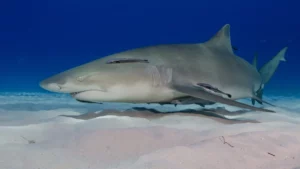 | 2.4–3 m (8–10 ft) | Low | Mangrove nurseries and flats of the south and east coastsYellow-brown, slow, easy to see in a metre of water. Juveniles stay in the mangroves for years. |
Tiger SharkGaleocerdo cuvier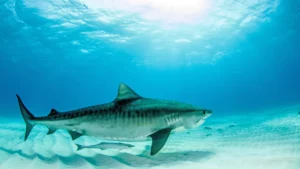 | 3–4.5 m (10–15 ft) | High | Deep reef edges and the Mona Passage; occasionally inshore at nightPresent and tracked through the region, rarely seen by divers. No Puerto Rican incident attributed to it. |
Bull SharkCarcharhinus leucas | 2.2–3.3 m (7–11 ft) | High | River mouths and turbid coasts: Loíza, Añasco, Jobos BayTolerates fresh water and murky shallows. The species to respect near river mouths after rain. |
Blacktip SharkCarcharhinus limbatus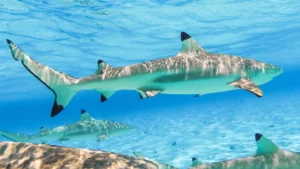 | 1.5–2.5 m (5–8 ft) | Moderate | Beaches, flats and outer reefs all round the islandFast, jumps when feeding on schooling fish. Responsible for many quick, minor bites on waders across the Caribbean. |
Spinner SharkCarcharhinus brevipinna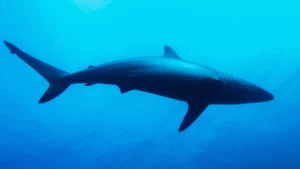 | 2–2.5 m (7–8 ft) | Moderate | Coastal water, often with bait schools; north and south coastsSpins out of the water chasing fish. Easily confused with the blacktip. |
Blacknose SharkCarcharhinus acronotus | 1–1.4 m (3–4.5 ft) | Low | Sandy and seagrass bottoms in shallow waterSmall, with a dusky smudge on the snout tip. Harmless. |
| Caribbean Sharpnose SharkRhizoprionodon porosus | 0.8–1.1 m (2.5–3.5 ft) | Low | Shallow coastal water and estuariesThe island's small inshore shark, often caught by shore anglers. Wrongly labelled 'highly aggressive' on the old page; it is harmless. |
Silky SharkCarcharhinus falciformis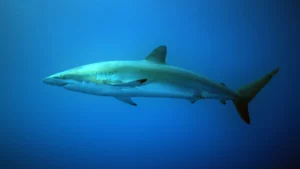 | 2–3 m (7–10 ft) | Moderate | Blue water along the walls and the trench edgeSleek pelagic shark that follows tuna and boats. Bold with divers in open water. |
Dusky SharkCarcharhinus obscurus | 3–3.6 m (10–12 ft) | Moderate | Outer shelf and slope; uncommonLarge, slow-growing and prohibited in US fisheries. Rarely inshore. |
Sandbar SharkCarcharhinus plumbeus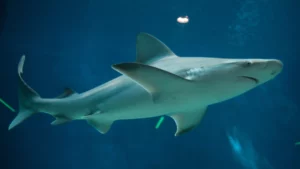 | 1.8–2.4 m (6–8 ft) | Low | Sandy shelf and bays, 20–100 mHigh dorsal fin, shy. Recorded around the island but far less common than in the Gulf of Mexico. |
Night SharkCarcharhinus signatus | 2–2.8 m (7–9 ft) | Low | Deep water off the shelf edge, rising at nightGreen-eyed and slender. Taken on deep longlines; prohibited in US waters. |
Bignose SharkCarcharhinus altimus | 2.4–3 m (8–10 ft) | Low | Slope waters 100–400 m deep around the islandA deep-living requiem shark seldom seen alive. Prohibited species in US fisheries. |
| Oceanic Whitetip SharkCarcharhinus longimanus | 2–3 m (7–10 ft) | High | Open ocean north of the island and the Mona PassageBold, persistent pelagic shark, dangerous to people adrift at sea. Threatened under the US Endangered Species Act. |
Scalloped Hammerhead SharkSphyrna lewini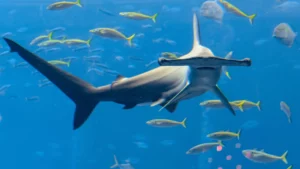 | 2.5–3.5 m (8–12 ft) | Low | Walls at Mona, Desecheo and Cabo Rojo; schools offshoreThe hammerhead divers hope for. Listed as threatened in the Caribbean under the ESA. |
Great Hammerhead SharkSphyrna mokarran | 3.5–4.5 m (11–15 ft) | Moderate | Deep reef edges and the passage; solitary, uncommonHuge, tall-finned and mostly interested in stingrays. Critically endangered globally. |
Bonnethead SharkSphyrna tiburo | 0.8–1.2 m (2.5–4 ft) | Low | Seagrass beds and mangrove channels; La Parguera, Jobos BayThe small shovel-headed hammerhead of the flats. Eats crabs and, uniquely, seagrass. |
Shortfin Mako SharkIsurus oxyrinchus | 2–3 m (7–10 ft) | Moderate | Blue water off the north coast and the trench edgeThe sport-fishing shark of San Juan's charter fleet. Endangered; release is encouraged. |
Longfin Mako SharkIsurus paucus | 2.5–4 m (8–13 ft) | Low | Deep oceanic water north of the islandLong pectoral fins, slower than its cousin. Taken occasionally on deep longlines. Endangered. |
Blue SharkPrionace glauca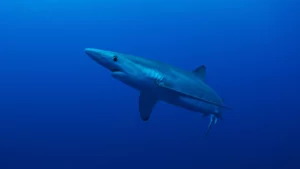 | 2–3 m (7–10 ft) | Low | Open Atlantic north of the island, mostly in the cooler monthsPrefers water below 25 °C, so it stays deep or arrives in winter. Rarely seen by divers. |
Bigeye Thresher SharkAlopias superciliosus | 3–4 m (10–13 ft) incl. tail | Low | Deep water off the trench and the passageHuge eyes for hunting squid at depth. Longline bycatch; harmless. |
Common Thresher SharkAlopias vulpinus | 3–5 m (10–16 ft) incl. tail | Low | Offshore, uncommon in tropical waterWhip-tailed and shy. Recorded around the island but far less common than the bigeye. |
Whale SharkRhincodon typus | 6–10 m (20–33 ft) | Low | Mona Passage and west coast, mostly December to AprilSeasonal visitor, not a resident. Harmless filter feeder; sightings are unpredictable. |
Bluntnose Sixgill SharkHexanchus griseus | 3–4.5 m (10–15 ft) | Low | Slope below 300 m all round the islandDeep-water giant filmed by submersible surveys off Puerto Rico. Never near swimmers. |
Atlantic Sixgill SharkHexanchus vitulus | 1.5–1.8 m (5–6 ft) | Low | Deep slope, 200–600 mThe small Caribbean sixgill, recognised as its own species in 2018. |
Sharpnose Sevengill SharkHeptranchias perlo | 0.8–1.2 m (2.5–4 ft) | Low | Deep water off the shelfSlender, seven-gilled deep-sea shark taken on research longlines. |
Cookiecutter SharkIsistius brasiliensis | 0.4–0.5 m (1.5 ft) | Low | Oceanic depths off the trench, rising at nightBites round plugs from tuna, whales and, very rarely, long-distance swimmers. Not a beach concern. |
Cuban DogfishSqualus cubensis | 0.7–1.1 m (2.5–3.5 ft) | Low | Outer shelf and slope, 60–400 mThe Caribbean's common dogfish, with spined dorsal fins. Trawl bycatch. |
| Antilles CatsharkGaleus antillensis | 0.3–0.45 m (1–1.5 ft) | Low | Deep slope off Puerto Rico and the Virgin Islands, 300–700 mA tiny sawtail catshark described from this part of the Caribbean. Never seen by divers. |
Caribbean LanternsharkEtmopterus hillianus | 0.25–0.3 m (1 ft) | Low | Deep slope, 300–700 mBioluminescent dwarf shark of the deep Caribbean slope. |
Gulper SharkCentrophorus granulosus | 0.8–1.2 m (2.5–4 ft) | Low | Deep slope around the islandGreen-eyed deep-water dogfish, slow-breeding and endangered. |
Kitefin SharkDalatias licha | 1–1.5 m (3–5 ft) | Low | Deep slope below 300 mA dark deep-sea species that gouges mouthfuls from larger fish. Never inshore. |
| Smooth Dogfish (island form)Mustelus canis insularis | 0.9–1.3 m (3–4 ft) | Low | Deeper shelf, 50–300 m; the Caribbean island subspeciesCrab-eating houndshark with flat teeth. The island subspecies lives deeper than its mainland relative. |
Great White SharkCarcharodon carcharias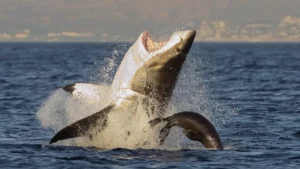 | 4–6 m (13–20 ft) | n/a | No verified record from Puerto RicoIncluded because it is the most-asked question. Occasional wanderers reach the northern Caribbean, but none has been confirmed here. |
Several sharks on the old version of this page do not belong in Puerto Rico. The blacktip reef shark is an Indo-Pacific species and has never been recorded in the Atlantic; the blacktips here are the blacktip shark proper and the spinner shark. The broadnose sevengill lives in cool temperate seas and is absent from the entire Caribbean. The basking shark is a cold-water animal with no Puerto Rican record, and the Galapagos shark, though it occurs at Bermuda and some oceanic islands, has no confirmed record from Puerto Rico. The great white shark is the one everybody asks about: white sharks do wander into the northern Caribbean occasionally, and satellite-tagged animals from the US east coast have been tracked past the Bahamas, but there is no verified sighting or capture from Puerto Rican waters. If someone tells you they saw one off Rincón, it was almost certainly a mako or a large bull shark.
Where to see sharks in Puerto Rico
Puerto Rico has no shark-feeding dives and none of the cage or baited encounters sold in the Bahamas. What it has is a set of walls, offshore islands and reserves where sharks turn up naturally, and dive operators in Rincón, Aguadilla, La Parguera, Fajardo and Culebra that know where. These are the reliable places.
- Desecheo Island, off RincónA no-take marine reserve 20 km west of the mainland, reached from Rincón or Aguadilla. Clear oceanic water over boulder reefs and walls, with Caribbean reef sharks, nurse sharks and, seasonally, hammerheads and whale sharks on the passage side.
- Mona and Monito IslandsUninhabited limestone islands 70 km out in the Mona Passage, a nature reserve with the healthiest reefs in Puerto Rico. Reef sharks on every wall dive, nurse sharks in the caves, and the best odds on the island of a hammerhead or a passing whale shark. Liveaboard or long day trip only.
- La Parguera wall (Lajas)The famous drop-off off the south-west coast, a short run from the bioluminescent bay. The wall starts at about 20 m and falls past 300 m; Caribbean reef sharks, nurse sharks and the occasional silky shark along the edge, with lemon and bonnethead sharks in the mangrove channels inshore.
- Culebra and the Luis Peña Channel reserveA no-take reserve since 1999 off Puerto Rico's eastern island. Nurse sharks are almost guaranteed under the reef ledges, juvenile lemon and blacktip sharks patrol the flats, and reef sharks appear on the outer reefs of Culebrita.
- Vieques south coastReefs and seagrass beds that were off-limits during sixty years of naval exercises and recovered as a result. Nurse sharks, reef sharks and lemon sharks; the Mosquito Bay bioluminescent lagoon is a nursery for small sharks and rays.
- Fajardo and the Cordillera reefsThe chain of cays running east from Fajardo toward Culebra, a natural reserve with easy reef diving. Nurse sharks under the coral heads and, on the outer edges, blacktip and reef sharks.
- Cabo Rojo and Los MorrillosThe south-western corner, where the Caribbean meets the Mona Passage. Deep water close to the cliffs brings in reef sharks, silkies and hammerheads; it is also the site of the 2015 spearfishing incident in the database.
- The Puerto Rico Trench, north coastBlue-water fishing charters out of San Juan and Arecibo work the edge of the deepest water in the Atlantic. Shortfin makos, blue sharks in winter, silky and oceanic whitetip sharks around the fish aggregations. Not a dive, but the only reliable way to meet the pelagic species.
If you have one dive trip, take the boat to Desecheo from Rincón: reef sharks are near-certain on the walls, the reserve is well enforced and the passage side occasionally produces a whale shark or a hammerhead. Mona is the bigger adventure and the better reef, but it needs a full day or a liveaboard and a calm forecast. For families, snorkelling the Culebra flats is the easiest way to see a nurse shark or a juvenile lemon shark from a metre away.
Best time of year to see sharks in Puerto Rico
The water around Puerto Rico never gets cold, so the reef sharks are present in every month. The seasons matter for sea conditions and for the visiting species.
- December to April: the dry season and the calmest water on the west and south coasts. Visibility peaks at Mona and Desecheo, humpback whales fill the Mona Passage in February and March, and this is the window when whale sharks are most often reported off Rincón, Aguadilla and Cabo Rojo. Water 26–27 °C. The north coast takes big Atlantic swells in winter, which suits surfers but not divers.
- May to July: warming to 28 °C, the north coast settles and the best all-round diving begins. Lemon, blacktip and nurse sharks give birth in the mangroves and flats in late spring, so juveniles are easy to find in the shallows. Sargassum seaweed can pile onto south and east beaches from May onward.
- August to November: peak hurricane season, with the warmest water of the year at 29 °C. Between storms the diving is excellent and silky sharks and hammerheads are most common along the walls, but plans need flexibility.
Shark attacks in Puerto Rico: what the record actually shows
Puerto Rico's record is short enough to read in full. SharkSider keeps every case on the shark attacks in Puerto Rico page, and the database holds two incidents, both non-fatal, both shown below (the list is updated weekly on the attacks page):
- 2025 · Carolina Beach, CarolinaWading — Bite to thigh areaSpecies: Undetermined · not fatal
- 2015 · Off Cabo RojoSpearfishing — Injury to handSpecies not identified · not fatal
The two cases follow the two patterns that account for most Caribbean shark bites. The 2015 incident off Cabo Rojo was a spearfisher bitten on the hand, the classic situation in which a shark drawn in by a struggling or bleeding fish grabs the hand holding it; the species was not recorded, but reef sharks and blacktips are the usual culprits in that scenario across the region. The 2025 case at Carolina Beach, on the busy strip east of San Juan, involved a person wading in shallow water who received a bite to the thigh from a shark that was never identified. That coast is turbid, lies near the mouth of the Río Grande de Loíza and is heavily fished, which is the kind of water where a small blacktip, spinner or bull shark may strike at a moving leg it cannot see clearly and then leave. A single bite and a quick retreat is what the record shows.
Neither case involved a diver, a snorkeller or a surfer at a reef, and neither involved the tiger or bull sharks that make headlines elsewhere. Ten years between incidents, on an island with thousands of kilometres of beach visits every day, tells you where the real risk sits: in the water close to fishing activity and in murky shallows near river mouths. The usual advice covers it: keep your catch out of the water or on a float well away from you, avoid swimming at dawn and dusk near river mouths and fishing piers, leave the water if bait fish are jumping, and do not wear shiny jewellery in turbid surf.
Is it safe to swim and snorkel with sharks in Puerto Rico?
Yes. On Puerto Rico's beaches you are at far greater risk from rip currents, which claim lives on the north coast every year, than from any shark; sea urchins, fire coral and the summer jellyfish are next on the list. The two shark incidents in over a decade both happened in circumstances that a swimmer at Flamenco, Luquillo or Boquerón will never be in.
The sharks you will meet are gentle. The nurse shark, the most common encounter, spends the day lying under a ledge and will only bite if grabbed or cornered, which is exactly what happens to the tourists who get bitten by nurse sharks in the Caribbean every year. Look, do not touch. Juvenile lemon sharks and blacktips on the flats are skittish and will turn away from a snorkeller long before they are close. The Caribbean reef shark on the walls is curious and will make a couple of passes; hold your position, keep it in sight and it will move off. If one begins to swim jerkily with its pectoral fins dropped, it is telling you that you are too close to something it cares about, and you should back away along the reef.
Whale sharks in the Mona Passage are harmless plankton feeders, but they are not a swim-with attraction here in the way they are in Mexico; sightings are unpredictable and there are no licensed encounter tours. If you are lucky enough to meet one, the rules for swimming with whale sharks apply: give the body several metres and the tail more, never touch or ride it, and let the animal set the pace.
Shark conservation in Puerto Rico
As a US territory, Puerto Rico's sharks sit under federal fisheries law as well as local rules. The commercial and recreational shark fisheries in federal waters are managed under NOAA's highly migratory species permits, with size and bag limits and a list of prohibited species that includes the sand tiger, dusky, bignose, night, Caribbean sharpnose and several others. The Shark Conservation Act of 2010 requires every shark landed to have its fins naturally attached, ending finning at sea, and the federal Shark Fin Sales Elimination Act, in force since 2023, bans the buying and selling of shark fins across all US states and territories, Puerto Rico included. The island's own Department of Natural and Environmental Resources regulates fishing in territorial waters out to nine nautical miles.
Two of Puerto Rico's sharks are protected under the US Endangered Species Act. The scalloped hammerhead's Central and Southwest Atlantic population, which includes the Caribbean, is listed as threatened, and the oceanic whitetip was listed as threatened across its range in 2018 after declines of more than 80% in the western Atlantic. Both still appear along the island's walls and on longlines, which makes Puerto Rico's deep water part of their remaining habitat. The nurse shark, once fished for its hide and liver, is now abundant again on the reefs, and the lemon shark nurseries in the mangroves of the south coast appear to be stable.
The threats that remain are habitat loss and pressure on the reefs rather than fishing. Coral bleaching in 2005 and again in 2023 hit the shallow reefs hard, Hurricane Maria in 2017 flattened seagrass beds and mangroves that juvenile sharks depend on, and coastal development and sediment runoff continue to degrade the nurseries at La Parguera and Jobos Bay. The reserves help: Desecheo has been a no-take zone since 2000, Luis Peña Channel at Culebra since 1999, Tres Palmas at Rincón since 2004, and the Mona and Monito reserves cover the island's best reefs. The bigger picture is in our guide to why sharks are endangered.
Sharks in neighbouring waters
Puerto Rico shares its sharks with the whole Greater Antilles arc. The Dominican Republic lies across the Mona Passage and shares its whale shark and humpback traffic; Haiti and Cuba continue the chain westward, with Cuba's Jardines de la Reina holding the Caribbean's most famous reef shark population. To the east, the US Virgin Islands and the British Virgin Islands sit on the same shallow platform as Culebra and Vieques and have the same nurse, reef and lemon sharks. North across the Atlantic, the Bahamas is the region's shark-diving capital and the origin of many of the tiger sharks tracked past Puerto Rico. Our sharks around the world index covers every coast we have profiled.
Frequently asked questions
Are there sharks in Puerto Rico?
Yes, 34 species with solid records. Nurse sharks rest under ledges on almost every reef, Caribbean reef sharks patrol the walls at Mona, Desecheo and La Parguera, lemon and blacktip sharks use the mangrove flats, and tiger and bull sharks are present but rarely seen. Offshore, silky sharks, hammerheads and makos live along the deep water.
Have there been shark attacks in Puerto Rico?
Only two are in the SharkSider database and neither was fatal: a spearfisher bitten on the hand off Cabo Rojo in 2015, and a wader bitten on the thigh at Carolina Beach near San Juan in August 2025 by a shark that was never identified. No diver, snorkeller or surfer appears in the record.
Is it safe to swim in Puerto Rico?
Yes. Rip currents on the north coast are a far bigger danger than sharks, which have caused two minor injuries in over a decade. Keep speared fish away from your body, avoid swimming at dusk near river mouths and fishing piers, and stay out of murky surf after heavy rain, and the shark risk is effectively zero.
Are there great white sharks in Puerto Rico?
No verified record exists. White sharks occasionally wander into the northern Caribbean and tagged animals have been tracked past the Bahamas, but none has been confirmed in Puerto Rican waters. Large sharks reported off Rincón or Aguadilla are makos, bull sharks or, rarely, tiger sharks.
Can you swim or dive with sharks in Puerto Rico?
Yes, naturally rather than at feeding stations. Dive boats from Rincón and Aguadilla reach Desecheo, where reef sharks and nurse sharks are near-certain; Mona Island offers the healthiest reefs and the best chance of hammerheads; and the Culebra flats let snorkellers watch nurse sharks and juvenile lemon sharks in shallow water.
What is the most common shark in Puerto Rico?
The nurse shark, found resting under coral ledges from Culebra to La Parguera in every month of the year. Among active sharks the Caribbean reef shark is the most frequently seen on wall dives, and juvenile lemon and blacktip sharks are the species most often spotted from beaches and mangrove flats.
Are there bull sharks in Puerto Rico?
Yes. Bull sharks use the turbid water off river mouths such as the Río Grande de Loíza on the north coast and the Añasco on the west, and the estuaries of Jobos Bay in the south. They are seldom seen by divers and have not been tied to any incident on the island, but they are the reason to avoid murky river-mouth surf after rain.
When is the best time to see sharks in Puerto Rico?
Reef sharks are present all year. December to April brings the calmest west-coast seas, the best visibility at Mona and Desecheo and most whale shark sightings in the Mona Passage. May to July is when juvenile lemon and blacktip sharks fill the flats, and August to November, between storms, is peak season for silky sharks and hammerheads on the walls.
Are there whale sharks in Puerto Rico?
Yes, as unpredictable visitors rather than residents. They pass through the Mona Passage and along the west coast off Rincón, Aguadilla and Cabo Rojo, mostly between December and April. There are no licensed whale shark tours; encounters happen by chance from dive and fishing boats, and the no-touch rules apply.
Is shark fishing legal in Puerto Rico?
Yes with limits. US federal rules apply, requiring fins to be naturally attached, banning the sale of fins since 2023, and prohibiting several species such as dusky, night, bignose and sand tiger sharks. Scalloped hammerheads and oceanic whitetips are protected under the Endangered Species Act. There is no industrial shark fishery on the island.
References

A small team focused on researching sharks and making marine biology easy to understand. Every page is reviewed against current species records and the SharkSider attack database, and updated when new incidents or research appear.
Published December 8, 2022 · Last updated September 21, 2026 · Incident data from the SharkSider attack database (2 records for Puerto Rico, 0 fatal).


