
Yes, Honduras has sharks on both of its coasts. Fourteen species have solid records in Honduran waters. On the Caribbean side the species you are likeliest to meet are the nurse shark, the Caribbean reef shark, the whale shark off Utila and the bull shark near the mainland river mouths; hammerheads, silky sharks and the occasional tiger shark live along the deeper island walls and offshore banks.
The safety picture is mixed but easy to read. The SharkSider database holds six incidents for Honduras, three of them fatal, but all three deaths date from 1874, 1887 and 1930. The modern record is four cases since 2005, none fatal, and the two most serious, both in 2024, were bull shark bites near the mainland towns of Tela and Trujillo, not on the Bay Islands where almost all tourist diving and snorkelling happens.
- Shark species recorded14 with solid records
- Protected since2011 shark sanctuary, both coasts
- Most seen from the beachNurse shark (Bay Islands)
- Signature encounterWhale sharks off Utila; reef shark dive at Roatán
- Incidents in the database6 (1874–2024), 3 fatal, last death 1930
- Water temperature26–30 °C (Caribbean), 27–30 °C (Pacific)

On this page
- Why Honduras has more sharks than people expect
- List of the different types of sharks in Honduras
- Where to see sharks in Honduras
- Best time of year to see sharks in Honduras
- Shark attacks in Honduras: what the record actually shows
- Is it safe to swim and snorkel with sharks in Honduras?
- Shark conservation in Honduras
- Sharks in neighbouring waters
- Frequently asked questions
- References
Why Honduras has more sharks than people expect
Honduras has two very different seas. The long Caribbean coast, from Puerto Cortés in the west to the Mosquitia lagoons on the Nicaraguan border, is a low, river-fed shoreline with turbid water, mangroves and the outflow of the Ulúa, Aguán and Patuca rivers. That is bull shark country, and it always has been. Forty to sixty kilometres offshore the seabed drops away and the Bay Islands (Islas de la Bahía) stand up on the edge of the Cayman Trench: Utila, Roatán and Guanaja, plus the tiny Cayos Cochinos closer to the mainland and the remote Swan Islands (Islas del Cisne) far out in the open Caribbean. The islands are the southern tail of the Mesoamerican Reef, the same reef system that runs up through Belize and Mexico, and their walls fall from a few metres to more than a thousand within a short swim of the shore. Deep water that close to a reef is exactly what pulls whale sharks, hammerheads and silky sharks in beside the resident nurse and reef sharks.
On the other side of the country, Honduras owns a short stretch of Pacific coast inside the Gulf of Fonseca, a shallow, mangrove-lined bay shared with El Salvador and Nicaragua. There is no diving there and almost no tourism, but the gulf is one of the eastern Pacific's known nursery grounds for scalloped hammerheads, and small coastal sharks are a regular part of the artisanal catch landed at Amapala and San Lorenzo.
What turned this geography into a genuine refuge was a political decision. In 2010 Honduras announced a moratorium on shark fishing in its Caribbean waters, and in June 2011 it declared its entire exclusive economic zone, on both coasts, a permanent shark sanctuary, the first in Central America. Commercial shark fishing and the sale of shark products were banned outright. The enforcement is not perfect along a coast this long, but the effect on the islands has been visible: the Roatán reef shark population that the dive industry is built on has been stable for more than a decade, and Utila's whale sharks are counted and photo-identified every season by a resident research station.
List of the different types of sharks in Honduras
The rows below are the species with reliable records from Honduran waters, combining the Bay Islands, the mainland Caribbean coast and the Gulf of Fonseca. Sizes are typical adults, not record fish. The risk column rates the species from the point of view of a swimmer or snorkeller, which is why the bull shark sits at the top and the great hammerhead, despite its size, does not. The older version of this page called the silky shark, the mako and the great hammerhead “highly aggressive”; none of them has a meaningful record of biting people in Honduras or anywhere in the Caribbean.
| Species | Adult size | Risk to swimmers | Where in Honduras & notes |
|---|---|---|---|
Nurse SharkGinglymostoma cirratum | 2.2–3 m (7–10 ft) | Low | Reef ledges and sand around Roatán, Utila and Cayos CochinosThe shark snorkellers see most. Sluggish by day; bites only when grabbed or fed. |
Caribbean Reef SharkCarcharhinus perezi | 1.5–2.5 m (5–8 ft) | Moderate | Island walls and drop-offs; the Roatán shark diveThe resident wall shark of the Bay Islands. Calm around divers who follow the protocol. |
Bull SharkCarcharhinus leucas | 2.2–3.4 m (7–11 ft) | High | Mainland river mouths and turbid coast: Tela, Trujillo, MosquitiaResponsible for both 2024 bites. Rare at the islands; common in estuaries and lagoons. |
Whale SharkRhincodon typus | 5–9 m here (adults to 12 m+) | Low | Deep water off Utila's north side, feeding under tuna boilsFilter feeder, harmless. Best from March to April and August to October. |
Scalloped Hammerhead SharkSphyrna lewini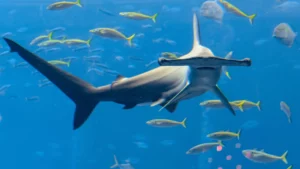 | 2.5–3.5 m (8–12 ft) | Low | Deep walls at Guanaja and the Swan Islands; nursery in the Gulf of FonsecaSchools in the blue, rarely near the surface. Critically endangered worldwide. |
Great Hammerhead SharkSphyrna mokarran | 3–4.5 m (10–15 ft) | Moderate | Solitary on the outer walls, mostly Guanaja and the Swan IslandsA rare, impressive sighting. Hunts rays on the sand; no record of injuring anyone in Honduras. |
Tiger SharkGaleocerdo cuvier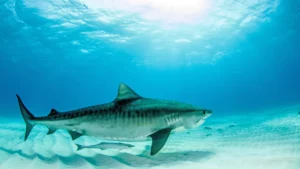 | 3–4.5 m (10–15 ft) | High | Deep outer reefs and the Swan Islands; occasional off the islandsSeen a few times a year by divers, never implicated in a Honduran incident. |
Silky SharkCarcharhinus falciformis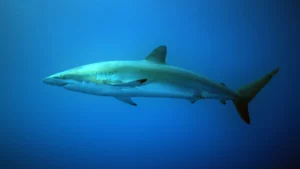 | 2–3 m (7–10 ft) | Moderate | Open water beyond the walls, often with tuna in summerPelagic and inquisitive. The species most often taken by illegal longliners here. |
Blacktip SharkCarcharhinus limbatus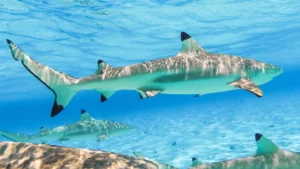 | 1.5–2.5 m (5–8 ft) | Moderate | Shallow reef edges and mainland bays, chasing bait fishFast and jumpy; occasionally seen from the beach at Roatán's West Bay. |
Lemon SharkNegaprion brevirostris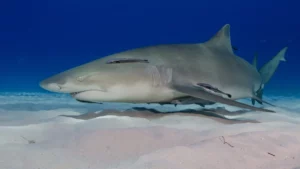 | 2.4–3 m (8–10 ft) | Low | Mangrove lagoons of Utila and the mainland; juveniles in shallow waterUtila's mangrove channels are a nursery. Adults are seen on the flats at dusk. |
Shortfin Mako SharkIsurus oxyrinchus | 2–3.2 m (7–10 ft) | Moderate | Offshore blue water, mostly known from sport-fishing boatsNever near the reef. The old page called it highly aggressive; in Honduras it is simply absent from the record. |
| Oceanic Whitetip SharkCarcharhinus longimanus | 2–3 m (7–10 ft) | High | Open Caribbean beyond the Swan IslandsA genuine open-ocean risk to people adrift, irrelevant to anyone on the reef. |
| Caribbean Sharpnose SharkRhizoprionodon porosus | 0.8–1.1 m (2.5–3.5 ft) | Low | Mainland coastal shallows and estuariesSmall, harmless and common in the artisanal catch along the north coast. |
Pacific Sharpnose SharkRhizoprionodon longurio | 0.9–1.3 m (3–4 ft) | Low | Gulf of Fonseca, Pacific coastThe everyday shark of the Pacific artisanal fishery at Amapala and San Lorenzo. |
Two species people ask about are missing on purpose. The great white shark has never been confirmed in Honduran waters; it is a temperate species and the Caribbean here never cools below about 26 °C. The other is the “Roatán whale shark” of the old page: whale sharks do pass Roatán, but the reliable place to see them is Utila, one island to the west, and the animals do not gather there “in abundance” so much as pass through in ones and twos while feeding on schooling bait fish. Great hammerheads are real but rare, usually a single large animal cruising a deep wall at Guanaja or the Swan Islands rather than anything a snorkeller will meet.
Where to see sharks in Honduras
Almost every shark encounter in Honduras happens around the Bay Islands, which is convenient because that is also where the good visibility is. The mainland coast has sharks too, but the water is green and the species involved is one you do not want to meet on purpose.
- Utila, north sideThe whale shark island. Boats cruise the deep water off the north coast looking for “boils” of blackfin tuna and bonito feeding at the surface; the whale sharks come up underneath them. Snorkelling only, in small groups, with a research station on the island that photo-identifies each animal.
- Roatán, south shore (Cara a Cara)A wall dive at about 20 m where a resident group of Caribbean reef sharks, often 10 to 20 at a time, comes in close. This is the country's signature shark dive and is run under a fixed protocol by one operator; no touching, kneel on the sand, keep your hands in.
- Roatán Marine Park, West End and Sandy BayThe protected reef along Roatán's north-west coast. Nurse sharks rest under coral heads in a few metres of water and are easily seen by snorkellers; eagle rays and the occasional blacktip cruise the drop-off.
- Cayos CochinosA cluster of small cays inside a marine reserve halfway between Roatán and the mainland. Sheltered, shallow reefs with nurse sharks and juvenile Caribbean reef sharks, visited on day trips from La Ceiba and Roatán.
- Guanaja, Black Rock and the northern wallsThe least visited of the three big islands, with steep walls and strong currents. Scalloped hammerheads and the occasional great hammerhead are seen in the deep blue here, along with silky sharks in the summer months.
- Swan Islands (Islas del Cisne)Two remote islands 150 km north of the mainland, reachable only by liveaboard or expedition boat. Pristine walls with silky sharks, reef sharks, hammerheads and tiger sharks reported by the few divers who have been.
- Tela Bay and the Capiro banksA coral bank in green mainland water off the town of Tela. Interesting for hard corals, but this is also where a swimmer was badly bitten by a bull shark in October 2024, so treat the mainland beaches with respect.
- Gulf of Fonseca (Pacific)No diving, but an important scalloped hammerhead nursery. Juveniles turn up in the artisanal nets around Amapala and Isla del Tigre, which is how scientists know they are there.
For a first trip, base yourself on Utila for whale sharks or Roatán for reef sharks; the two islands are an hour apart by ferry and it is easy to do both. Guanaja and the Swan Islands are for experienced divers chasing hammerheads and pelagic species.
Best time of year to see sharks in Honduras
The Bay Islands are diveable all year, but the sharks follow the food and the weather.
- March to April: the classic whale shark season off Utila, when the tuna boils are most frequent and the seas are usually calm. Visibility of 30 m is normal.
- August to October: a second, smaller whale shark peak, with warmer water and afternoon squalls. Silky sharks and hammerheads are seen most often on the outer walls in these months.
- November to February: the “northers” season, when cold fronts from the Gulf of Mexico bring wind and chop to the north coasts of the islands. Diving moves to the sheltered south sides, which is where the Roatán reef shark site is anyway, so sightings there hardly change.
- Nurse sharks and Caribbean reef sharks: resident and seen in every month. The reef sharks pair up and bear scars from mating in late spring.
Sea temperature on the Caribbean side runs from about 26 °C in January to 30 °C in September. The Gulf of Fonseca is warmer still, 27–30 °C, with the wet season from May to October muddying the water with river runoff.
Shark attacks in Honduras: what the record actually shows
The SharkSider database lists six incidents for Honduras, kept up to date on the shark attacks in Honduras page. Three are deaths, and every one of them is old: a boat from the ship Resolution capsized in the breakers at the mouth of the Ulúa River in June 1874, a passenger fell overboard from the steamer Wanderer off Puerto Cortés in December 1887, and a swimmer was killed at Black River on the Mosquitia coast in September 1930. The four modern records, from 2005 to 2024, were all survived. The incident count at the foot of this page covers the four cases dated from 1900 onwards, one of them fatal; the two 19th-century deaths are kept on the attacks page. The four records dated from 1900 onwards are shown below; the full list, including the two 19th-century deaths, is on the attacks page:
- 2024 · Atlantida, TelaSwimming — Back and thigh extensive tissue lossSpecies: Bull shark · not fatal
- 2024 · Puerto Castillo, Trujillo ColonDiving for shellfish — Bite to left legSpecies: Bull shark 6-7ft · not fatal
- 2005 · Utila, Bay IslandsSCUBA Diving — Laceration on siide of calf, small laceration on thigh, large bruise on other leg inside the knee, knuckle of hand abradedSpecies: Shark involvement not confirmed · not fatal
- 1930 · Black RiverSwimming — FatalSpecies not identified · fatal
The pattern is unusually clear for such a short list. Every serious modern injury happened on the mainland coast, in turbid water, and involved a bull shark. In September 2024 a man diving for shellfish at Puerto Castilla, near Trujillo, was bitten on the left leg by a bull shark estimated at 6–7 ft. Four weeks later, in October 2024, a swimmer at Tela suffered extensive tissue loss to the back and thigh, again from a bull shark. Both sites are on the river-fed coast where the bull shark is the dominant large predator and the visibility is measured in centimetres. The only Bay Islands entry, a scuba diver at Utila in 2005 with lacerations to the calf and thigh, was never confirmed as a shark bite at all.
In other words, the Bay Islands, where a million dives a year take place among nurse and reef sharks, have no confirmed shark injury in the database, and the mainland beaches, where almost nobody dives, have two serious bull shark bites in a single month of 2024. That should shape your behaviour: enjoy the islands, and on the mainland coast avoid swimming near river mouths, at dusk, or anywhere fish are being cleaned. The general advice in our guide to surviving a shark attack is written with exactly this kind of murky-water encounter in mind.
Is it safe to swim and snorkel with sharks in Honduras?
Around the Bay Islands, yes, and few places in the Caribbean do it more cheaply. The nurse sharks that snorkellers meet at Roatán and Cayos Cochinos spend the day motionless under ledges and only get into trouble when someone grabs a tail or pushes food at them; their small mouths can still clamp on and hold. Caribbean reef sharks at the Roatán shark dive are habituated to divers and stay calm as long as everyone follows the briefing. Give them room, keep your fins still and do not chase a shark for a photograph.
Utila's whale sharks deserve the same manners as anywhere else. They are not dangerous, but a 7 m fish accelerating away from a crowd can knock a swimmer with its tail. Lower yourself in from the side of the boat instead of jumping, keep 3 m from the body, never touch the animal, and pick an operator that limits the number of swimmers per encounter; the island's own guidelines were written by the whale shark research station and the good boats follow them. Our page on swimming safely with whale sharks covers the details.
On the mainland the advice is simply different. The beaches at Tela, La Ceiba, Trujillo and Omoa are pleasant, but the water is green, the rivers bring down food and silt, and the 2024 bites show what lives there. Swim in daylight, stay in groups, keep away from river mouths after rain, and stay out of the water where fishermen are landing or gutting their catch.
Shark conservation in Honduras
The 2011 sanctuary declaration put Honduras in a small club of countries that protect every shark species throughout their waters, about 240,000 square kilometres in this case. Commercial shark fishing, the possession and sale of shark products and the fin trade are prohibited, with an exception written in later for a limited, licensed catch on the Mosquitia coast to supply the traditional Easter demand for dried shark meat. The Bay Islands are additionally covered by the Bay Islands National Marine Park, the Roatán Marine Park patrols, and the Cayos Cochinos reserve, and the Utila whale shark population has been monitored by a research and conservation centre on the island since the early 2000s.
The pressures are the familiar ones. Illegal longlining by boats from neighbouring countries still takes silky sharks and hammerheads offshore, the mainland gill-net fishery catches juvenile sharks in the estuaries whether it means to or not, and the Gulf of Fonseca hammerhead nursery has no formal protection at all. Sedimentation from the mainland rivers and coral bleaching in 2015–2016 and 2023 have hurt the reefs that everything depends on. If you want to help, dive with operators that are members of the marine parks, pay the park fee without grumbling, and never buy dried shark, shark-jaw souvenirs or fin soup anywhere in the region. Our explainer on why sharks are endangered gives the wider background.
Sharks in neighbouring waters
The Mesoamerican Reef does not stop at borders. Belize, immediately to the north, has the same reef sharks and a famous whale shark season at Gladden Spit that overlaps with Utila's. Guatemala shares the Gulf of Honduras and the Pacific hammerhead grounds, while Nicaragua to the south has the Mosquitia coast's bull sharks and the Corn Islands. El Salvador shares the Gulf of Fonseca. Further afield, Mexico's Yucatán and the Cayman Islands sit on the far side of the same deep trench. For the rest of Central America and beyond, see our sharks around the world index.
Frequently asked questions
Are there sharks in Honduras?
Yes. Fourteen species have solid records in Honduran waters. Nurse sharks and Caribbean reef sharks live on the Bay Islands reefs, whale sharks feed off Utila, hammerheads and silky sharks patrol the deeper walls, and bull sharks are common along the river-fed mainland coast.
Have there been shark attacks in Honduras?
Six are in the SharkSider database. Three were fatal, but all date from 1874, 1887 and 1930. The four modern cases, from 2005 to 2024, were survived; the two serious ones were bull shark bites on the mainland coast at Puerto Castilla and Tela in September and October 2024.
Is it safe to swim and snorkel in Roatán and Utila?
Yes. There is no confirmed shark injury to a swimmer or snorkeller anywhere in the Bay Islands in the database, despite huge numbers of visitors. The resident nurse and reef sharks are calm around people. Standard precautions apply: no swimming at dusk, no feeding, no touching.
Where can you see whale sharks in Honduras?
Off the north coast of Utila, where boats look for tuna boils and the whale sharks feeding underneath them. The main season is March to April, with a second peak from August to October, though sightings happen year-round. Encounters are snorkel-only in small groups.
Are there great white sharks in Honduras?
No. Honduran waters have never produced a confirmed great white. It is a temperate species and the Caribbean off Honduras stays above 26 °C all year. Any large grey shark seen on the outer walls is far more likely to be a tiger, bull or silky shark.
Are there bull sharks in Honduras?
Yes, and they are the species to take seriously. Bull sharks live along the turbid mainland coast, in the river mouths and the Mosquitia lagoons, and were responsible for both serious bites recorded in 2024 at Puerto Castilla and Tela. They are rare around the Bay Islands' clear reefs.
Can you dive with sharks in Honduras?
Yes. Roatán's south shore has a well-run Caribbean reef shark dive where 10 to 20 sharks come in close on a sandy ledge at about 20 m. Guanaja and the remote Swan Islands offer hammerheads and silky sharks for experienced divers, and nurse sharks are on almost every reef.
Is shark fishing legal in Honduras?
Not commercially. Honduras declared all of its waters on both coasts a shark sanctuary in June 2011, after a 2010 moratorium in the Caribbean, banning commercial shark fishing and the trade in shark products. A small licensed traditional catch on the Mosquitia coast is the only exception.
What is the best time of year to see sharks in Honduras?
March and April give the calmest seas and the best whale shark odds off Utila. August to October brings a second whale shark peak and the most hammerhead and silky shark sightings on the outer walls. Nurse and Caribbean reef sharks are resident and seen in any month.
References

A small team focused on researching sharks and making marine biology easy to understand. Every page is reviewed against current species records and the SharkSider attack database, and updated when new incidents or research appear.
Published January 12, 2023 · Last updated September 21, 2026 · Incident data from the SharkSider attack database (4 records for Honduras, 1 fatal).


