
Yes, there are sharks in Alabama, at least 20 species with a confirmed record in state or nearby federal waters. The Atlantic sharpnose, blacktip, finetooth and bull shark are the four you are most likely to meet inshore, with bonnetheads and blacknose sharks close behind; Mobile Bay and the Mississippi Sound are nurseries for several of them. Offshore, the reef zones hold sandbar, silky, scalloped hammerhead and tiger sharks, and whale sharks pass through in summer.
The attack record is reassuring: 17 incidents in the SharkSider database between 1866 and 2022, with three deaths, all of them in Mobile Bay in the nineteenth century. The 14 cases since 1900 were all survived, 11 of them since 2000, and almost every one was a bite to a foot or leg in the surf at Gulf Shores or Orange Beach. The one serious modern injury, a forearm lost to a bull shark at Gulf Shores in June 2000, is the exception that people remember.
- Shark species in this list20 recorded
- Protected speciesSand tiger, white, dusky & others (no landing)
- Most seen from the beachAtlantic sharpnose & blacktip
- Signature encounterSandbar & tiger sharks on the offshore reef zones
- Incidents in the database17 (1866–2022), 3 fatal (all pre-1900)
- Water temperature13–15 °C in Jan, 29–30 °C in Aug

On this page
- Why Alabama's Gulf coast is so rich in sharks
- List of the different types of sharks in Alabama
- Where to see sharks in Alabama
- Best time of year to see sharks in Alabama
- Shark attacks in Alabama: what the record shows
- Is it safe to swim in Alabama with sharks around?
- Shark conservation in Alabama
- Sharks in nearby states
- Frequently asked questions
- References
Why Alabama's Gulf coast is so rich in sharks
The story of Alabama's sharks starts a long way inland. The Mobile-Tensaw delta collects water from the Alabama, Tombigbee, Black Warrior and Coosa rivers, a basin that drains most of the state and pieces of four others, and pours it into the top of Mobile Bay at a rate that only the Mississippi beats among rivers in the lower 48. The bay itself is 31 miles long and averages barely 3 metres deep, so it warms early, stays brackish, and produces an extraordinary amount of shrimp, menhaden, mullet and blue crab. That is bull shark country. Females drop their pups in the upper bay and the lower delta in early summer, and the young sharks stay in the low-salinity water, where few larger predators follow them, for their first couple of years.
West of the bay mouth lies the Mississippi Sound, a shallow lagoon protected by Dauphin Island and Petit Bois, and here the small coastal species dominate. Atlantic sharpnose sharks are so abundant that biologists at the Dauphin Island Sea Lab, who have run standardised gillnet and longline surveys off the state since the mid-2000s, catch them by the hundred, with finetooth and blacktip sharks the next most common. Alabama's finetooth catch rates are among the highest recorded anywhere in the Gulf of Mexico, which is remarkable for a species most beachgoers have never heard of.
East of Mobile Bay the coast changes character: the white quartz-sand beaches of Fort Morgan, Gulf Shores and Orange Beach face the open Gulf with clearer, saltier water and a gently sloping shelf. Alabama has turned that shelf into the country's largest artificial reef programme, more than 1,000 square miles of permitted reef zones seeded with everything from concrete pyramids to decommissioned ships, and the reefs concentrate the bigger sharks: sandbar, dusky, scalloped and great hammerheads, silky sharks around the deeper structures, and tiger sharks that follow the snapper and grouper fishing fleet. Further out, on the shelf edge 40 to 60 miles south, the water turns blue and the pelagic species take over.
List of the different types of sharks in Alabama
The table lists every shark with a solid Alabama record, ordered roughly from the beach outward. Sizes are the length of a typical adult, and the risk rating is for people swimming or wading at the beach, not for anglers unhooking a shark on the sand, which is a different and larger source of injuries. A few sizes circulating online for these species are simply wrong: the shortfin mako and silky shark are often labelled "highly aggressive", which overstates the danger from two offshore species that almost never meet a swimmer, and the great hammerhead is usually 3.5 to 4.5 metres long, not 15 to 20 feet as a rule.
| Species | Adult size | Risk to swimmers | Where in Alabama & notes |
|---|---|---|---|
Atlantic Sharpnose SharkRhizoprionodon terraenovae | 0.8–1.1 m (2.5–3.5 ft) | Low | Mississippi Sound, Mobile Bay mouth, every pier and beachThe most numerous shark off Alabama by a wide margin; hundreds are caught in a single survey. Harmless, and usually the "baby shark" people pull up from the pier. |
Blacktip SharkCarcharhinus limbatus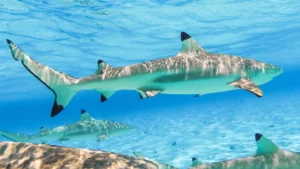 | 1.5–1.8 m (5–6 ft) | Moderate | Surf zone, passes and piers from April to NovemberThe shark most often seen jumping behind the sandbar at Gulf Shores. Implicated (with the spinner) in the 2020 Orange Beach bite. |
Finetooth SharkCarcharhinus isodon | 1.2–1.6 m (4–5 ft) | Low | Nearshore Gulf and the sound in summerAlabama has some of the highest finetooth catch rates in the Gulf. A slim, fast menhaden hunter with no bite record. |
Bull SharkCarcharhinus leucas | 2.2–3.2 m (7–10.5 ft) | High | Mobile Bay, the delta, Fort Morgan and Dauphin IslandThe only species named in more than one Alabama incident, including the 2000 Gulf Shores amputation. Pups in the bay every June. |
Bonnethead SharkSphyrna tiburo | 0.9–1.2 m (3–4 ft) | Low | Grass flats of Bon Secour Bay, Perdido Bay and the soundA small crab-eating hammerhead that is common in a metre of water. Skittish and never a danger. |
Blacknose SharkCarcharhinus acronotus | 1.1–1.4 m (3.5–4.5 ft) | Low | Nearshore Gulf over sand and the inner reef zonesRecognised by the dark smudge on the snout. Common in surveys, rarely noticed by the public. |
Spinner SharkCarcharhinus brevipinna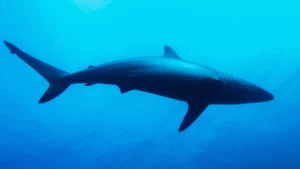 | 1.8–2.2 m (6–7 ft) | Moderate | Beaches and nearshore Gulf, especially in the autumn mullet runLeaps and spins when feeding. Shares the blacktip's habit of the occasional mistaken-identity bite on a foot. |
Sandbar SharkCarcharhinus plumbeus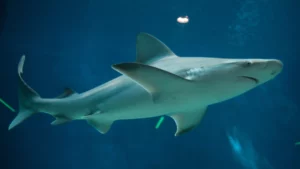 | 1.8–2.4 m (6–8 ft) | Low | Artificial reefs and wrecks such as the LuLuThe shark divers see most on Alabama's reefs. Tall dorsal fin, calm temperament, still recovering from past overfishing. |
Scalloped Hammerhead SharkSphyrna lewini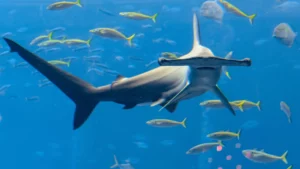 | 2.5–3.5 m (8–12 ft) | Low | Reef zones and the shelf; pups in the nearshore GulfCritically endangered worldwide; the northern Gulf is one of its strongholds. Shy of divers. |
Great Hammerhead SharkSphyrna mokarran | 3.5–4.5 m (11–15 ft) | Moderate | Nearshore in summer hunting rays; the passes and piersA 3-metre-plus hammerhead chasing stingrays along Orange Beach is an annual event. Big, but not implicated in any Alabama bite. |
Tiger SharkGaleocerdo cuvier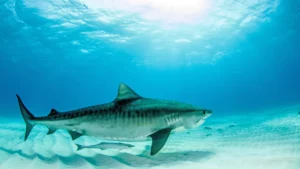 | 3–4.5 m (10–15 ft) | High | Offshore reefs and the snapper grounds; occasionally the passesFollows the fishing fleet and bit a trolling motor off Mobile in 2016. Among the largest sharks weighed at the Dauphin Island rodeo. |
Lemon SharkNegaprion brevirostris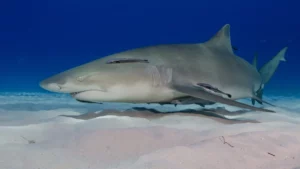 | 2.4–3 m (8–10 ft) | Low | Shallow sandy flats and the sound in summerLess common here than in Florida, but caught by surf anglers most summers. Slow and unbothered by people. |
Nurse SharkGinglymostoma cirratum | 2.2–3 m (7–10 ft) | Low | Under ledges on the offshore reefs and wrecksSeen by divers on the LuLu and the deeper reef zones. Adults reach about 3 m; the 18 to 32 ft sometimes quoted is fiction. |
Dusky SharkCarcharhinus obscurus | 2.8–3.6 m (9–12 ft) | Low | Outer shelf and the deeper reef zonesProhibited to land and rarely seen inshore. Large, slow to mature and still depleted. |
Silky SharkCarcharhinus falciformis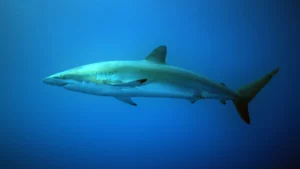 | 2–3 m (7–10 ft) | Low | Deep reef structures and the shelf edgeCircles the deeper wrecks and platforms. Curious with divers, but the "highly aggressive" label is unwarranted for an animal that never nears a beach. |
Shortfin Mako SharkIsurus oxyrinchus | 2.5–3.5 m (8–11 ft) | Low | Blue water beyond the shelf edge, winter and springCaught by the offshore charter fleet 40 miles out. Fast and formidable to anglers; irrelevant to swimmers. |
Whale SharkRhincodon typus | 6–10 m (20–33 ft) | Low | Offshore Gulf, June to SeptemberReported to the Dauphin Island Sea Lab's sighting programme most summers. A plankton feeder; harmless. |
| Gulf SmoothhoundMustelus sinusmexicanus | 0.9–1.2 m (3–4 ft) | Low | Outer shelf bottom in 40–200 mA small, toothless-looking shark found only in the Gulf of Mexico. Taken by shrimp trawls and deep-drop anglers, never seen from shore. |
Gulper SharkCentrophorus granulosus | 0.9–1.5 m (3–5 ft) | Low | Continental slope below 200 mA deep-water species that turns up on deep-drop lines off Alabama. Huge green eyes, lives in the dark; no contact with people. |
Great White SharkCarcharodon carcharias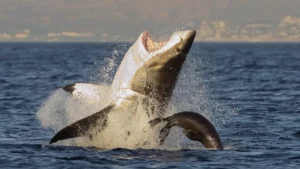 | 4–5.5 m (13–18 ft) | Moderate | Outer shelf of the northern Gulf, December to April, rareSatellite-tagged white sharks from the Atlantic have been tracked off the Alabama shelf in winter. No bites, no summer presence. |
What about the great white shark? White sharks do enter the northern Gulf of Mexico in winter, and satellite-tagged animals from OCEARCH's Atlantic programme, including a 3.5-metre female named Edithe tagged off Nova Scotia in 2020, have been tracked along the Alabama and Florida panhandle shelf between December and April. They are genuine but rare visitors, offshore, in cold water, in months when the beaches are empty; there has never been a white shark bite in Alabama. The Caribbean reef shark and the blacktip reef shark, both sometimes listed for the state, do not occur here, and the Gulf of Mexico as a whole has no confirmed resident white shark population.
Where to see sharks in Alabama
Alabama's inshore water is green to brown and the offshore water is blue, so the way to see sharks here is from a pier, a boat or on a reef dive. These are the reliable spots.
- Gulf State Park Pier, Gulf ShoresOne of the longest piers on the Gulf, reaching over 450 m into 6 m of water. Atlantic sharpnose, blacktips and bonnetheads are hooked from it daily in summer, and bigger blacktips and spinners chase bait along its length at dusk.
- Perdido Pass and Orange BeachThe jetties at the pass funnel bait and sharks between the Gulf and Perdido Bay. Blacktips and bulls work the pass on a moving tide; the 2020 Orange Beach foot bite happened on the beach just west of here.
- Dauphin Island (West End and the public pier)The barrier island at the mouth of Mobile Bay. The shallow west end and the former Katrina Cut are bull shark and blacktip water; the east-end pier produces sharpnose and finetooth sharks. Base of the Dauphin Island Sea Lab and its Alabama Aquarium.
- Fort Morgan peninsulaWild beach on the eastern lip of Mobile Bay. Surf anglers land bull sharks, blacktips and the occasional hammerhead where the bay current meets the Gulf, and dolphins and sharks feed together on mullet in autumn.
- Mobile Bay and the Mobile-Tensaw deltaThe bull shark nursery. Juveniles are netted in the upper bay and the lower delta every summer, and adults are caught as far up as the causeway. This is where all three of the state's historic fatalities occurred, in 1866, 1881 and 1894.
- Alabama artificial reef zones (LuLu and the Pinnacles)Divers on the 82-metre freighter LuLu, sunk in 2013 about 17 miles south of Perdido Pass in 35 m of water, regularly see sandbar sharks and nurse sharks, with scalloped hammerheads and silky sharks on the deeper structures.
- Alabama Aquarium at Dauphin Island Sea LabThe state's marine science centre, with a Mobile Bay exhibit, a Gulf of Mexico tank holding coastal sharks, and the research vessels that run the shark surveys. The best place to learn which species live in each part of the coast.
- Alabama Deep Sea Fishing Rodeo, Dauphin IslandHeld every July since 1929, the oldest fishing tournament in the country. Its shark category brings large tiger, bull and hammerhead sharks to the weigh station, where Sea Lab scientists sample every one for research.
If you want to see a shark without a fishing rod, walk the Gulf State Park Pier an hour before sunset in July or August and look down. If you want to dive with them, book the LuLu or one of the deeper reef sites out of Orange Beach between May and October, when the water is warm and visibility is at its best.
Best time of year to see sharks in Alabama
The northern Gulf has real seasons, and Alabama's sharks follow the thermometer.
- December to February: inshore water drops to 13–15 °C and the bay and sound empty out. Bull sharks retreat to the Gulf, the small coastal species head south or offshore, and this is the window in which tagged white sharks have been tracked on the outer shelf.
- March to May: the sound warms through 20 °C in April and the sharpnose, blacktip and finetooth sharks return in numbers. Pregnant bull sharks move into Mobile Bay to pup from late May.
- June to September: peak abundance, with water of 29–30 °C by August. Every summer bite in the record falls in these months, and the pier and surf fishing is at its best. Whale sharks are sighted offshore by charter boats from June to September.
- October to November: the mullet run brings blacktips and spinners tight to the beaches in clear autumn water, often the best month for seeing them from the sand.
Surface water on the shelf edge stays around 20 °C even in January, which is why the offshore fleet still finds makos, hammerheads and the odd white shark when the beaches are deserted.
Shark attacks in Alabama: what the record shows
SharkSider's database has 17 records for Alabama. Three are from the nineteenth century, all in Mobile Bay, and 14 are dated 1900 or later; the summary below counts those 14, and the six most recent are listed in full. Every one of the modern cases was survived.
- 2022 · Gulf Shores, Baldwin CountySwimming — Bite to right footSpecies not identified
- 2020 · Orange Beach, Baldwin CountySwimming — Lacerations to foot and toesBlacktip or Spinner shark
- 2016 · 8 miles off MobileFishing — No injury, shark bit trolling motorTiger shark, 10'
- 2014 · Katrina Cut, Dauphin Island, Mobile CountyFishing — Leg bittenBull shark
- 2013 · Gulf Shores, Baldwin CountyWalking in surf — Lacerations and abrasions to foot and ankleSpecies not identified
- 2012 · Gulf Shores, Baldwin CountyWading or swimming — Lacerations to legSpecies not identified
Alabama's three deaths all happened in Mobile Bay: a bather in July 1866, a man who fell overboard in June 1881 and a swimmer in October 1894. Nothing since has come close, and the last fatality is now more than 130 years old. The modern record clusters tightly in Baldwin County, which holds nine of the 14 post-1900 incidents, seven of them at Gulf Shores alone, with Orange Beach and Dauphin Island's Katrina Cut adding one apiece. Swimming and wading account for ten records, fishing for four, and two involved boards. The injuries are overwhelmingly to feet, ankles and lower legs, the signature of a small shark striking at a foot in murky surf.
The exception is 9 June 2000, when two people were bitten at Gulf Shores on the same day. One received puncture wounds to the hip and arm; the other, a swimmer training in open water, had his right forearm severed by a bull shark and the arm was later amputated above the elbow. It remains the most serious shark injury in the state's history, and it is often misdated to 2001 online. Bull sharks are the only species named more than once in the record, three times, with a tiger shark of about 3 metres that chewed a trolling motor 8 miles off Mobile in 2016 (no one was hurt) and a blacktip or spinner that cut a swimmer's toes at Orange Beach in July 2020 making up the rest. The latest entry, a bite to the right foot at Gulf Shores in April 2022, fits the same pattern. Alabama does not yet have its own attacks page on SharkSider; the state's cases sit within our shark attacks in the USA records.
Is it safe to swim in Alabama with sharks around?
Yes. Gulf Shores and Orange Beach host millions of visitors a year, and the state averages a shark bite roughly every two years, none fatal in modern times. The sharks in the surf are mostly sharpnose and blacktips feeding on mullet and menhaden, and the injuries they cause are cuts and punctures that heal. The wading-depth bites in the record almost all share a setting: cloudy water, a bait school close to shore, and a person standing still in the trough between sandbars where sharks hunt.
Bull sharks change the calculation in two places. The first is Mobile Bay, the delta and the lower rivers, where bull sharks are resident all summer in water with no visibility at all; swimming there, especially at dusk, is where the three historic deaths occurred and where the modern Katrina Cut bite happened. The second is around anyone fishing: four of the 14 modern incidents involved fishing, and shark fishing from the beach at night puts bait, blood and big sharks into the same water people swim in the next morning, which is why both Gulf Shores and Orange Beach now restrict it. Sensible habits cover the rest: swim near a lifeguard stand, avoid the passes and river mouths on a running tide, stay out of the water if you see birds working bait close in, and never wade with a stringer of fish. Our guide on how to survive a shark attack explains what to do in the rare event that a shark does make contact. Divers on the reefs see sandbar and nurse sharks that ignore them; tiger sharks on the deeper wrecks deserve the usual respect and a guide who knows the site.
Shark conservation in Alabama
Sharks in Alabama are managed by the Marine Resources Division of the state's Department of Conservation and Natural Resources, working inside the federal Gulf of Mexico shark rules set by NOAA Fisheries. Recreational anglers may keep one shark per person per day, the large coastal species must reach a minimum fork length before they can be kept, and the prohibited list mirrors the federal one: sand tiger, white, dusky, bigeye sand tiger, basking, whale shark and a string of deep-water and rarely seen species must be released alive. Commercial shark fishing in state waters is small and licence-limited. The coastal cities add their own rules on where and when shark fishing from the beach is allowed.
The research base is unusually strong for a state this small. The Dauphin Island Sea Lab has tracked shark populations off Alabama with standardised surveys for two decades, and the Alabama Deep Sea Fishing Rodeo gives scientists hundreds of large sharks to sample every July. What the data show is a coast in reasonable health: finetooth, sharpnose and blacktip numbers are stable, bull shark pups still fill Mobile Bay each summer, and sandbar sharks are recovering slowly from the overfishing of the 1980s and 1990s. The threats are habitat and water: the 2010 Deepwater Horizon spill oiled the barrier beaches and the sound, repeated openings of the Bonnet Carré spillway in Louisiana have sent pulses of fresh Mississippi River water east through the sound, and the delta wetlands that feed the bay are under pressure from development and dredging. Scalloped and great hammerheads remain globally endangered despite doing reasonably well here. Read why sharks are endangered for the wider picture.
Sharks in nearby states
Alabama's sharks do not respect state lines. The Mississippi Sound continues west into Mississippi, with the same bull shark and finetooth nurseries, and beyond it Louisiana adds the Mississippi delta, whale shark aggregations and bull sharks in Lake Pontchartrain. To the east, Florida begins at Perdido Key and its panhandle beaches share Alabama's species and its clear-water summers, while Texas at the far western end of the Gulf has the longest beaches and the most bull sharks. Across the Gulf, Mexico gets the same tiger and hammerhead sharks on the Yucatán side. Our overview of sharks around the world lists every region on the site, and Georgia shows how different the Atlantic side of the South is.
Frequently asked questions
Are there sharks in Alabama?
Yes. At least 20 species are recorded in Alabama's Gulf, sound and bay waters. Atlantic sharpnose, blacktip, finetooth and bull sharks are the common inshore species, bonnetheads and blacknose sharks are frequent, and the offshore reef zones hold sandbar, hammerhead, silky and tiger sharks. Mobile Bay is a bull shark nursery.
Are there great white sharks in Alabama?
Rarely, and only in winter. White sharks tagged in the Atlantic by OCEARCH, including a 3.5 m female named Edithe tagged off Nova Scotia in 2020, have been tracked on the northern Gulf shelf off Alabama and the Florida panhandle between December and April. They stay offshore, and no white shark bite has ever been recorded in the state.
Has there been a shark attack in Alabama?
Seventeen incidents are in the SharkSider database from 1866 to 2022. Three were fatal, all in Mobile Bay before 1900. The 14 cases since then were survived; the most serious was on 9 June 2000, when a bull shark severed a swimmer's right forearm at Gulf Shores. Most others were foot and leg bites in the surf.
Is it safe to swim at Gulf Shores and Orange Beach?
Yes. Gulf Shores has the most recorded incidents in the state, seven, because it has by far the most swimmers, and all were survived. Swim near lifeguards, avoid Perdido Pass and the bay mouth on a running tide, stay away from anyone fishing, and leave the water when bait schools or diving birds come close to shore.
Are there bull sharks in Mobile Bay?
Yes, in numbers. Mobile Bay and the lower Mobile-Tensaw delta are a bull shark nursery, with pups born in early summer and juveniles staying in the brackish upper bay for their first years. Adults are caught from Fort Morgan to the causeway, and the three historic deaths in the state all happened in the bay.
What is the most common shark in Alabama?
The Atlantic sharpnose shark. It dominates every survey run by the Dauphin Island Sea Lab and is the small shark most anglers catch from the Gulf State Park Pier and the beaches. Finetooth and blacktip sharks are next, with Alabama recording some of the highest finetooth catch rates in the Gulf.
When is the best time to see sharks in Alabama?
June to September, when the water is 29 to 30 °C and the sound, bay and surf are full of sharks. The autumn mullet run in October and November brings blacktips and spinners close to the beaches in clear water. Whale sharks are reported offshore from June to September; white sharks only in winter.
Can you dive with sharks in Alabama?
Yes, on the artificial reefs. The freighter LuLu, sunk in 2013 about 17 miles south of Perdido Pass in 35 m of water, and the deeper reef zones regularly show sandbar, nurse and silky sharks, with scalloped hammerheads on the outer structures. Charters run from Orange Beach from May to October.
Are there whale sharks off Alabama?
Yes, seasonally. Whale sharks move through the northern Gulf in summer and are reported by charter boats and offshore anglers off Alabama most years between June and September, sometimes within 20 miles of Orange Beach. Sightings are logged by the Dauphin Island Sea Lab. They are filter feeders and harmless.
Is shark fishing legal in Alabama?
Yes, with limits set by the Marine Resources Division: one shark per person per day, minimum lengths for the large coastal species, and a prohibited list that includes sand tiger, white, dusky and whale sharks. Gulf Shores and Orange Beach restrict shark fishing from the public beaches.
References

A small team focused on researching sharks and making marine biology easy to understand. Every page is reviewed against current species records and the SharkSider attack database, and updated when new incidents or research appear.
Published November 30, 2022 · Last updated September 22, 2026 · Incident data from the SharkSider attack database (14 records for Alabama, 0 fatal).


