


Sharks are being killed at a rate of roughly 80 million a year, about 25 million of them from threatened species, and the great majority die as bycatch in fisheries set for tuna and swordfish rather than in the fin trade that gets the attention. That is the number any useful response has to be measured against.
Individual action still matters, but only through two channels: what people buy, which sets demand, and what they push governments to regulate, which sets the rules fleets work under. Everything else, including sharing a page like this one, works by feeding those two.
- Killed by fishing each yearAbout 80 million
- Sharks and rays threatenedMore than one third
- Oceanic decline since 197071 per cent
What is actually killing sharks
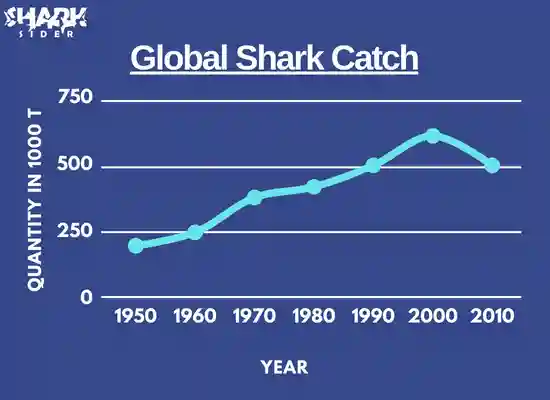
Older versions of this page put the global take at around 800,000 sharks a year. That figure came from confusing tonnes of reported landings with individual animals, and it is wrong by two orders of magnitude. The most recent global estimate, built from catch records, trade data and observer programmes, puts fishing mortality at roughly 80 million sharks a year, with about 25 million of those belonging to species already assessed as threatened.
Most of that is not directed shark fishing. It is bycatch: sharks taken on longlines and in nets set for tuna, swordfish and other target species, hauled up alongside the catch and often discarded. The finning trade, which dominates the conversation, was estimated from trade records at something between 26 and 73 million sharks a year in the early 2000s, and bans on removing fins at sea have since changed how sharks are landed without reducing how many die. The Red List assessment published in 2021 found more than a third of all sharks, rays and chimaeras threatened with extinction, and separate work in the same year put the fall in oceanic shark and ray abundance at 71 per cent since 1970. What fishing does to shark populations covers the mechanism in more detail.
What an individual can and cannot change
Two levers are real. The first is demand. Shark meat is widely sold under names that hide it — flake in Australia, rock salmon or huss in British fish shops, cazón in Spanish-speaking markets — and squalene rendered from deep-sea shark livers still turns up in cosmetics where a plant-derived substitute exists. Cartilage supplements have no demonstrated medical benefit and consume sharks to produce. Declining to buy any of these costs nothing and removes a buyer from the market.
The second is money that stays in the water. A study in Palau valued one reef shark at around 1.9 million US dollars in dive tourism over its life, against roughly 100 dollars landed once, and that arithmetic is what persuaded several governments to protect sharks on economic grounds rather than sentimental ones. Choosing an operator that does not bait or handle animals keeps the value real. Beyond that, the regulations that govern fleets are written in public processes that take public comment, and fisheries rules move when constituents write in. The practical list is set out in ten ways to help save sharks, and the truth behind shark fin soup covers the trade specifically.
Getting the story right is part of the work
Fear and indifference both cost sharks, and both are fed by numbers that nobody checks. The claim that sharks kill four people a year is too low; our own file records 219 deaths since 2000, which averages nearer nine. The claim that more than 150 people a day die on American roads is too high; the figure is a little over a hundred. Neither correction changes the conclusion, but a conservation argument built on figures that fall apart under a search does not hold anybody for long.
The same applies to the idea that sharks have no enemies in the sea. Orcas kill white sharks and eat their livers, and the two animals that did so off South Africa emptied a stretch of coast of white sharks for months — the subject of what eats sharks. What is genuinely at stake is the role, not the animal's reputation: remove the large predators from a reef and the species below them expand until the system reorganises, which is the scenario worked through in what would happen if every shark disappeared. The incident record itself, broken down by country, sits under shark attacks.

Frequently asked questions
How many sharks are killed each year?
About 80 million, according to the most recent global estimate, with roughly 25 million of them from species already assessed as threatened. The older figure of 800,000 that circulated for years came from reading tonnes of reported landings as individual animals, and understates the toll by about a hundredfold.
Is shark finning the main problem?
No. Finning gets most of the attention, but the bulk of shark mortality is bycatch in fisheries targeting tuna and swordfish. Bans on removing fins at sea spread widely after 2010 and changed how sharks are landed without lowering the number killed, because the animals were still being caught.
What can one person actually do for sharks?
Two things carry weight. Refuse products that consume sharks, including shark meat sold under other names, squalene in cosmetics and cartilage supplements. And put money and pressure where it counts: responsible shark-diving operators, conservation groups working on fisheries policy, and public comment on fishing regulations.
Does sharing information about sharks help?
Indirectly, and only if it is accurate. Public attitude sets the political cost of protecting a species, and the exaggerated risk figures that circulate make culls easier to justify. Correcting a number is a small thing, but conservation arguments built on figures that collapse under checking persuade nobody for long.
Why do sharks matter to the ocean?
Large sharks sit near the top of marine food webs, and removing them lets the species below expand until the system reorganises, usually in ways that reduce what the reef or shelf can produce. They are also slow to reproduce, so populations that are fished down take decades to recover, if they recover at all.
References

A small team focused on researching sharks and making marine biology easy to understand. Every page is reviewed against current species records and the SharkSider attack database, and updated when new incidents or research appear.
Published December 1, 2014 · Last updated September 23, 2026 · Part of the Shark Facts section.


